Author Archives: yachtcamomile
Our first week back in the Seychelles
We arrived back on Camomile Saturday 9th July after a wonderful 3 weeks in the UK. As usual we hit the ground running and I spent the first day unpacking, putting away my nicely washed and ironed clothes, disentangling Bill’s bits from all 4 bags and repacking winter clothes back in the bags so they could go back under the bed.
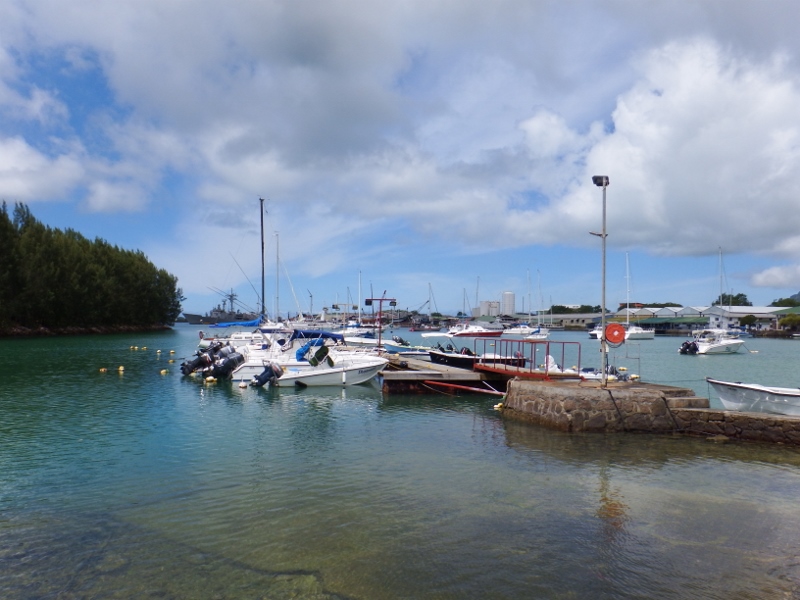
Camomile out in the bay
Sunday we started cleaning because the marina is under the flight path and the deck was covered in fuel particles from the plane’s engines. Unusually I also had mildew growing in some areas of the boat which, in all our time in the tropics, we haven’t had before. We then moved Camomile out of the expensive marina to Victoria bay which is right by the town. There are a number of buoys there and we picked one up at
04˚37.51S
055˚27.48E
They don’t cost anything but you need to ask the locals if it belongs to anyone or you could find yourself being asked to move. Anchoring isn’t very good here although we managed to get our anchor to stick on the first night.
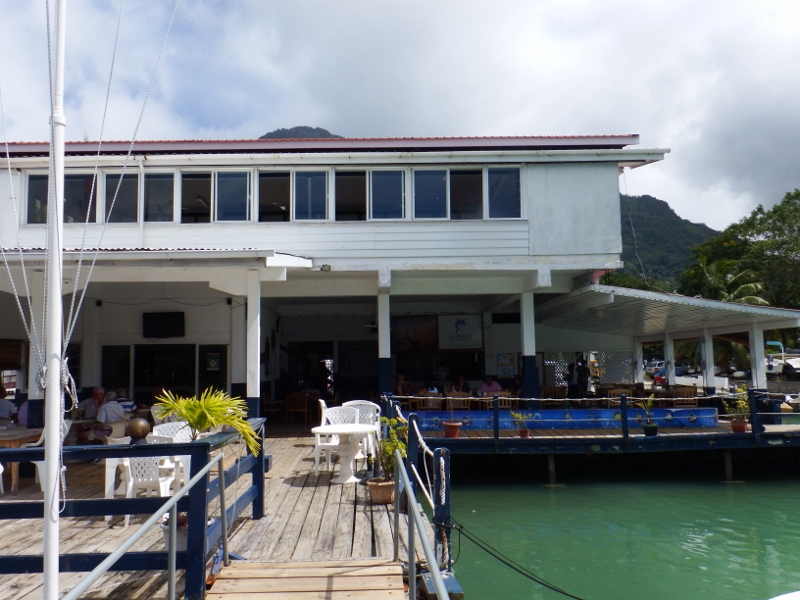
The Seychelles yacht club
Monday morning we went ashore to join the yacht club. For 125rupees (about £7) for the week you can use the (hot!) shower, dump your rubbish, use their water to fill water jugs or do washing and leave your dinghy safely on their pontoon, good value really. The next job was shopping because there wasn’t anything on the boat to eat after our time in Chagos and the UK and its very expensive eating out here, although the YC does some reasonably priced meals. The big supermarket is a 10 minute walk out of town so with a trolley each we went to stock up.
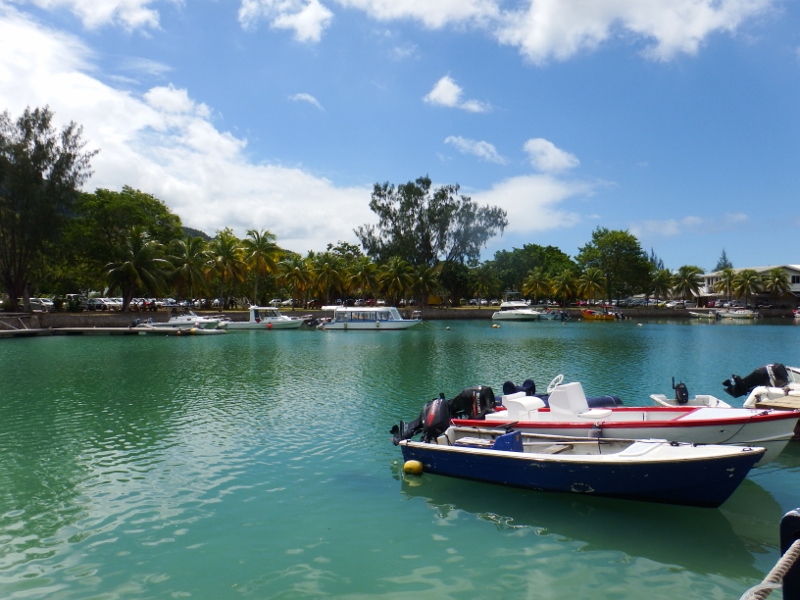
Overlooking the park
Tuesday I decided to restart my joggy trots. I haven’t been able to run for months because I’ve had a ‘planters’ heal which was very painful although it’s finally stopped hurting but mainly because it’s been too hot. There’s a little park overlooking the boats so I did a couple of circuits of that. We spent the rest of the day on board because we’ve both developed colds, probably from the plane, and Bill’s is developing into man flu with an infected eye and ear. That evening Jacqui and Kevin of Tintin moored next to us invited us on board for drinks to welcome us back. It was nice to relax and chat for a few hours.
Wednesday we played tourist for the day and did the walking tour around Victoria. It was founded on this spot by the French in 1778 and called L’Etablissement because of its excellent natural harbour with shelter provided by St Anne and neighbouring islands. After the British captured the Seychelles in 1812 the little capital was given its English name in 1841 in honour of Queen Victoria. Many of the population today is trilingual with French being the main language but English and Creole is widely spoken too.
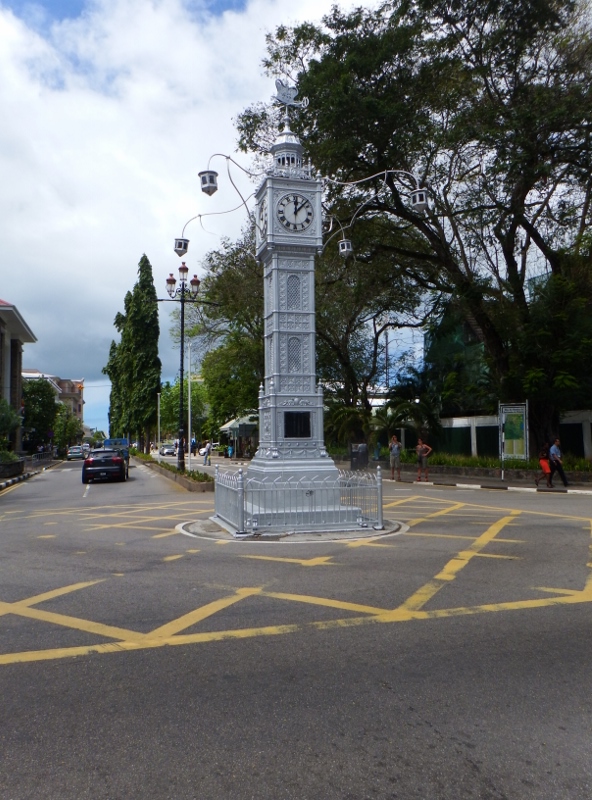
The clock tower
The clock tower in the centre is the very symbol of Victoria. It was erected as a memorial to Queen Victoria who died in 1901 but it took until 1903 to reach the Seychelles. The clock arrived in kit form and, in a mishap during unloading, the pendulum was dropped over the side of the ship. Despite a makeshift substitute being made locally the chime was disabled.

Kenwyn house
Most of Victoria east of the clock tower has been built on reclaimed land. We walked down Francis Rachel street which was once the waterfront and many of the old buildings still survive here. One such building is Kenwyn house. It is one of the best preserved 19th century buildings in Victoria. Apart from the architecture of the building itself it contains some beautiful art work from local artists. There were several pieces Bill and I liked but the price tags were way beyond our budget. This lovely little fountain was in the garden.

Pretty fountain
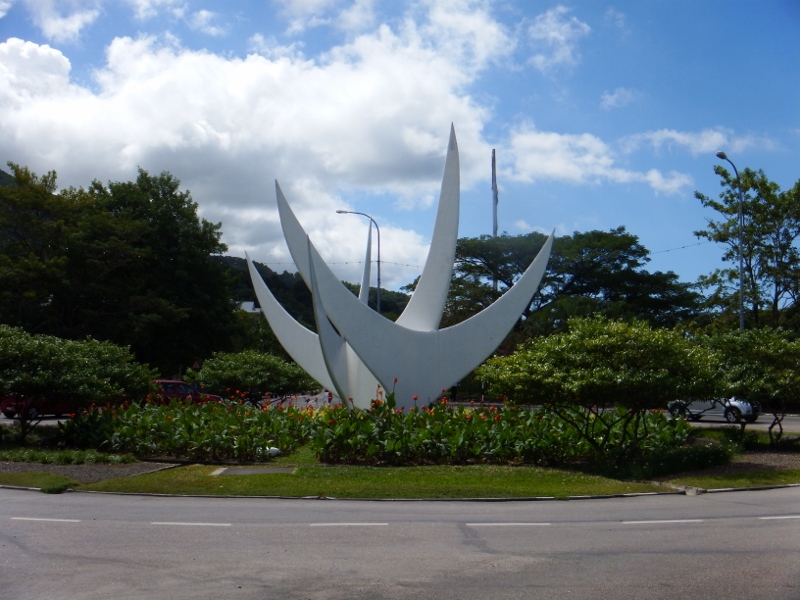
The Trwa Zwazo monument
The Seychelles gained independence from the British in 1976 and the road built on reclaimed land leading from the clock tower is named Independence avenue. At the end of the road is a roundabout with the Bicentennial Monument known as Trwa Zwazo (three birds) erected in 1978 to celebrate 200 years of human settlement in Seychelles. Each ‘bird’ represents one of the continents in the blood of the Seychellois: Europe, Africa and Asia. Do they look like birds?
Back to the clock tower again and a walk north on Albert street, also part of the original sea front, to find this very colourful building on the corner of Market street.
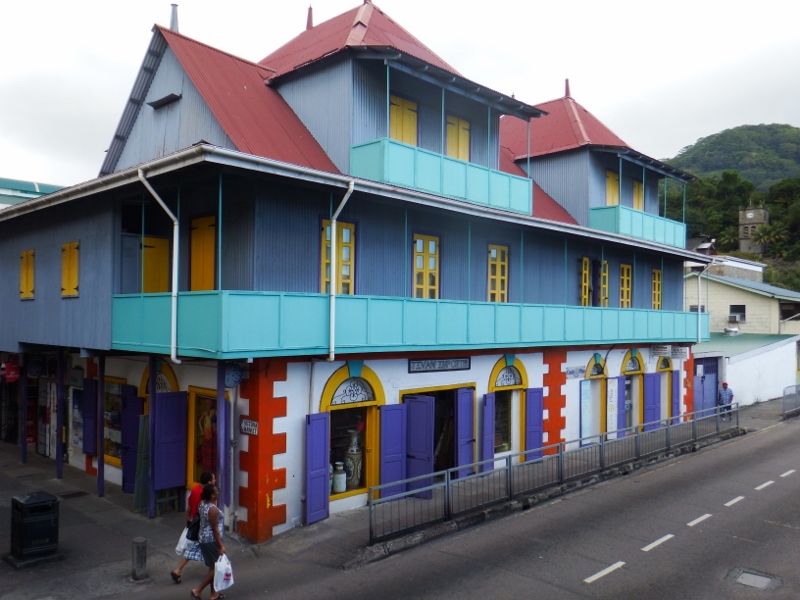
Colourful buildings
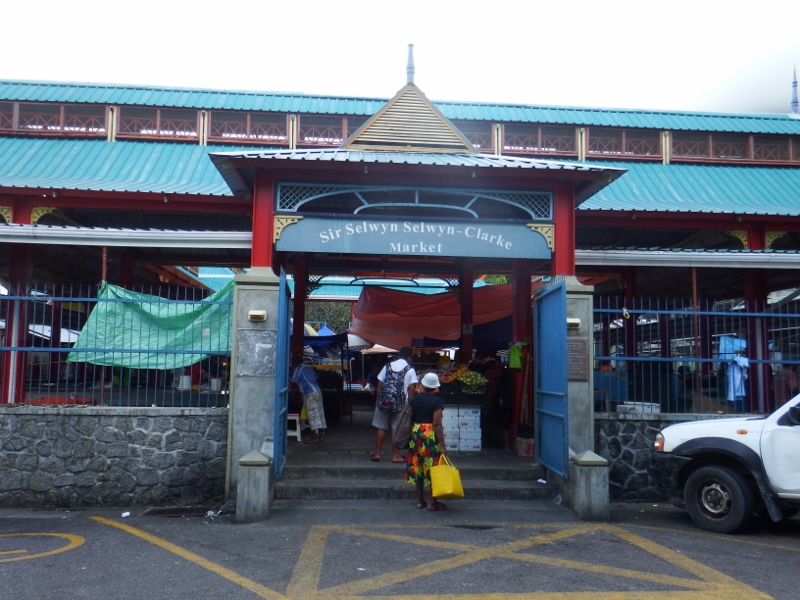
Sir Selwyn Selwyn-Clarke market
Market street, part of the old town and pedestrianised, leads to the Sir Selwyn Selwyn-Clarke market named in honour of a former governor. We had a quick look around but weren’t shopping today.
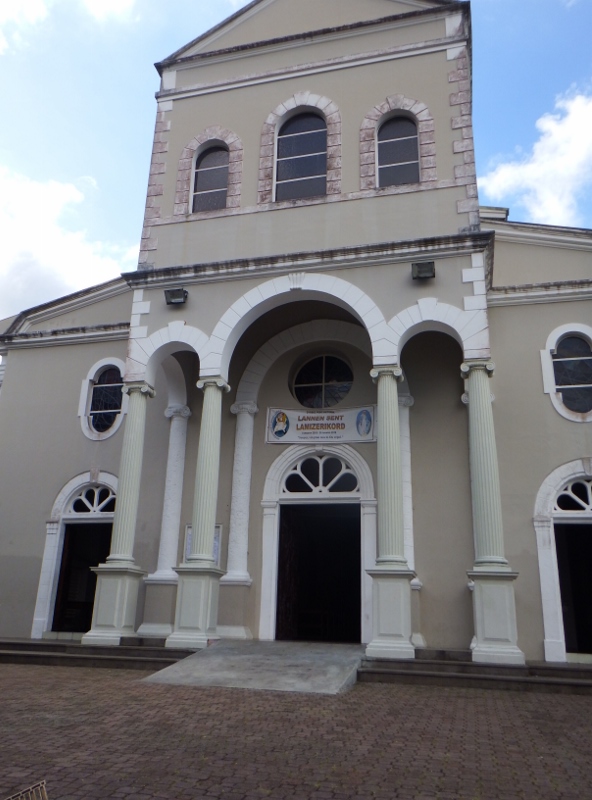
Cathedral of the Immaculate Conception
Church street leads from Market street to the roman catholic cathedral named Cathedral of the Immaculate Conception. Little remains of the original building dating from 1874, having been rebuilt in granite is 1933.
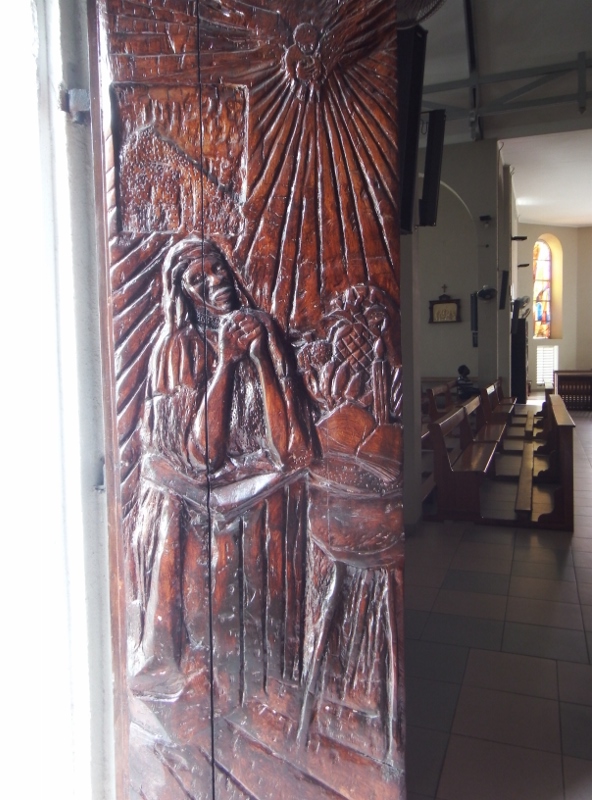
One of the original doors
One of the original doors has been fitted to a side entrance.
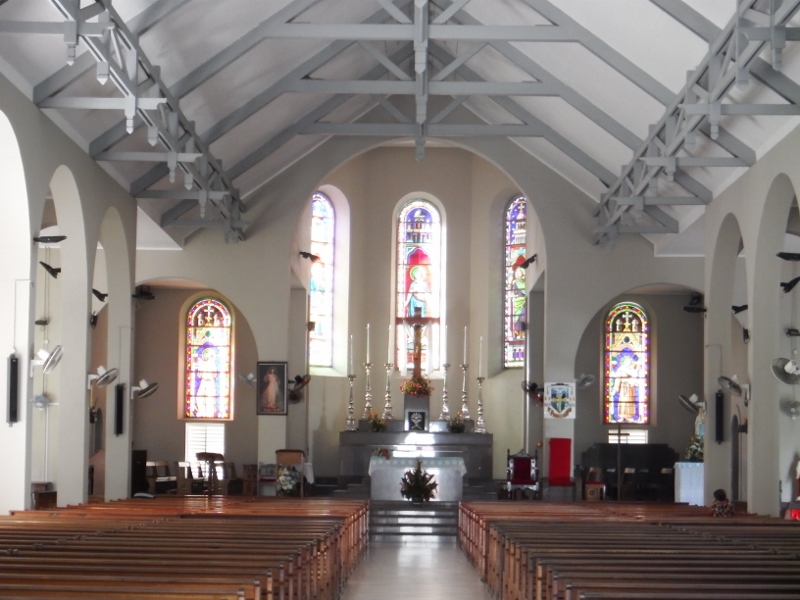
The inside was striking
I love old churches and this one was beautifully kept. The stain glassed windows were striking. It was wonderfully cool inside.
Part of the original clock tower was set on the hill behind the cathedral.
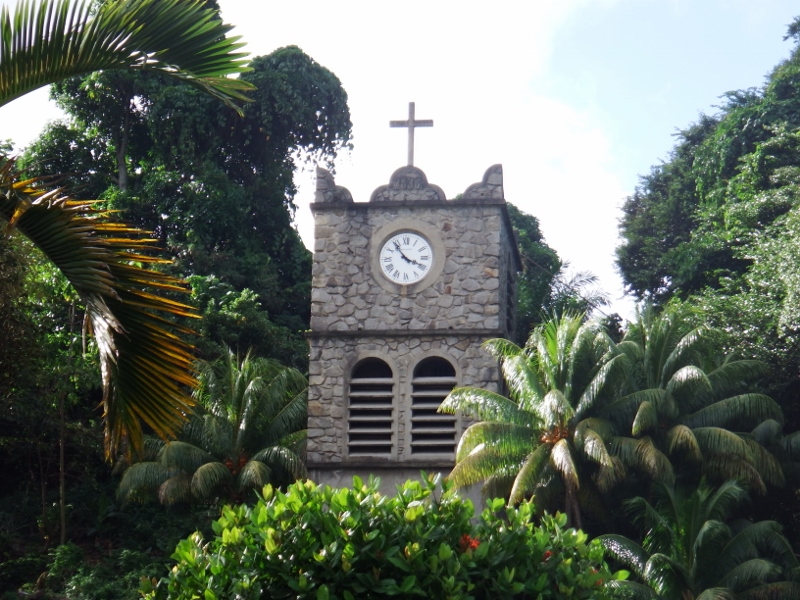
The old bell tower
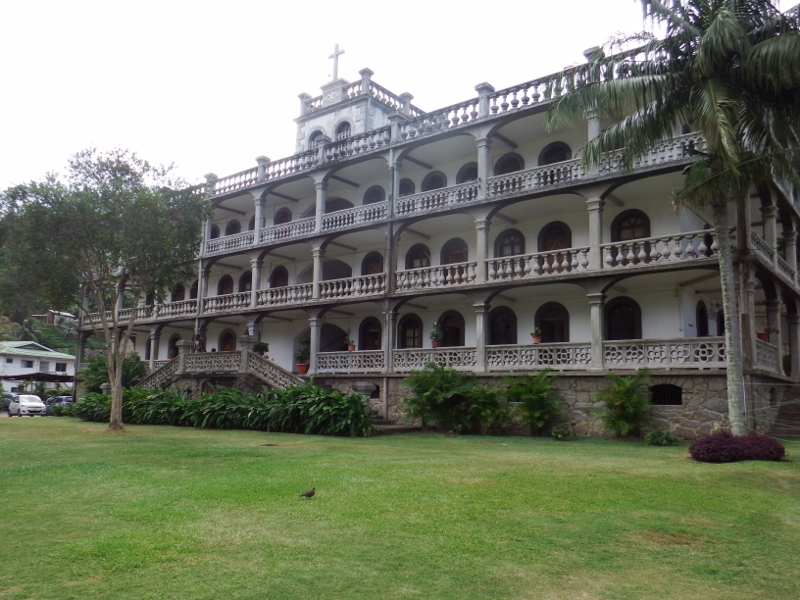
Capuchin house
One of Victoria’s most impressive buildings, the Catholic priests’ Residence, Capuchin House stands beside the cathedral. That was the end of the walk but on the other side of the cathedral is an orphanage and these dear little ones were sitting outside the cathedral with their house mother. Their ages range from 18 months to 3 years, I just wanted to take them all home they were adorable.

The church orphans
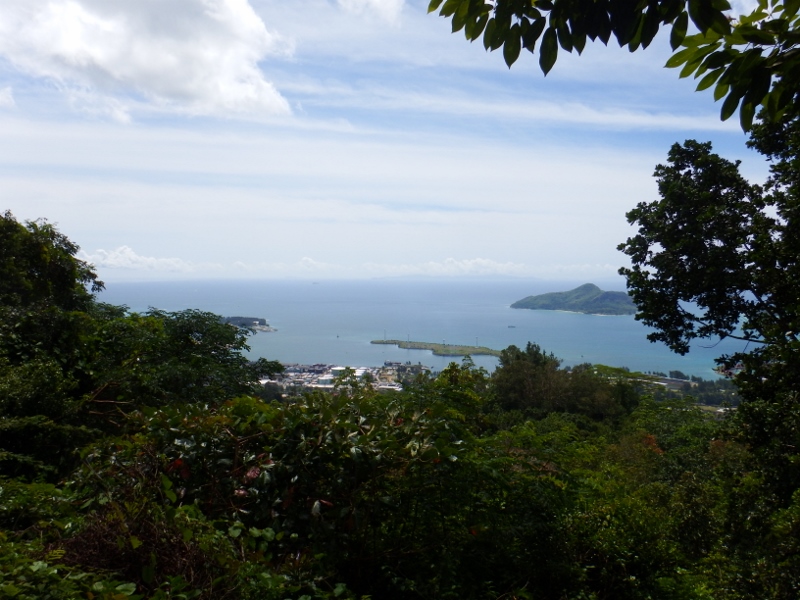
The view from the Mission
On Thursday we had another tourist day with Tintin and got on a bus. Public transport is very reasonable here. It costs 5 rupees (about 30p) a ride whether you go one stop or all around the island. We headed out of town on the Bel Air road passing the oldest cemetery in the Seychelles. Here lie some of the pioneers of the settlement of Seychelles. Leading onto the Sans Souci road it twists and turns upward. We got off by the Mission historical ruins to visit the viewpoint erected for the state visit of Queen Elizabeth II in 1972 on her tour of the Commonwealth Nations. Often there are misty clouds shrouding the mountain tops but today we were lucky and had a good view out across the islands, although the trees have grown a bit in 44 years.
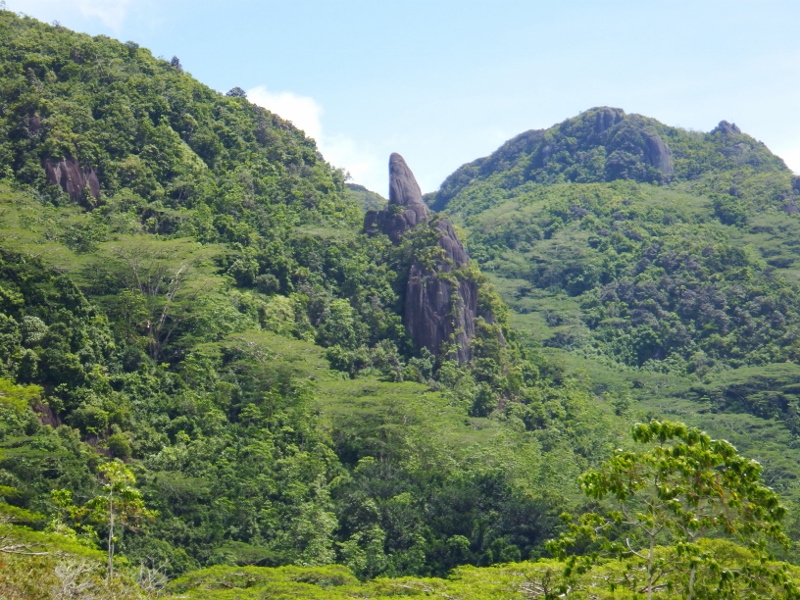
Stunning scenery
We all walked back down the road to the Copolia walk which took us about half an hour. The scenery was stunning as we walked passed endemic palms, trees and screwpines. The traffic was very infrequent so it was a pleasant walk.
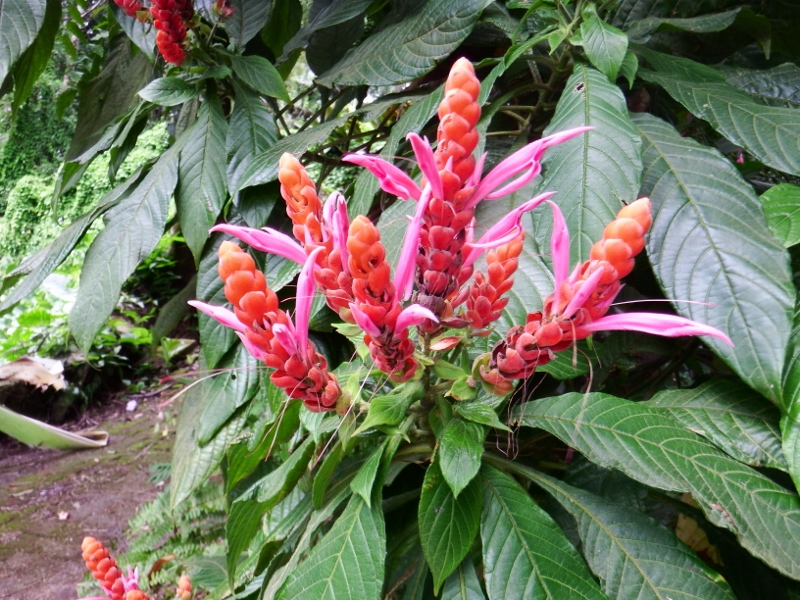
Beautiful flowers
The Copolia is only about a mile in length but is uphill using tree roots as steps along with steps cut out of the granite. There were many wild flowers growing along the way, not unlike Scotland although about 20C warmer!
We were told it was a 45 minute walk but it took us a good hour and a half but we finally made it to the top and what a stunning view.
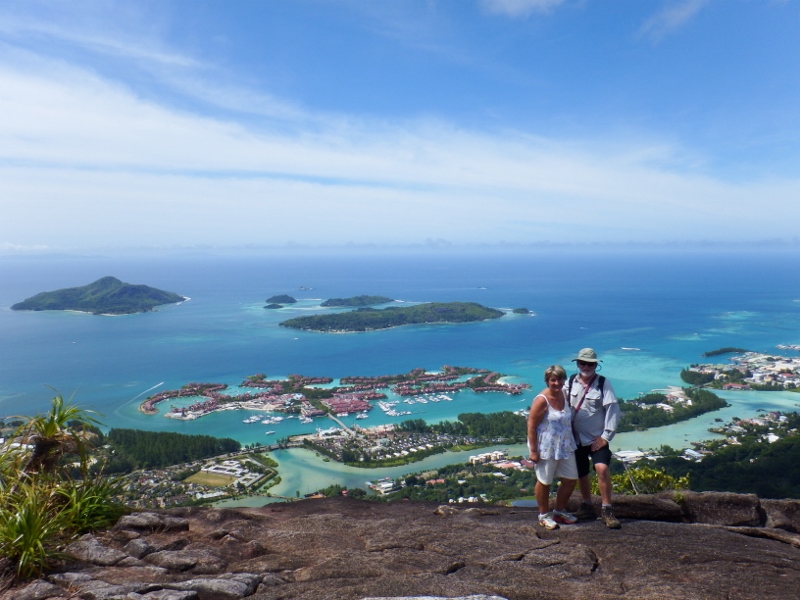
View from the top

Nepenthes
One of the reasons to come to the top, apart from the view, was to see the Nepenthes genus of pitcher plants. Of 70 species in total all but two are in south east Asia. The exceptions are in Seychelles and Madagascar. They were quite small and grew in clumps on top of the mountain.
As we looked down to the north we could see Camomile and Tintin in the harbour.
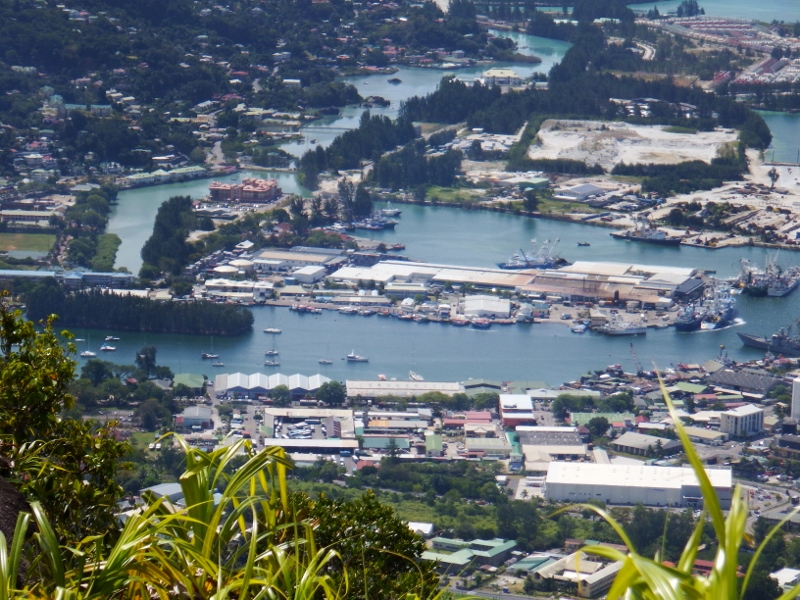
Looking down on Camomile
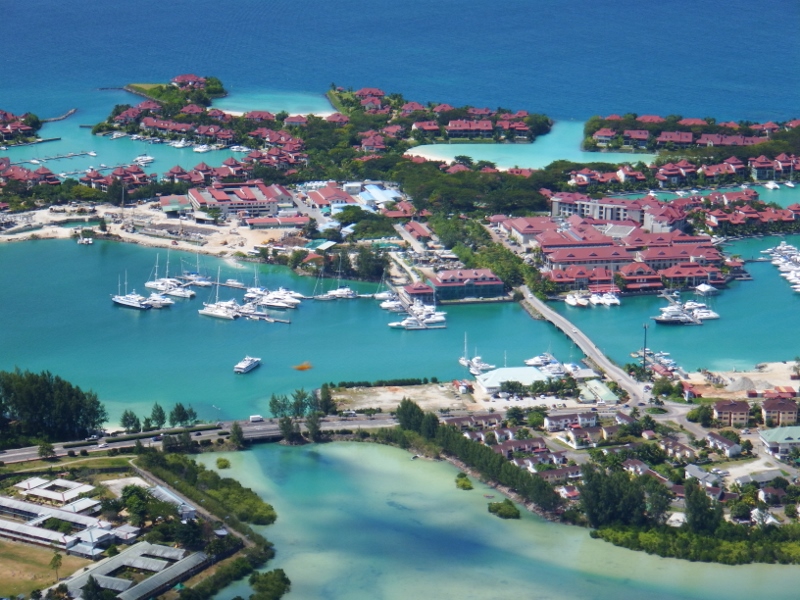
Eden marina
In front of us to the east was Eden island with Norsa sitting in the marina.
In this panoramic shot the airport is off to the south (right of the photo) and the islands of the St Anne national marine park beyond the marina.

The east coast of Mahe island
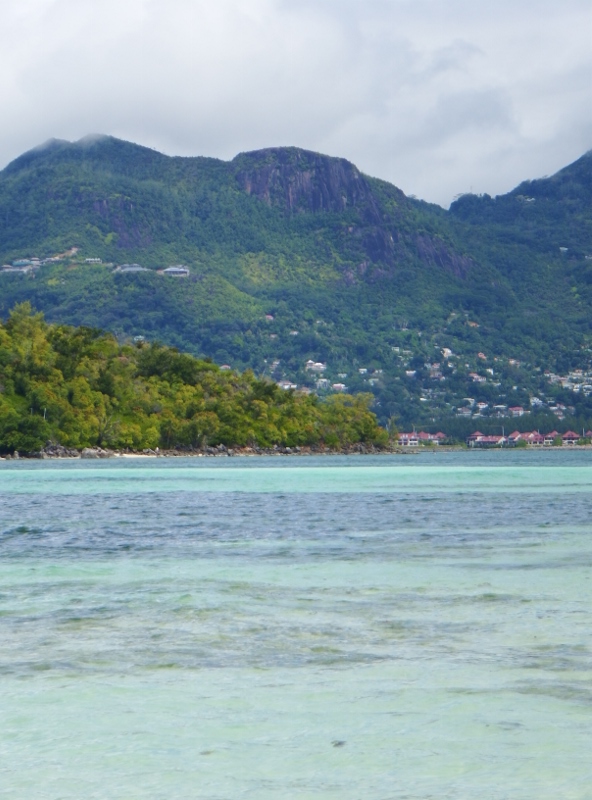
The hilltop we were standing on
That was where we headed the following week and took this photo. The peak we were standing on is in the middle of the photo.
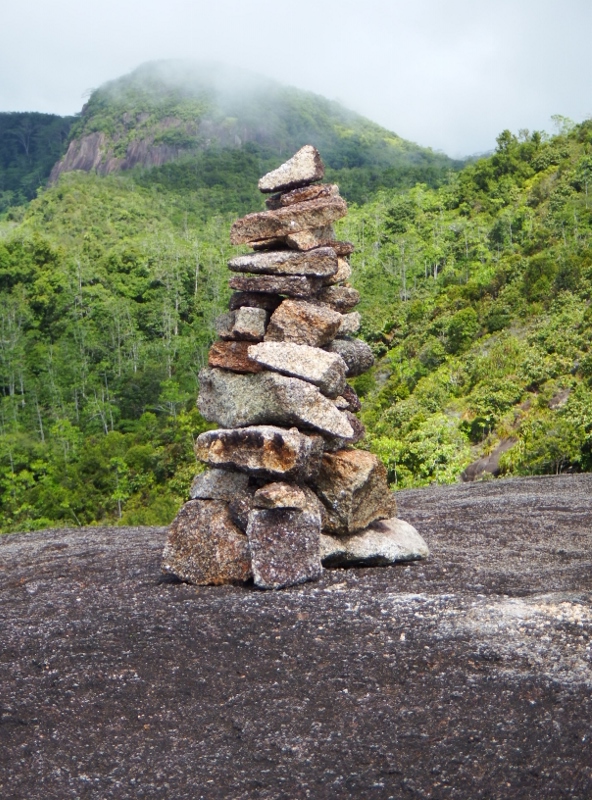
A poignant cairn
My final photo taken on the mountain is of one of the many cairns that have been built in memory of loved ones. The walk back down wasn’t as difficult but still took us nearly an hour.
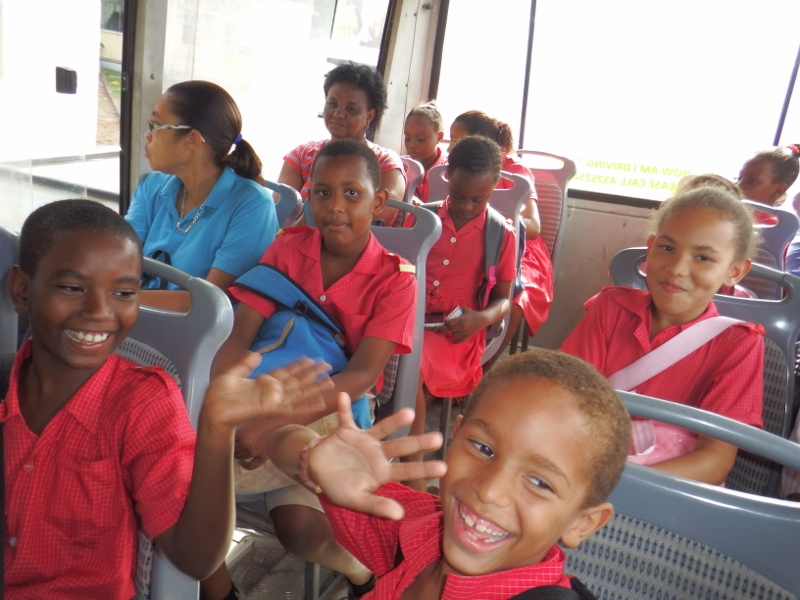
School children on the bus
Unfortunately the bus stop was another 20 minutes down the road so we had to walk to that before our poor feet and knees had a rest. These dear little school children joined us on the journey back down the hill.
We spent the rest of the week trying to shake off our colds.
Three weeks in the UK

Father’s day breakfast in the garden
and oh my goodness didn’t those three weeks go quickly but we managed to do quite a lot. The party was a huge success and to see the look on the boys faces was worth the effort to get back on time. The next day was Father’s day and Bill hasn’t had Father’s day with the boys for years so we celebrated with a wonderful breakfast cooked by Thomas. I even took my coat off for a few hours!
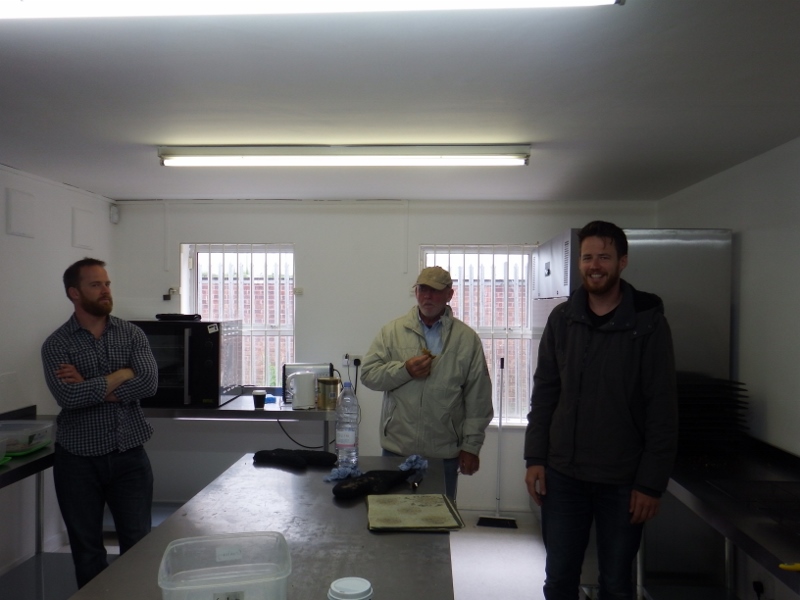
The new headquarters of the Thomas Cookie co
We hired a car Monday morning and drove to the other side of Maidstone to see Thomas’s new unit, the new headquarters of the Thomas Cookie co. Bill and I had very proud of what Thomas has achieved in just over a year and with Sonal’s help. It turned out to be a good time to arrive because Thomas was grateful for Bill’s help with sorting out some shelving and other bits. After making some plans the four of us drove into Maidstone for a coffee and a chat. It felt so strange walking around the town together after so long. Sadly James had to leave in the afternoon to fly back to Scotland. Had he known we were coming he would have stayed longer but we planned to go to Scotland the following week.

Logan with Bill’s shoe on
Tuesday we got onto the motorway to drive to Basingstoke to see my sister. There’s so much traffic here and after travelling everywhere at 6kts it felt strange going so fast. Angela looks after her grandson Logan, my great nephew 3 days a week and it was good to see him again. When I was in the UK last May he was a babe in arms but now he’s walking around very cheekily including in Uncle Bill’s trainers!
We spent 2 days there but after we left I realised I didn’t get a photo of me with him but I love this one of Bill in training to be a Grandpa!

Great Uncle Bill in training to be a Grandpa
We had a lovely meal out with Angela and Terry on the Tuesday evening and a nice meal in on Wednesday with my niece Kirsty too.
Thursday was a busy day. After laying some flowers on my Mum’s grave we drove to Pitton to see Bill’s Auntie Hilary and Uncle John for a lovely chat and a delicious lunch. After leaving in the afternoon we drove to our sister-in-law Claire and Gordon for a light supper, more chatting and a comfy bed.
Friday we paid a quick visit to our lock-up to leave a few bits there (there really isn’t any more room). I always feel sad when I see our ‘treasures’ stacked floor to ceiling – I wonder when they will all come out one day into a home? We continued onto Port Solent and the marine superstore to start buying the many items needed to take back. Another grave in the afternoon, Dad is buried in Littlehampton and doesn’t get visited very often so it needed a bit of TLC.
Finally we completed the loop and ended back in Maidstone in Thomas’s unit and I helped make some cookies. I was paid in cookies too, yum yum.
Saturday saw us visiting the chandleries of Gillingham and Chatham for more bits as well as some clothes shopping.

20+ sausage dogs going for a walk
Sunday was market day but while Bill went to help Thomas on the stall I went with Sonal to walk my ‘grand-fur-baby’ Slinky with the other dogs of the ‘Sausage dog club’ at Cobtree park north of the town. It brought back fond memories because I used to walk Nike there. Slinky is only 4 months old so can’t walk far but he enjoyed meeting his buddies. It was wonderful to spend time with Sonal and enjoyed our walk together.
Middle of summer and we all had coats on again.
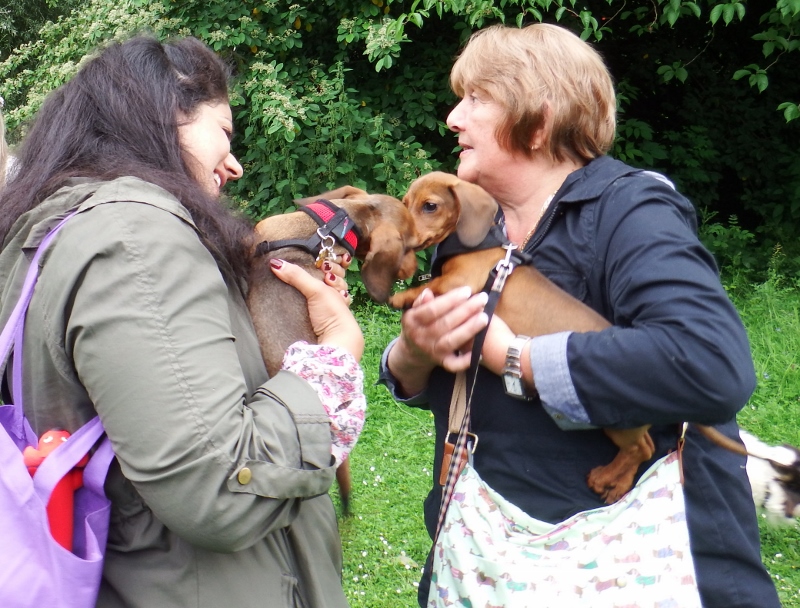
Sonal with Slinky meeting his brother
This is Slinky’s brother and is the first time he’s seen him since leaving the litter, I wonder if he remembered him.
After our walk Sonal and I drove to West Malling to see Thomas on his market stall. Also my other sister Amanda, my brother-in-law Alan and nephew and niece Tristan and Jasmine came to see us. After the stall was packed up we drove to the Kings Arms in Meopham and all enjoyed a delicious Sunday lunch together. In the afternoon back at Thomas and Sonal’s house Jasmine was asked to be one of Sonal’s bridesmaids so the talk turned to weddings.
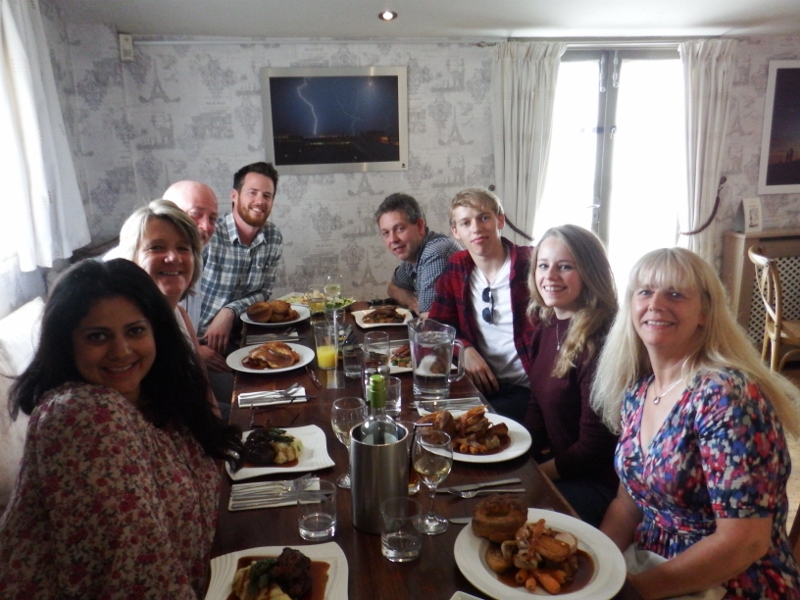
Sonal, Sue, Bill, Thomas, Alan, Tristan, Jasmine and Amanda
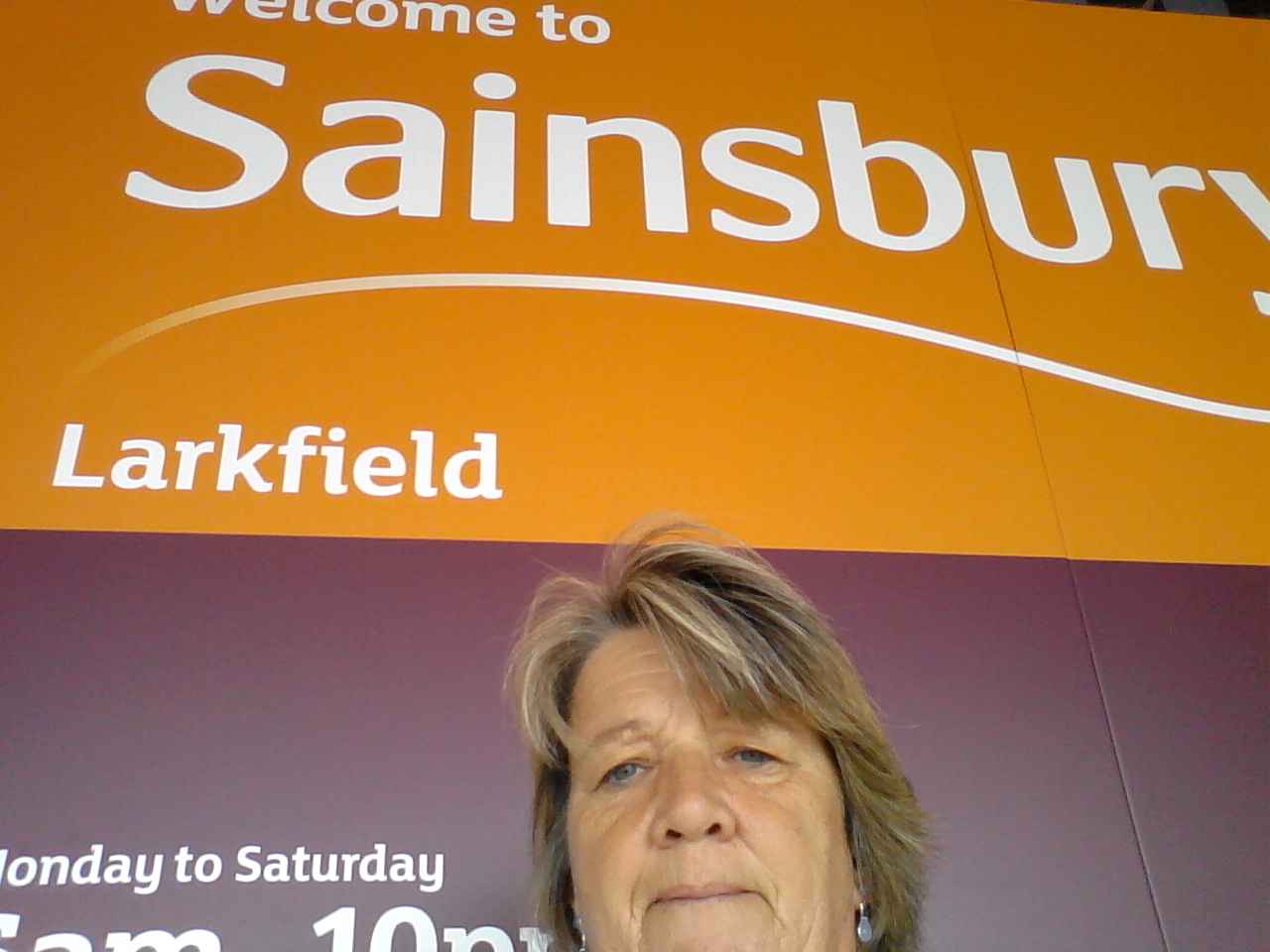
my selfie outside Sainsburys
Monday 27th Bill and Thomas headed off to Ikea to get some shelving and other bits for the unit and I did something so normal for everyone but I was thrilled – I walked to Sainsburys! I took this selfie in the entrance and the other shoppers probably thought I was a bit daft but there you go. I had a great time buying all the stuff I can’t normally buy like nice decaff filter coffee, nescafe cappuccino sachets, t bags, stirfry sauces, best jam, oxo cubes, birthday number candles, as well as some strawberries and raspberries to just eat.
Tuesday was spent packing as much as possible in just 2 cabin bags for the Easyjet flight to Scotland. To take hold luggage on easyjet was £32 a piece each way! Thomas drove us to Gatwick for the flight to Inverness. Goodness it was cold when we landed. Another layer went on, Bill walked around with 4 layers including his jacket and I’ve had 3 with my coat. James was excited to have us in Scotland. We hadn’t been there for 2 1/2 years.

Coffee in the Walled garden cafe
Wednesday morning we all went for a beautiful walk. It may be cold but at least it’s sunny. We walked to Gordon’s castle and had coffee in the tea rooms in the walled garden. It was a lovely start to our stay. www.gordoncastlescotland.com
The area around the castle is stunning and it’s only a mile or so from James’s house.
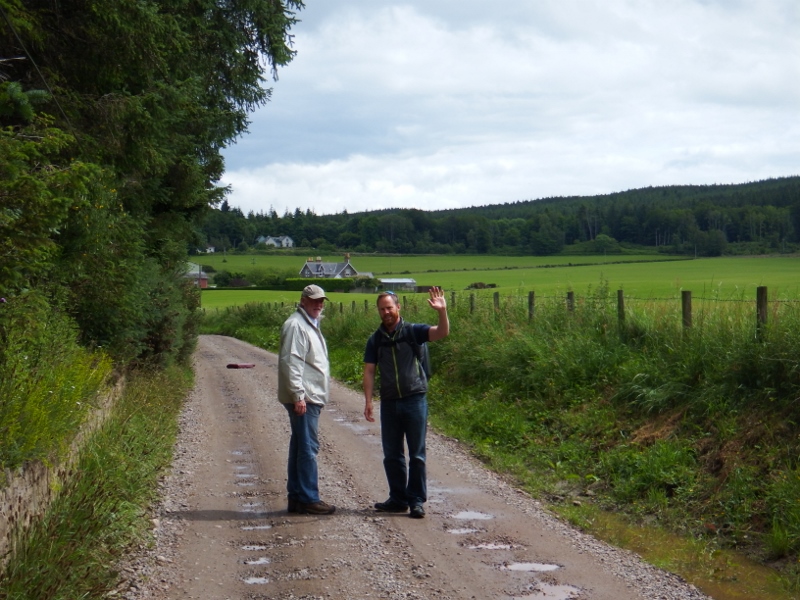
Out walking
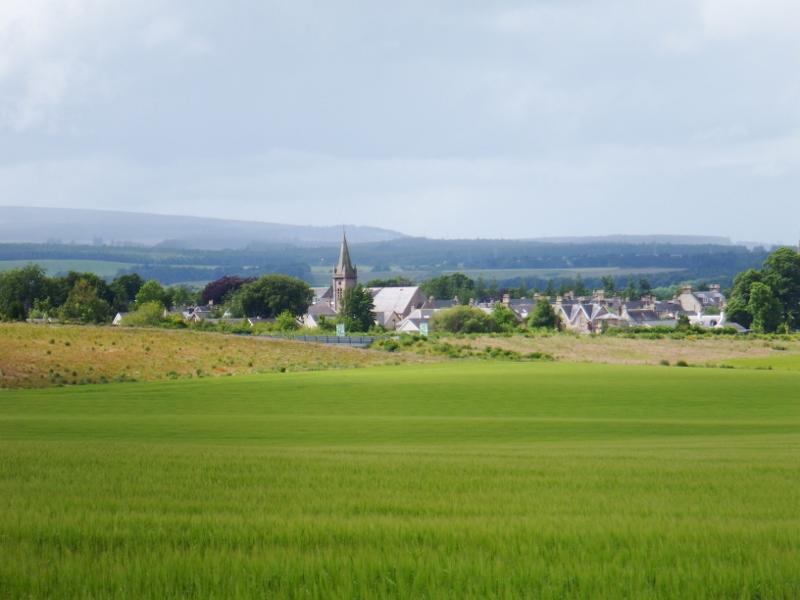
Stunning scenery
In the afternoon we went into Elgin to get some shopping so I could make some of James’s favourite dinners. That evening I started with a big lasagne and salad. James made the garlic bread.
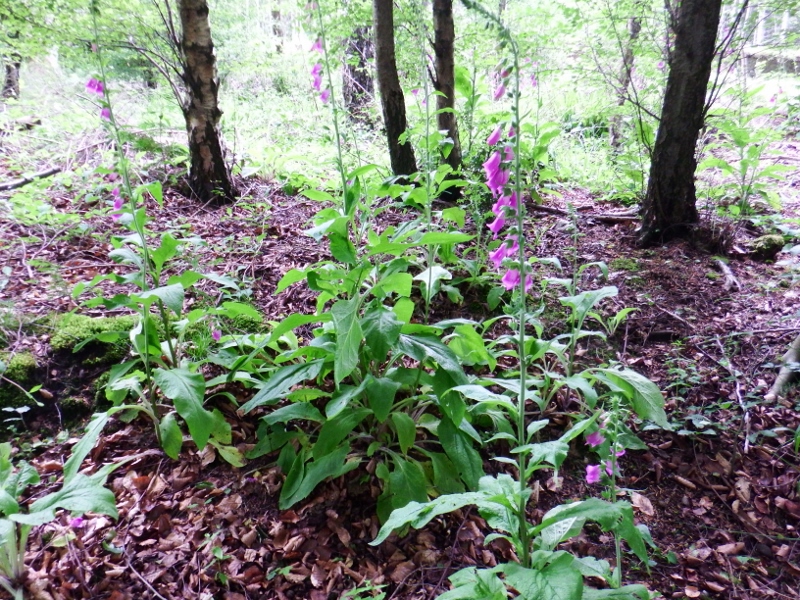
Pretty foxgloves
Thursday was big excitement because James was offered a job in Saudi Arabia. A great opportunity, we are very proud of him. So we went out for another walk to celebrate!
I love the wildflowers in Scotland, these foxgloves were every where, so rare in England.

The salmon staircase
We crossed a burn (a tributary of the river Spey) by the ford which also had a salmon staircase leading up the river. Unfortunately it isn’t salmon season so there wasn’t any to catch.

The ford

The drone
Our destination was the cricket field so James and Bill could fly James’s drone, otherwise known as his pet!
Bill was given very strict instructions on how to fly it after James had launched it but he wasn’t allowed to land it. Now Bill wants one.
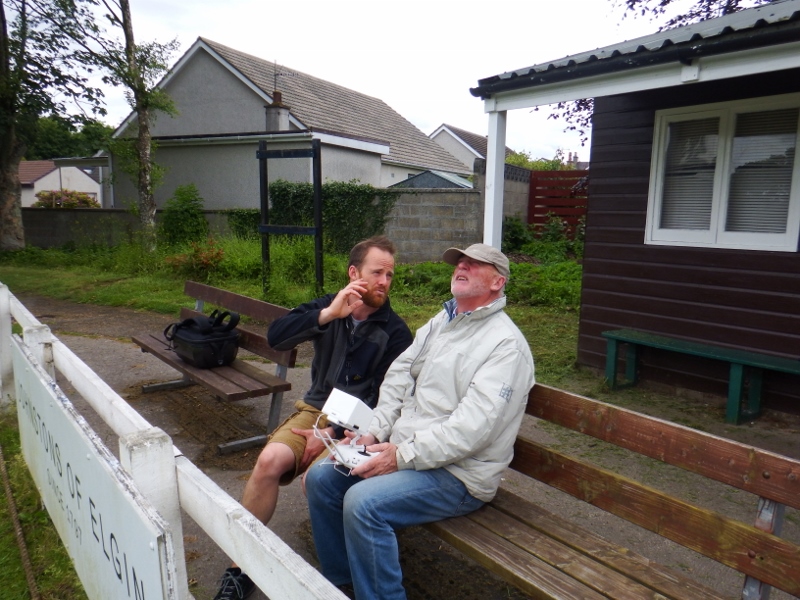
Bill in charge
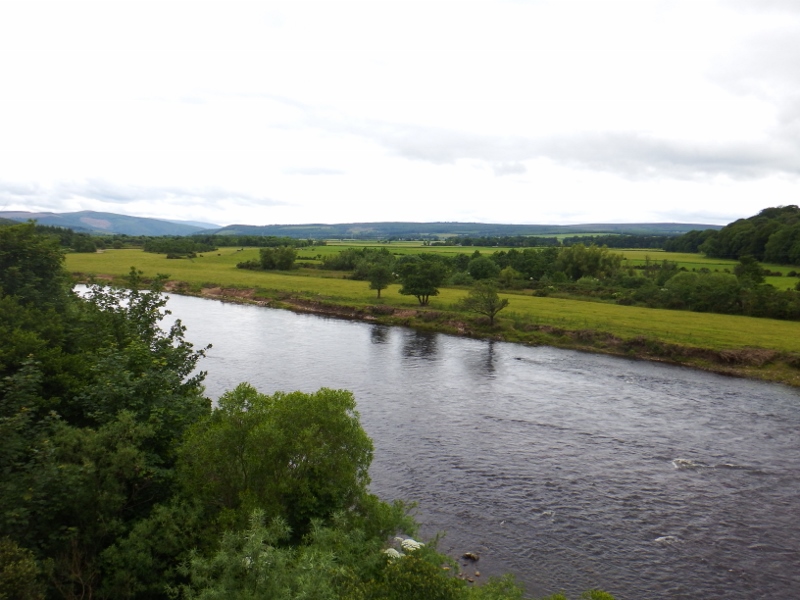
Beautiful countryside either side of the river Spey
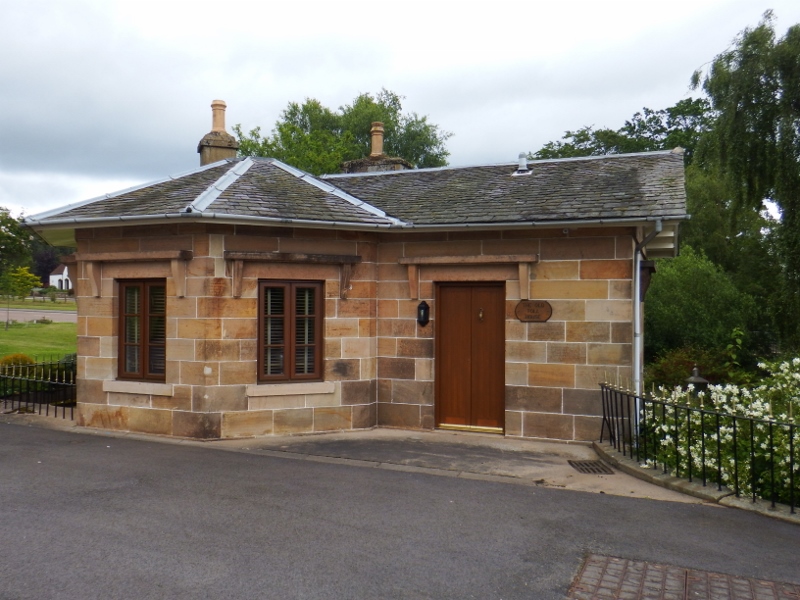
The old toll gate house
We continued our walk towards the Baxters coffee shop crossing the river Spey. This little cottage was once the tollgate for the old bridge, which is now a footpath and the new bridge lies alongside it and Baxters is the other side. Perfect.

The new road lying alongside the old road
James wanted Bill to help him put some windows in his van so that afternoon was spent working out what was needed and shopping for tools. I had a nice walk around Elgin instead. Made Chicken and chickpea curry for dinner
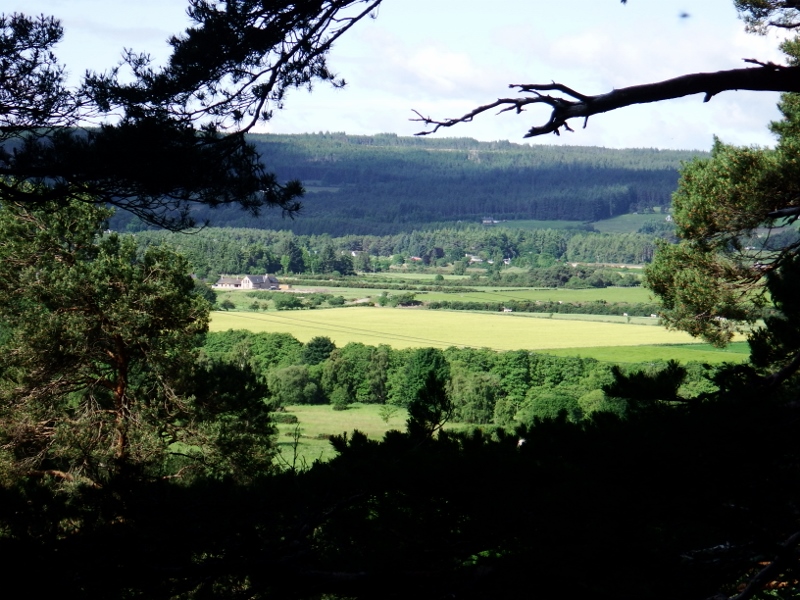
Beautiful countryside
On Friday Bill and James were waiting for some parts to be delivered so James drove us all a bit further out to see more of the surrounding countryside. We were lucky with the weather. It was normally sunny in the mornings for our walk or drive then clouded over later with the odd shower. What we really enjoyed was the light evenings. It didn’t get dark until 10.30 or even 11.00pm in Scotland.
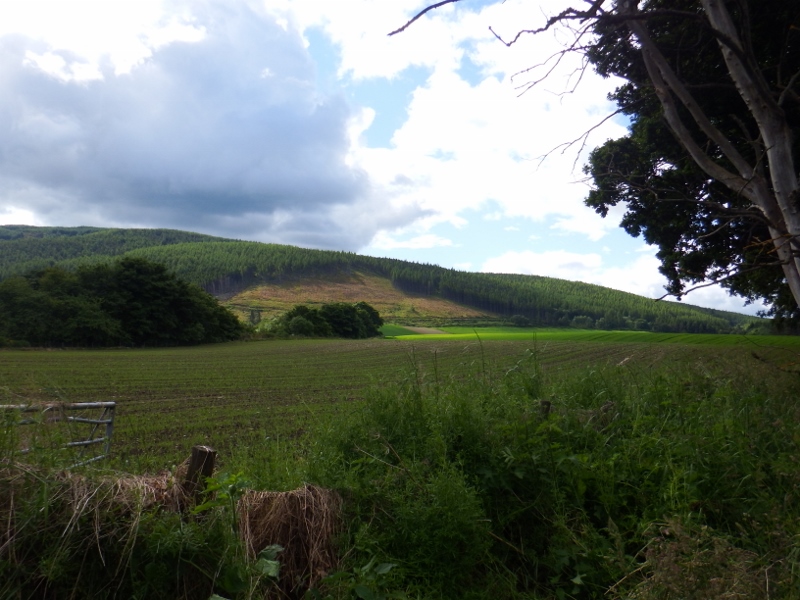
Rolling hills

James and the drone
and James took his drone.
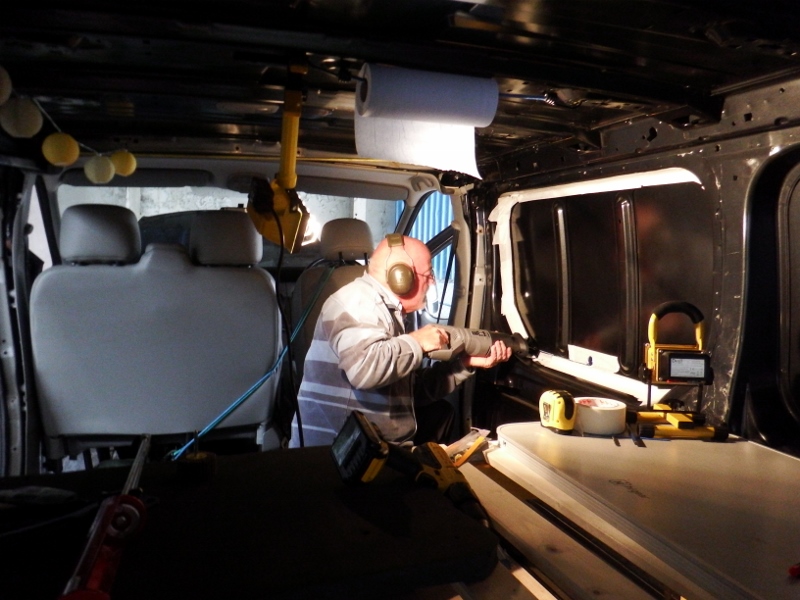
Bill cutting out the window
In the afternoon the rubber seal arrived they had been waiting for and the installation of the van windows began. Bill started with the new reciprocating saw they had bought. I could hear the noise from inside the house as Bill made a huge hole in the side of the van. James did the fileing and clipped on the rubber seal.
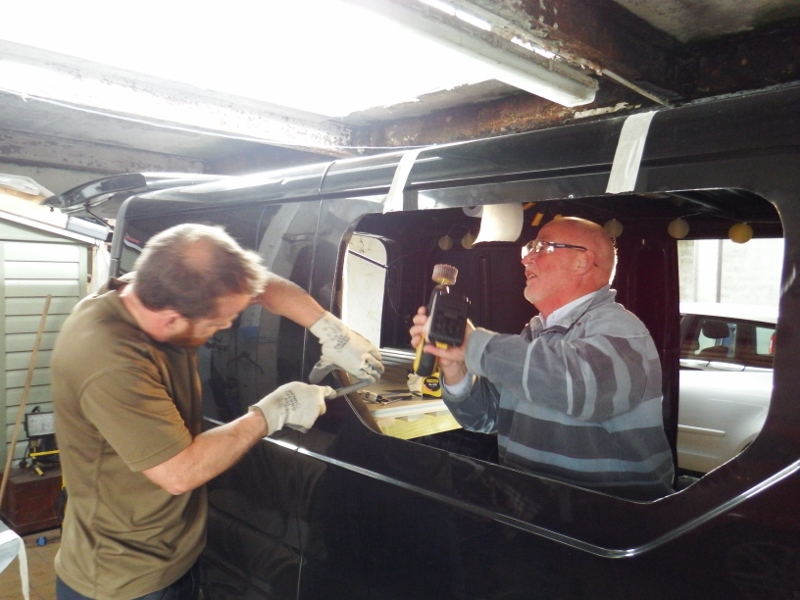
Working on the van

Cutting the other side
With Bill giving him the confidence he cut the other side himself. It was quite brave of both of them cutting 2 big holes in the side of the van. Once the rubber edging was clipped in place on both sides it was left for the day.
I had my hair cut and Hailey arrived in the evening.
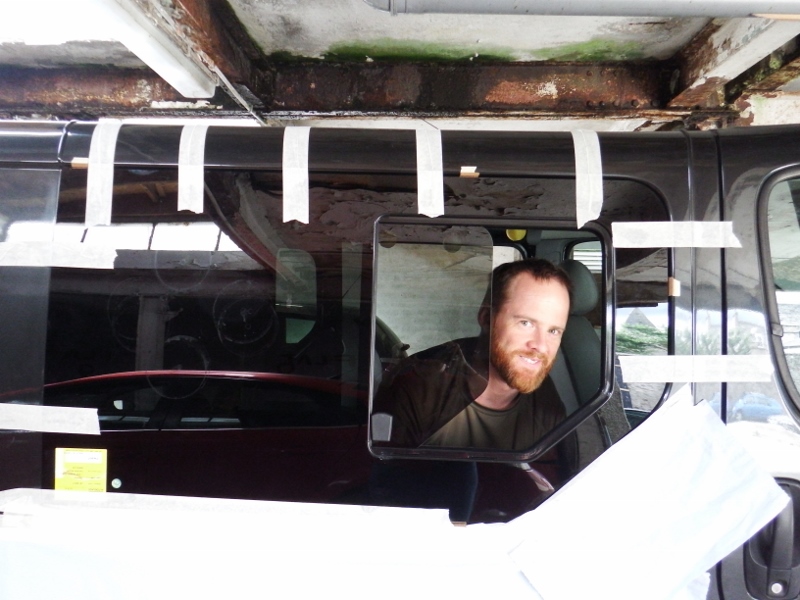
The windows in place.
In the morning Hailey and I went to the garden centre for coffee while Bill and James put the windows in. It was a two man job with one on the inside and one on the outside. They looked really good when they were finished but I forgot to take a final photo.
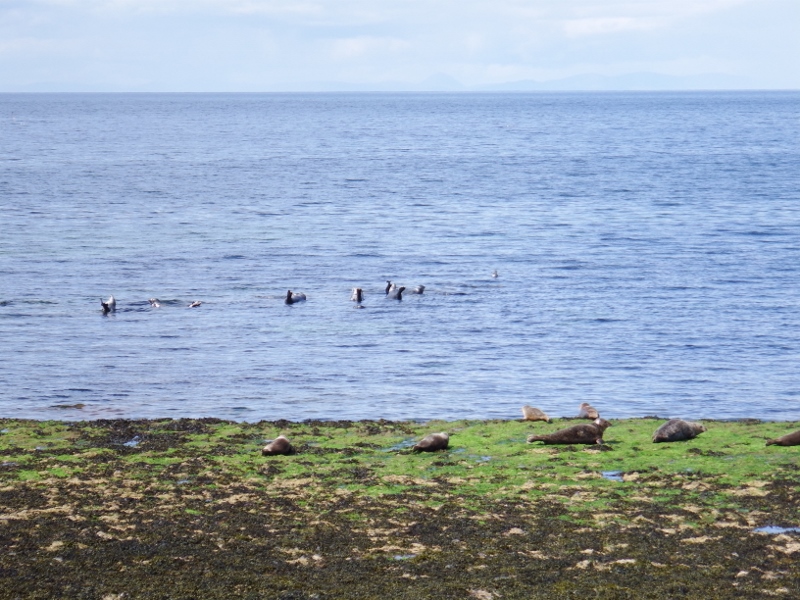
Watching the seals
In the afternoon we all went for a drive and saw these seals playing on the beach.
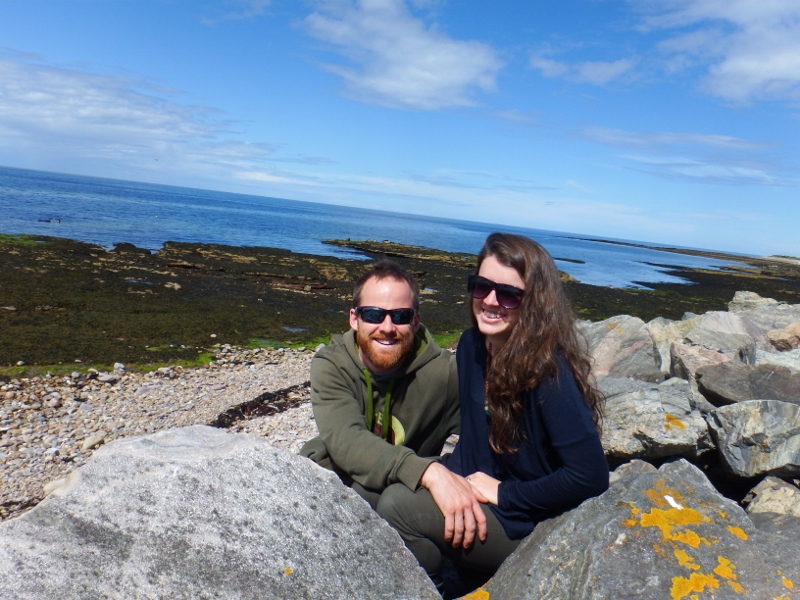
James and Hailey
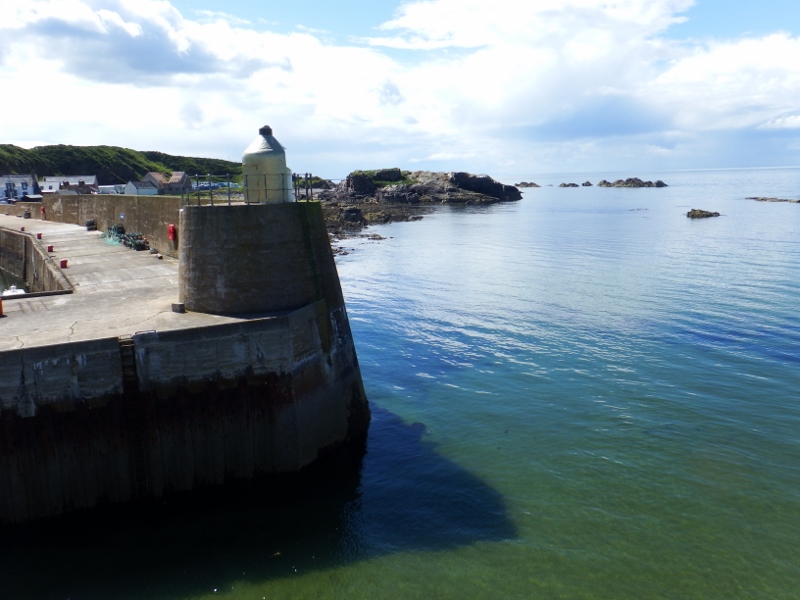
Findochty harbour
We continued onto Findochty to see the little harbour there. When we get back to the UK hopefully we’ll sail up to Scotland so it was good to look around first. The sea was really calm on that day. I wonder how often it’s like that. It was beautiful scenery.
Bill looking across the inside of the harbour.
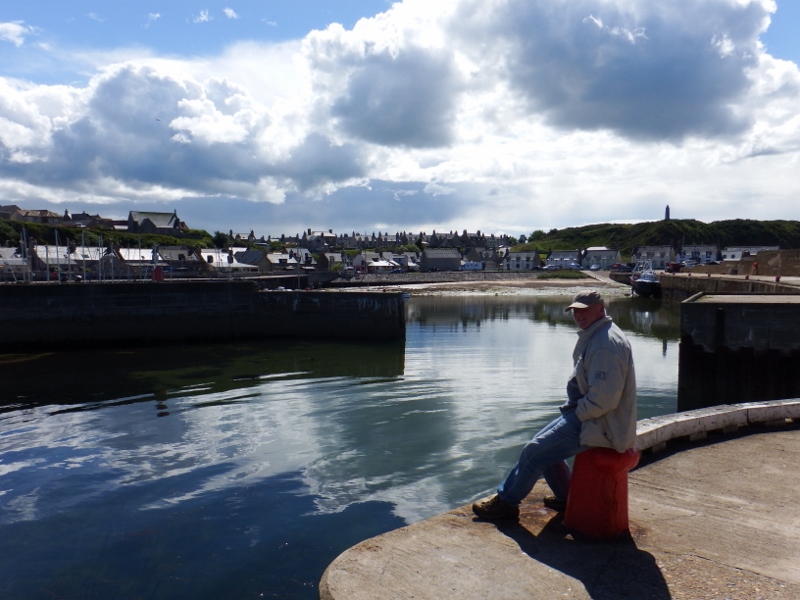

Cullen
Further along the road we stopped at Cullen which had another small harbour but we wouldn’t have been able to get Camomile in there. The town was overlooked by this beautiful old railway viaduct.
All the little towns were very pretty.

Bow Fiddle rock

Bow fiddle rock
The last place we stopped was Bow Fiddle rock. An amazing piece of sedimentary rock that had had a hole worn through it over millions of years. A very beautiful rock. We climbed down to get a closer look. It was covered in seabirds.

Gordon Arms hotel
On the sunday we enjoyed another drive across to Lossiemouth that had a small marina that would be good for us but I left my camera behind. For Sunday lunch we went to the Gordon Arms hotel for their delicious carvery.

James, Hailey, Bill and Nichola her mum.
Monday 4th July we packed our bags and left James’s house but the four of us continued together and drove for about 3 hours south to Broughty ferry near Dundee where Hailey lives. Hailey’s parents own a beautifully restored old mill. We were made very welcome and enjoyed a lovely dinner with all the family. It felt warmer now we were further south.

Broughty ferry castle
On Tuesday we went to explore the beautiful Broughty ferry castle built on the northern shore of the River Tay. This 15th century coastal fort has faced many battles and sieges, and was rebuilt in the 19th century as part of the River Tay’s coastal defence system.
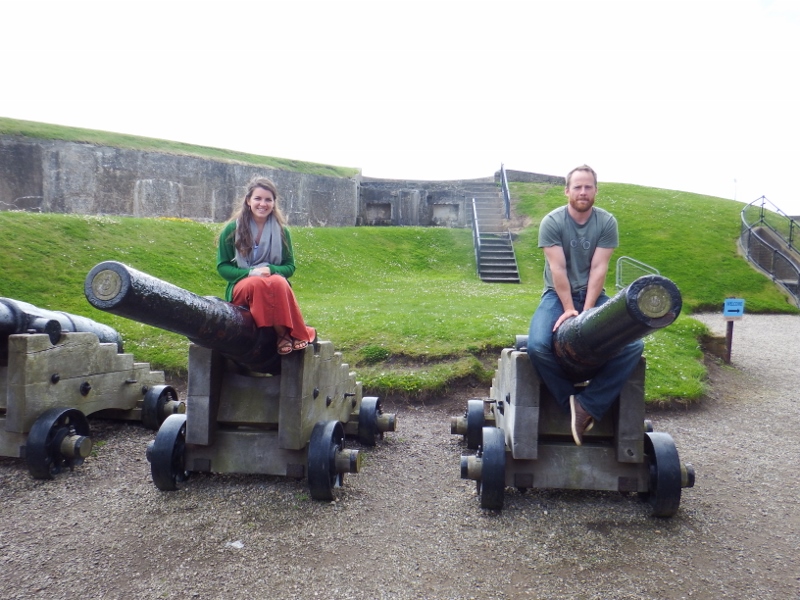
James and Hailey being big kids. Haha

The entrance gates
The wonderful old gates.

The new bridge
In the afternoon we continued further south to Edinburgh passing the new bridge being built over the Forth river.
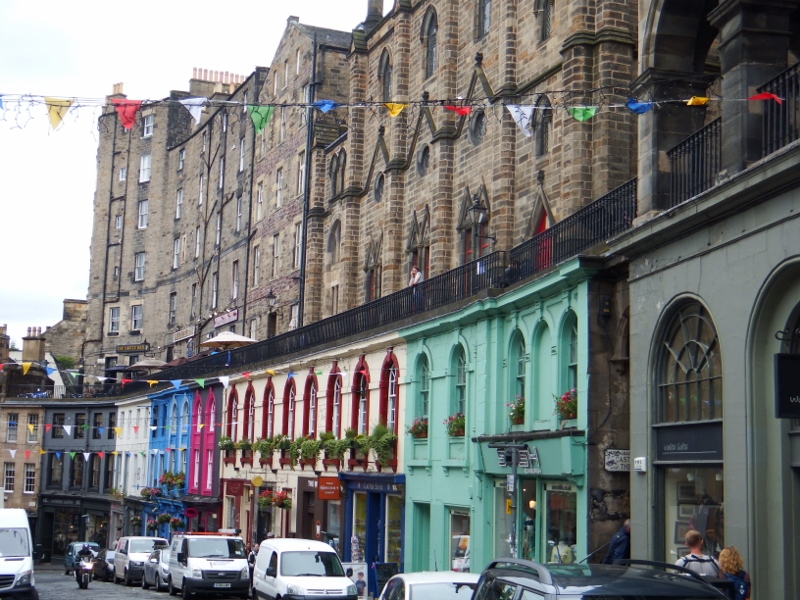
Victoria street
Wednesday 6th was Bill’s birthday. We had stayed the night in an AirB&B (we stayed in someone’s apartment) and James and Hailey had cooked Bill a wonderful steak dinner. In the morning we all had eggy bread and bacon before exploring the city. Edinburgh is a beautiful city. In the centre all the old buildings have been wonderfully preserved.
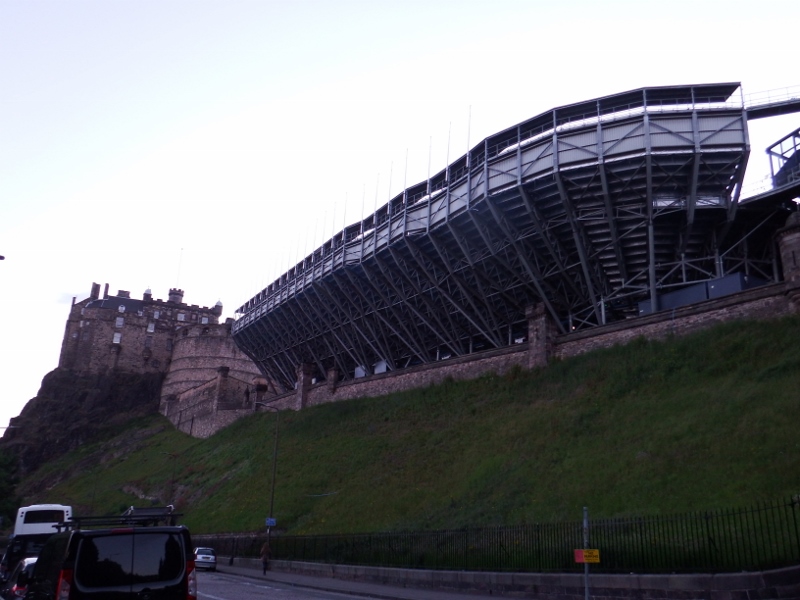
The walls of Edinburgh castle
This amazing structure has been erected up over the outer walls of Edinburgh castle for the military tattoo that would be taking place the following week. Once the festivities are over the whole thing is taken back down again.
We’ve been into the castle before so this time we went into St Giles cathedral. There’s so much history in Edinburgh, it’s a wonderful place.
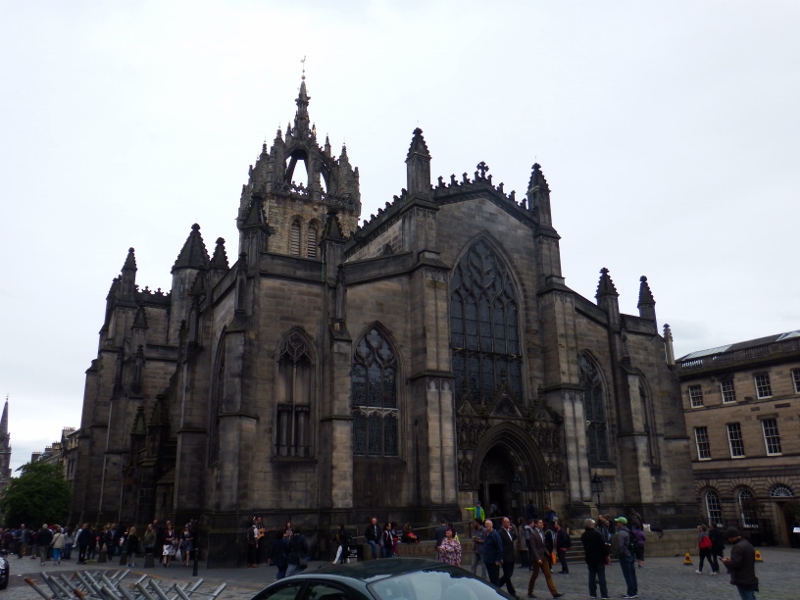
St Giles cathedral

Bill in the VR headset
We walked down the hill into the shopping area to look around the shops. James decided Bill needed to try a virtual reality headset. To demonstrate it’s use it was showing some off piste skiing and a roller coaster.
All too soon it was time to drive to Edinburgh airport and say goodbye to James and Hailey. We had enjoyed our holiday within our holiday.
We arrived at Gatwick and Thomas picked us up. Most of Bill’s birthday was gone but the next day Thomas cooked him a delicious egg and bacon birthday breakfast. I spent the day packing our bags which wasn’t easy with all the bits we had bought for the boat and ourselves but eventually it all fitted. Bill spent one last day with Thomas in the unit. Thomas cooked our final meal which was a delicious roast pork dinner with crackling that melted in your mouth and scrummy roast potatoes. Sonal’s mum Meena joined us and we gave her a beautiful orchid for letting us stay with her (she lives 6 doors away from Thomas).
On Friday morning with a heavy heart it was time to say goodbye to Sonal, Meena and little Slinky. Thomas drove us to Heathrow after cooking us another wonderful breakfast.
We had so enjoyed the quality time we had spent with both the boys and Sonal and Hailey.
Thank you to everyone who we stayed with and apologies for those we didn’t get to see this time.

Islands of the Seychelles
As we came into land at Mahe in the Seychelles I could see the islands from the window.
Our journey home continues.
Where are we now?
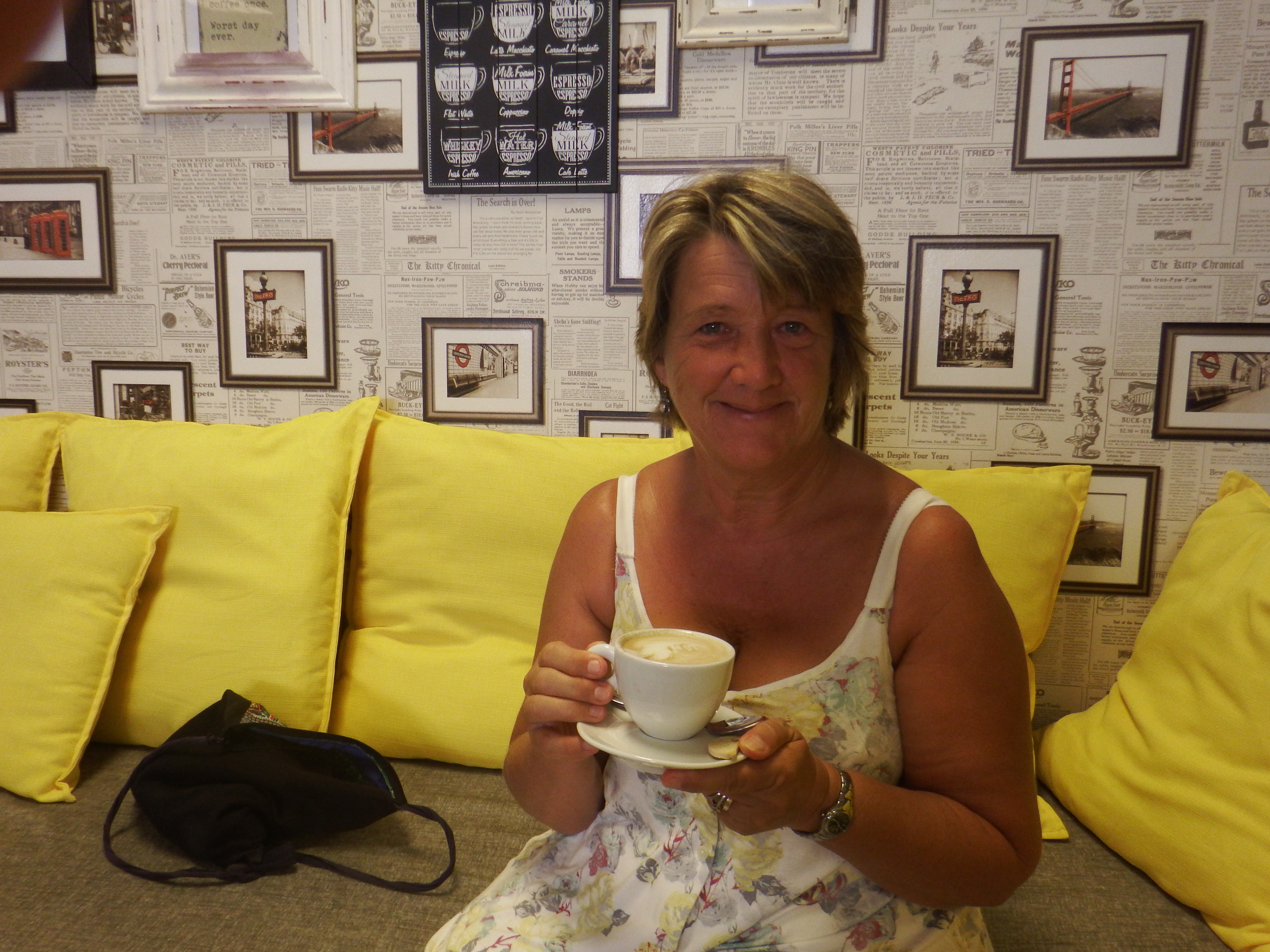
Sue with her first decent coffee in weeks
Just a quick blog to update where we are. After a protracted and arduous 10 day journey from Chagos to Seychelles we finally arrived on Tuesday 14th June. After checking in and fulfilling all the normal formalities we were able to explore the town. As most of you know I like my cappuccinos and a nice coffee shop was found.
The next task was find somewhere to put Camomile so she would be secure for 3 weeks because we were planning a trip.
Where are we going?
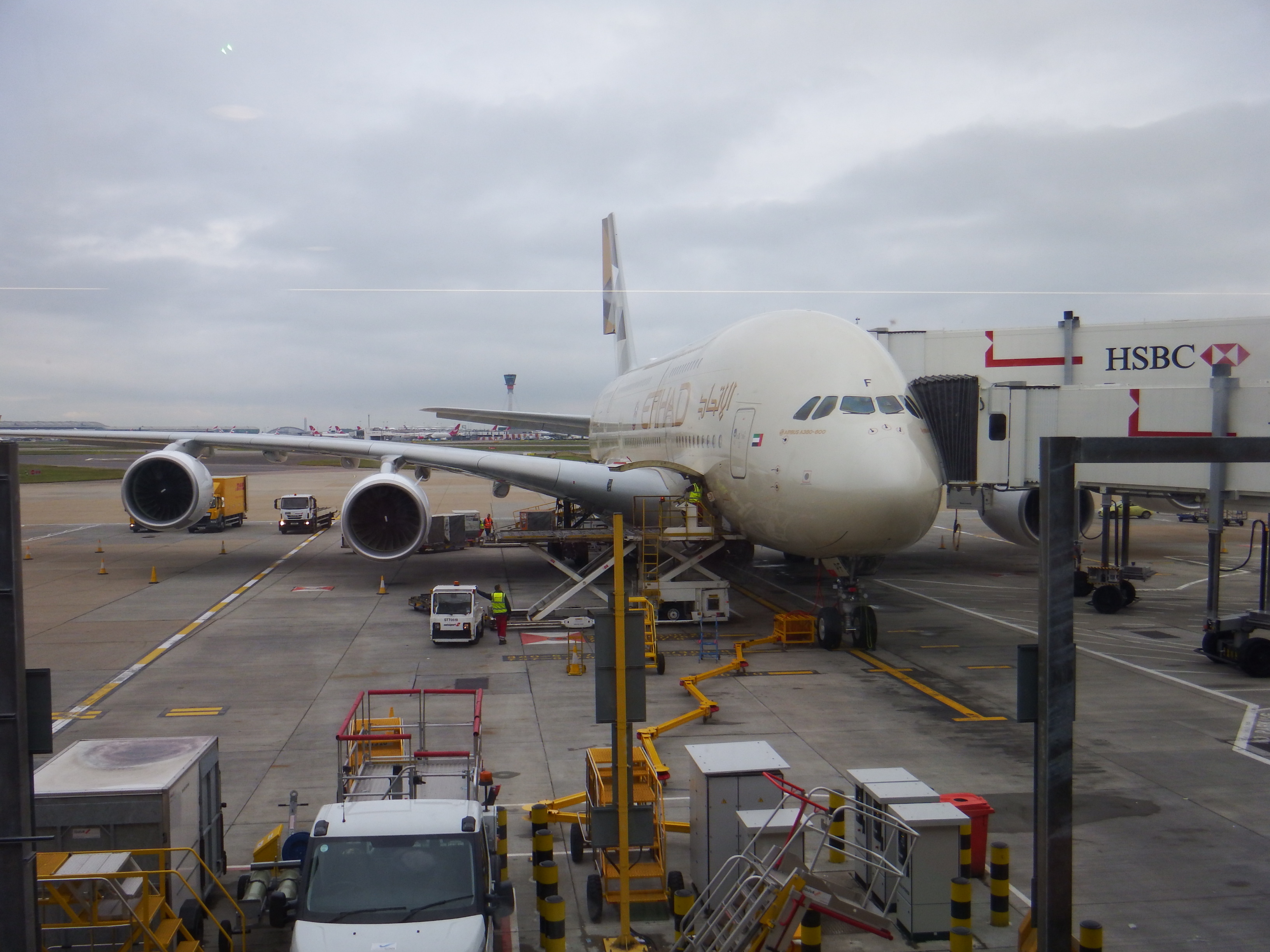
Ethiad A380
Within 2 days Camomile was ensconced in Eden marina and we had booked our airline tickets. This is the airplane we flew on. It’s an A380 with Ethiad. The sky looks a bit bleak doesn’t it?
Where are we?
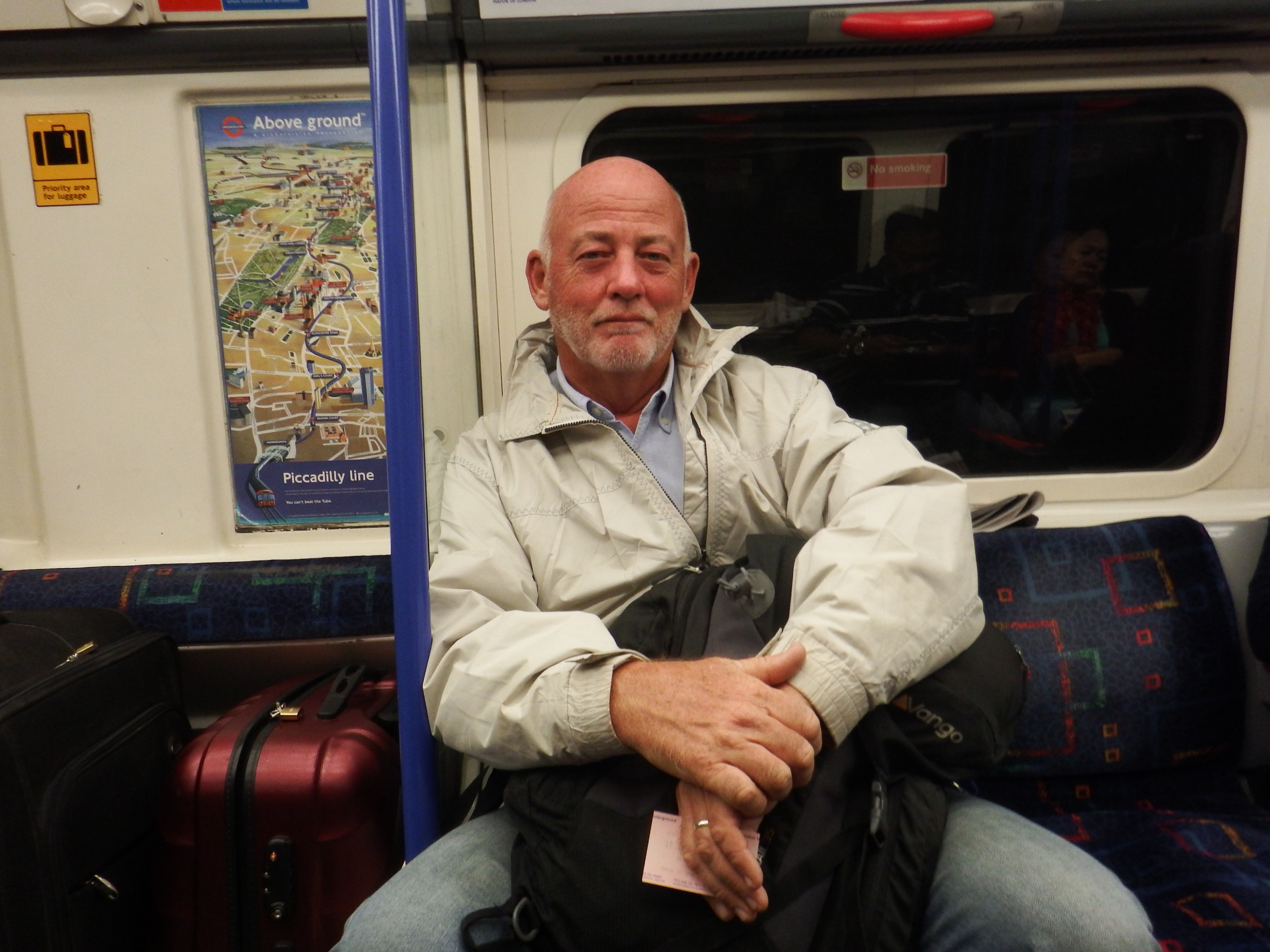
Bill on the tube
This looks like the London tube. Bill was a bit sleepy, he’s also wearing a coat!
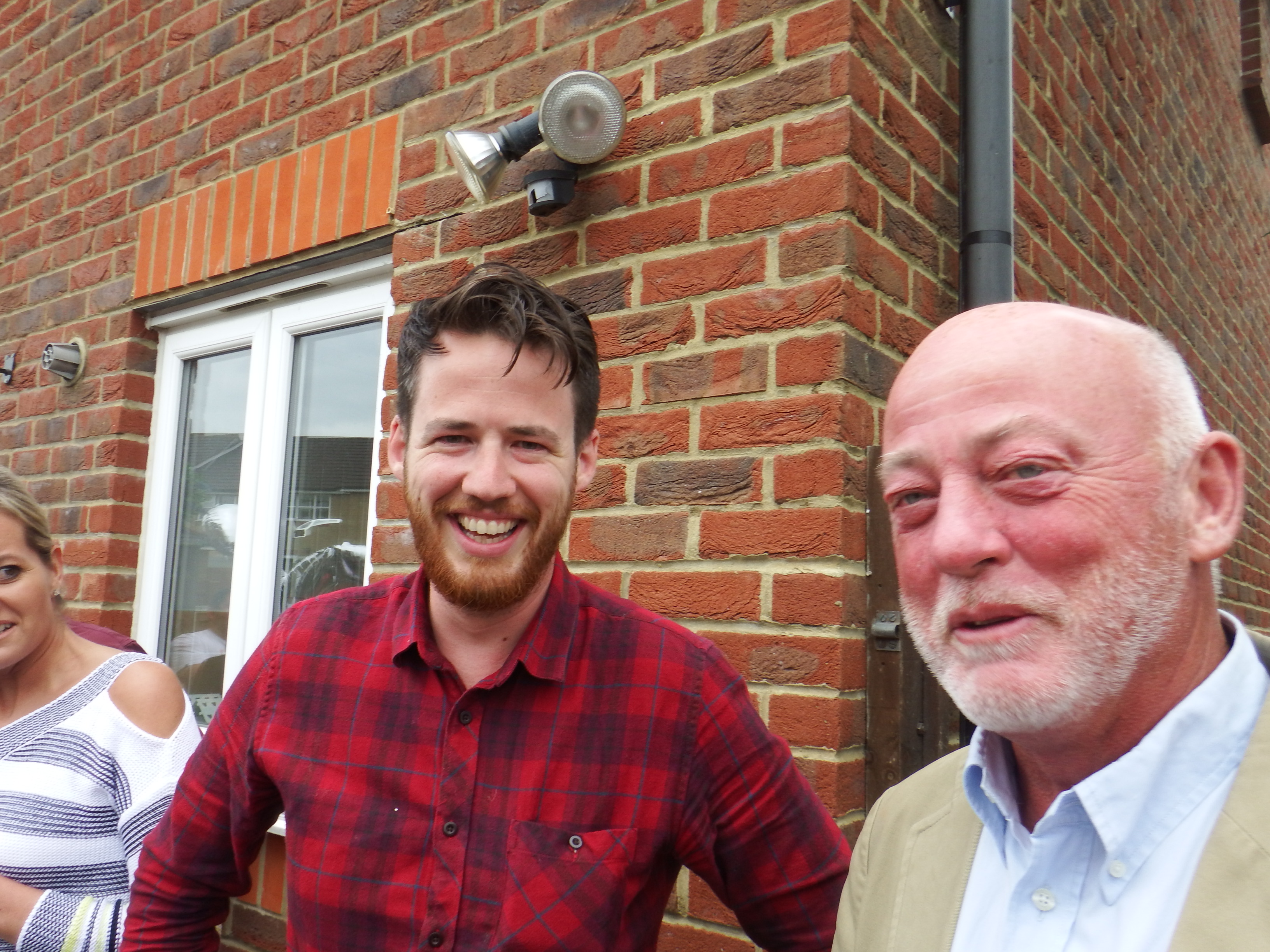
Thomas with Bill
This was our goal. Our youngest son Thomas was 30 last week and his fiancee Sonal had arranged a surprise party for him and we were the surprise guests. He had absolutely no idea we were in the country. We didn’t tell anyone, in fact we only knew ourselves the day before. It was impossible to plan and say for certain we could come because we had to make sure Camomile was secure first.
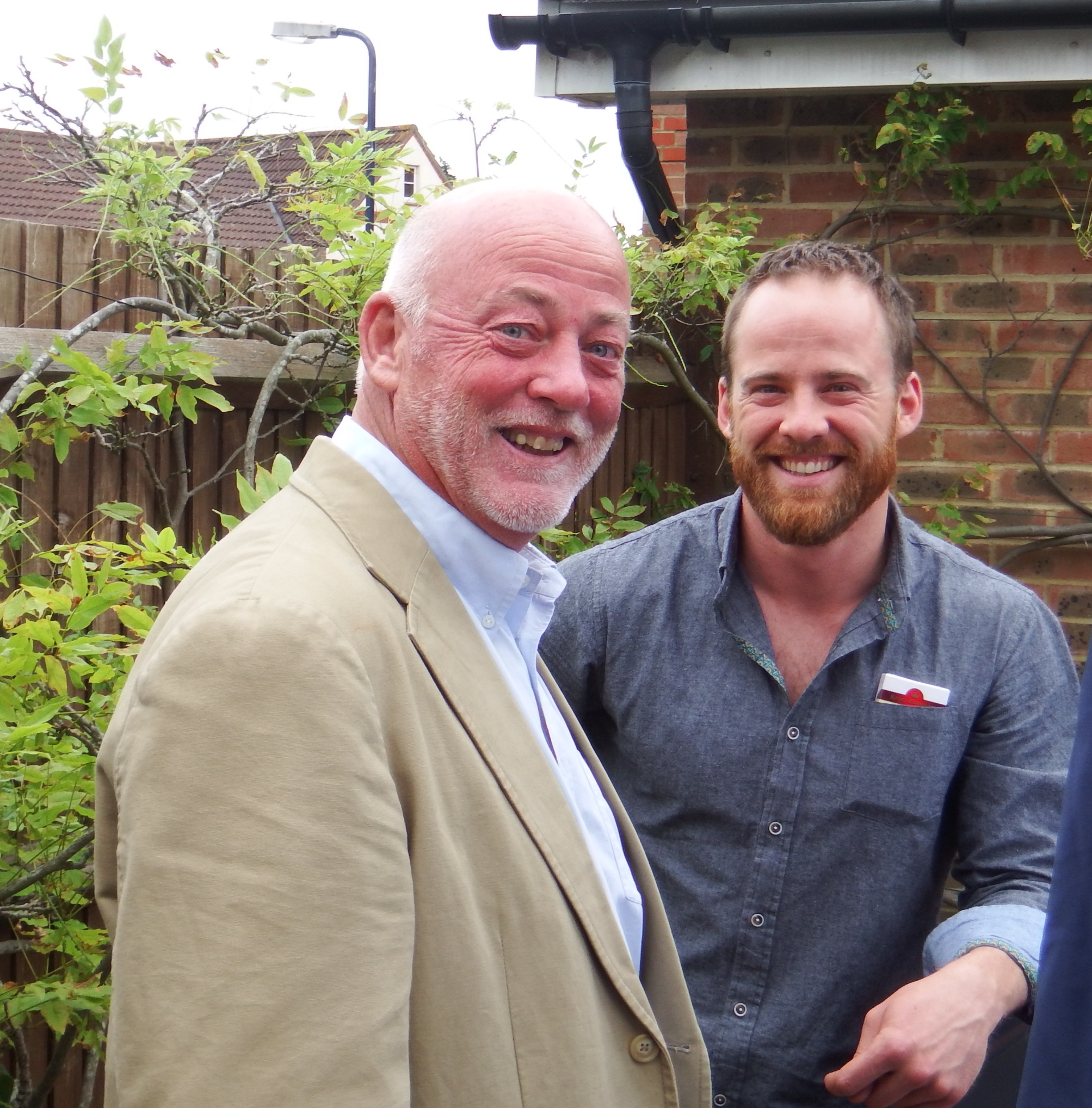
Bill with James
Our eldest son James didn’t know we were coming either and Bill and I managed to get to Maidstone without being seen despite the fact that James had been walking around Victoria station at the same time as us! Sonal was informing us of his whereabouts so we didn’t bump into him by accident. Once we knew he was on the train we caught the next one and Sonal secured us in her Mum’s house just a little way down the road. We organised an amazing entrance. James was filming the ‘Surprise’ for me live on skype thinking we were still in the Seychelles. At the same time we were walking around to the back gate and I walked in to face James. The look on his face was amazing and he shouted ‘what are you doing here?’ then when Thomas saw me his face was fantastic as well. Meanwhile Bill was still standing outside. I opened the gate and said ‘look who’s here’ Thomas was so excited to see Bill here too and then James joined them and there were lots of group hugs.

Thomas and Sonal with his birthday cake

James, Bill and Thomas
This morning Thomas cooked an amazing Father’s day breakfast for Bill and we ate it sitting in the sunshine.
We’ve got 3 weeks here so if you’ve got a spare room be careful you might get a pair of church mice standing on your door step!
Camomile arrived safely at Chagos
After a fairly slow passage Camomile has arrived at the island of Boddam in the clear blue lagoon of Salomon atoll in the Chagos archipelago.
We had a difficult start on 5th May. We awoke to strong winds of 25 to 27 kts and Camomile was being blown around in the small space in the lagoon we were anchored in. We had to move at 6.30 because we were being pushed towards the wall and Bill was worried if the anchor let go we would crash into the boats tied to the wall behind us. It was tempting just to go straight out to sea but Camomile wasn’t ready, the sun canopy was still up (we can’t sail with it like that), the outboard was still on the dinghy and the Hydrovane wasn’t ready. Once outside the lagoon we couldn’t put an anchor down because the depth was 25 to 30 metres, that’s why we hadn’t anchored out there in the first place. The two boats that were anchored there were starting to drag so instead we just motored slowly up into the wind for about an hour then turned the engine off and slowly drifted back. By 9.00 the wind was dropping and we had managed to get the canopy away and the dinghy down. The outboard was taken off, the dinghy lifted and extra lines put on for the journey and, after tidying up down below, we were ready to go. Norsa and Solstice were ready to leave from the lagoon too and the three boats motored towards the pass to leave Addu Atoll and the Maldives.
Once outside the first thing we noticed was the strong east going current and our course was south west. Any one making this passage should try and get some westing in as early as possible. We raised the sails straight away and sailed for the morning but with the strong current and the southerly winds we were being pushed to far east. There was quite a swell running after the overnight squalls and the seas were 1 to 2 metres high. By 22.00 that evening the wind died and the engine was back on. While motoring we used the opportunity to motor more south west to try to regain the ground lost but the current was now 2kts against us and the best speed we could make was 3.5 to 4 kts. The engine stayed on all night. 6th May
The next morning our 24 hour distance was a disappointing 106 miles. The wind came back and the engine was off for the morning but during the afternoon it was on and off several times trying to make the best course we could. Overnight a fishing boat crossed our path but that was the only traffic we saw for the whole trip. 7th May
On the third morning I saw a pod of bottle nose dolphins, they were much bigger than the dolphins we normally see, they only played around the boat for about 10 minutes then they were gone. Our 24 hour run was now down to 94 miles, normally we expect to do 120 to 150 but this was going to be a slow passage. The wind had dropped to 5 to 7kts on the nose and we couldn’t do anything with it. We tried tacking to the west and almost went backwards, tacking to the east which just took us more off course and towards the shallow speakers bank, and so resigned ourselves to just motoring forward into the wind with the current against us. We were making 2.5 to 3.5kts over the ground at best, our actual boat speed was 2kts above that. We took the sails down overnight because the main was just flapping and damaging itself. 8th May
At 4am the wind changed direction and the grip of the current released us slightly. Bill put the sails back up and the engine was turned off at 4.30am after having been on for 37 hours. The last 6 hours of the journey were quite pleasant as the wind moved round to the south west and our course was now more southerly having passed speakers bank and heading for the entrance to Salomon atoll. Our 24 hour run had slightly improved at 97 miles. We entered the pass at
05 18.355S 072 14.407E
and headed for a waypoint at
05 18.952S 072 14.964E
Once we reached it we turned 90 degrees towards a waypoint at 05 20.523S 072 13.509E
along that track there are several marked coral heads but none of them had less than 7 metres of water over them. Once you get to the waypoint then it’s up to you to pick your way among the bommies, there are quite a few and some only a metre or two below the surface. GOOD LIGHT IS ESSENTIAL. We are attached to a buoy at
05 21.326S 072 12.627E
Bill spent most of the first day free diving on the buoy to see what it consists of. There is a piece of chain going round the bommie with several lengths of thick rope attached to it. Each piece of rope has a buoy and Bill had 2 pieces of rope tied to each of them. Our anchor is 10mm chain but Bill kept the old 8mm chain and that was loaded into the dinghy. With me in the dinghy and Bill snorkeling and watching the chain (the water is as clear as a bell)he gently laid a length of chain around the bommie. Norman had his dive kit on securing his own mooring but came over to conecct the end of the chain to a shackle and tighten it up. The chain leads right up to the deck so we are being held with chain attached to a massive coral head. I don’t think we will be going any where. The whole point of coming to Chagos is to get away from the northern storms and wait for the south east trade winds to start before we can head west. It’s going to be tough stuck here!
This place is amazing, a true paradise island, uninhabited for at least 40 years. There are lots of ruins here but very little remains of the past inhabitants. There’s a ‘yacht club’ on the beach which we all head for about 4pm for sundowners before it gets dark. After dark when a torch is shone across the ground the most enormous coconut crabs come out. They are about half a metre claw to claw. I wish I could post some photos but you’ll have to wait until we get to Seychelles. So here we are, stuck, with Norsa, Antares II, Solstice, and WOW.
This blog should come through onto facebook but remember I can’t see facebook or any of your questions or comments. Please email mdqf6 @ sailmail.com (take out the gaps)if you want to contact us.
Camomile leaves the Maldives

My lovely card
Firstly I want to say a big thank you for all my wonderful birthday messages on facebook and email. It means a lot to me being so far from home. I had a wonderful day as many of you saw from my photos. It started with Norman and Sara coming over first thing with a little present and a home made card for me. How thoughtful.

The bar at the Equator village

The wonderful pool with the spa in the building behind.
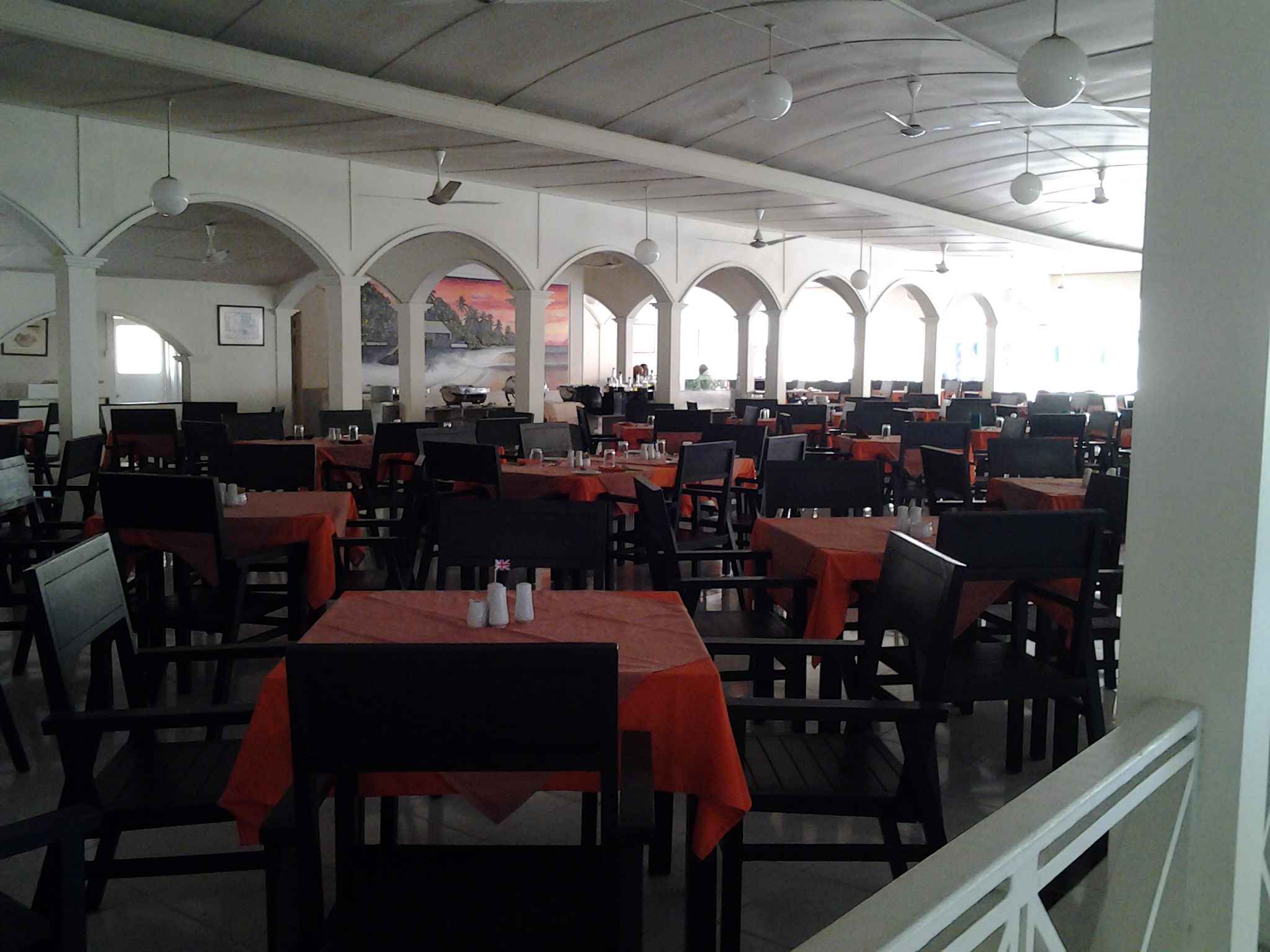
The dining room

Our position in the Addu atoll
We have spent the last few days doing last minute shopping, getting the boat ready for the next part of our journey and checking out of the Maldives. We have been anchored at
Camomile loses one of her 9 lives

The sun canopy came apart at the seam
Our nightmare started as a bad dream. We arrived at the entrance to Maavah Kandu at midday after a 4 hour sail from Veymandhoo to find squalls on our path. One of the things essential for entering passes is good light to see the reefs either side. So we hovered for an hour to allow them to pass. This was the time the sun canopy chose to come apart at the seam literally. We shouldn’t have had it up but it was rolled away as quickly as we could. Unfortunately some more squalls were advancing from behind us so we just had to go in. The entrance to the pass is at 01 54.85N 073 14.62E. It’s an easy entrance with a big beacon marking it and the reef could be seen clearly on both sides, even in the bad light.
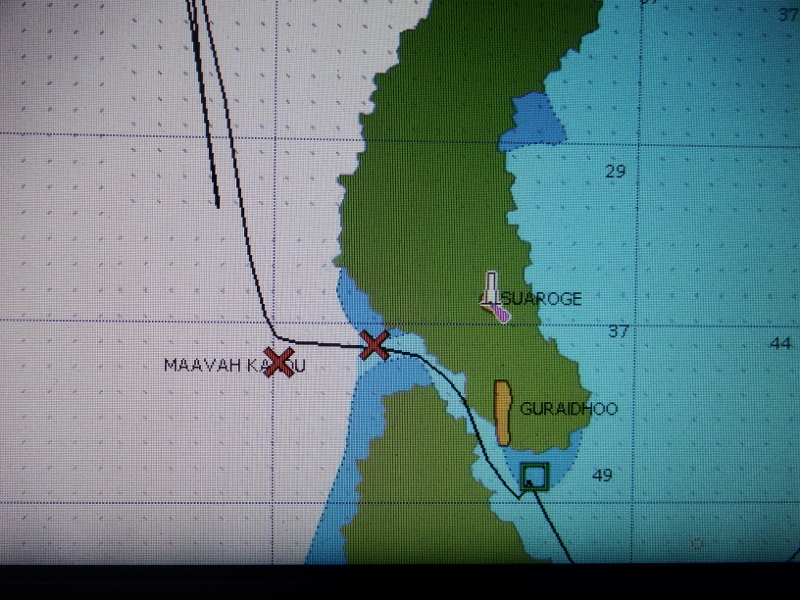
The outer reef
We made our way inside. The first thing we saw were 6 big local fishing boats, always a good sign if the local boats are sheltering in an anchorage. We motored south passed the village to the reef on the western side of the atoll. The wind was blowing strongly from the west but it was calm inside. We had a waypoint from a yacht that came through here last year. We went to it but it was in 30 metres. We motored towards the reef and dropped the anchor on a sandy reef shelf in 10 metres and fell back. The anchor pulled out. We made a second attempt this time going closer and dropped the anchor in 5 metres and fell back into 15 meters. This is NOT the way we like to anchor but we had no choice, we couldn’t go back outside and the light wasn’t good enough to travel through the atoll to see what we could find. This time it held well but Bill put out all of our 60 metre chain to allow for the sloped drop off.

Bill checking out the reef
We could see coral heads dotted around the sandy reef top and Bill took the dinghy over to have a closer look. The nearest was in our swinging area and only had about a metre clearance, we draw 2 metres. We worked out that even if the wind shifted due north in a squall we would still have a comfortable margin of safety. The alternative seemed to be motoring in circles all night. Mistake no 1, we should have moved but the anchor was holding this time so we stayed.
Our anchorage was
01 52.609N
073 15.139E
All was well the wind was dropping. Bill had the clever idea of marking the reef so we could keep an eye on it in the dark and took an orange buoy with some reflective tape tied to a bit of fishing line with a bit of chain on the bottom, over to it. We had the depth alarm set at 3 metres and the drag alarm set at 0.02nm.
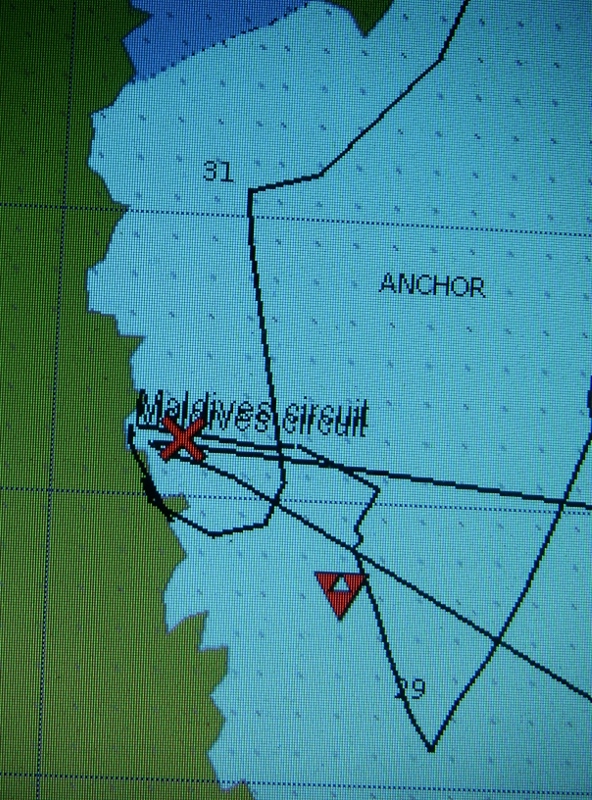
Our anchorage. Our position by the cross. The triangle is boat waypoint from last year
We settled in for the night and ate our dinner. Things started going wrong at about 9 ish. The wind started swinging around to the NW and it started raining. When shining a torch on the buoy we could see we had got closer to it. Within half an hour the depth alarm started going off because the wind had picked up and was now coming from the north. We decided to put a stern anchor out on our starboard side to pull us away from the reef. It took a while but we managed it in the dark. Bill took the dinghy round to the port side to push us off while I winched the anchor warp in. We were back in 5 metres, not good but not bad. Then the bad started. The wind veered round to the NE and picked up to 20 to 25 kts. The bad dream was turning into a nightmare. With the position the boat was now in that meant it was blowing onto our starboard beam and we were pinned onto the sand shelf with the reef a few meters away with 2 or less metres under our keel. The depth alarm kept going off so I turned it off because it was very distracting, I also turned the drag alarm off because we weren’t dragging. We waited about 20 minutes to see if it was going to drop but it didn’t. The wind was now blowing 27kts solidly from the NE and the sea was swiftly getting into a serious chop which bashed the starboard side of the boat making it jiggle which stressed both the anchors to the point that if it continued they were likely to let go. Bill was looking worried – not a good sign on our boat. We tried to decide what to do. Bill said ‘I’m prepared to lose the stern anchor but I’m not prepared to lose the boat’. We had to act quickly. A buoy was tied to the stern anchor. Bill started the engine although, as we were pinned to the sand shelf by the ever increasing wind, it was of little use unless we could move sideways and we don’t have bow thrusters. An additional problem was because all the chain was out of the locker I was needed in the forward cabin to poke it down otherwise it would jam and that was the last thing we needed. The plan was I would drop the stern anchor and quickly run inside while Bill started taking up the anchor chain (he has a remote control in the cockpit). During all this the anchor hadn’t budged, we weren’t dragged, Bill intended to motor forward toward the anchor as the chain was being raised, allowing Camomile to drift further onto the sand shelf in front of the coral head. With the chain two thirds in we would then stop raising it before it took us too far over the reef and power hard forward right using our starboard propwash to perform a tight turn and drag the rest of the chain and the anchor off the shelf and into deeper water away from the reef where we could continue raising it. It was dark, it was raining and it was risky because we didn’t know how shallow the sand shelf was or if there were any more bommies further forward, but we had no choice. With the wind increasing we needed to act quickly or Camomile would be lost. So with adrenalin pumping that’s what we did. The stern anchor fell away quickly and Bill started immediately to lift the anchor, I ran through the boat to start the job of poking down the chain, AARRGG the chain jammed half way up because it was straining so badly. If the fuse blew at this point it would be game over! Bill was pushing the up button, then the down, then the up, I was yanking it from below and managed to free it. Camomile swung into less than half a metre under her keel but thankfully there weren’t any bommies there and she motored forward dragging the anchor off the shelf with her and the rest of the chain was brought up. Phew. We did it! High fives all round. I was shaking like a leaf.
We were in deep water but the problem wasn’t over, what do we do now? We both thought of going back out the way we came in but the wind was now a steady 27 kts coming right into the entrance. We could hear the waves crashing onto the reef on the other side. To go out would be madness, we weren’t ready for a deep sea trip. The next atoll was an overnighter. We also still had the dinghy down which was thrashing around dangerously on the stern. We motored out into 50 metres fairly sure there weren’t any reefs in the area so we could lift the dinghy onto the davits. It was too rough for Bill to do it his usual way of getting in the dinghy, attaching the davit wires while I winch them up. He managed to get the stern wire on while I held the bow in with the painter, and start lifting it. Then while kneeling on the bathing platform he managed to get the forward wire on and lifted that up too. Then we both winched one end each once it was out of the water. During this whole operation it was still raining we were both soaked and, for the first time for months, feeling cold.

Our night track
All of this had taken about 2 hours and it was now 11pm. Bill decided to motor slowly up wind in an area we knew to be free from reefs having checked Navionics, google earth and Bing, which took about an hour. Then the engine was turned off and we hove to under bare poles gently drifting back through the deep water at just over 1 knot. The boat was stable in the local chop and still being inside the reef there was no swell. We drifted 4 miles in a line we knew to be safe then turned round and did it again. It was our only option there was no where else to anchor that was not a reef or 40 meters deep. We took it in turns to cat nap but neither of us could sleep properly. Ironically the wind had started dropping and gone back round to the west but we made the right call. If we’d stayed there we would have lost the boat.
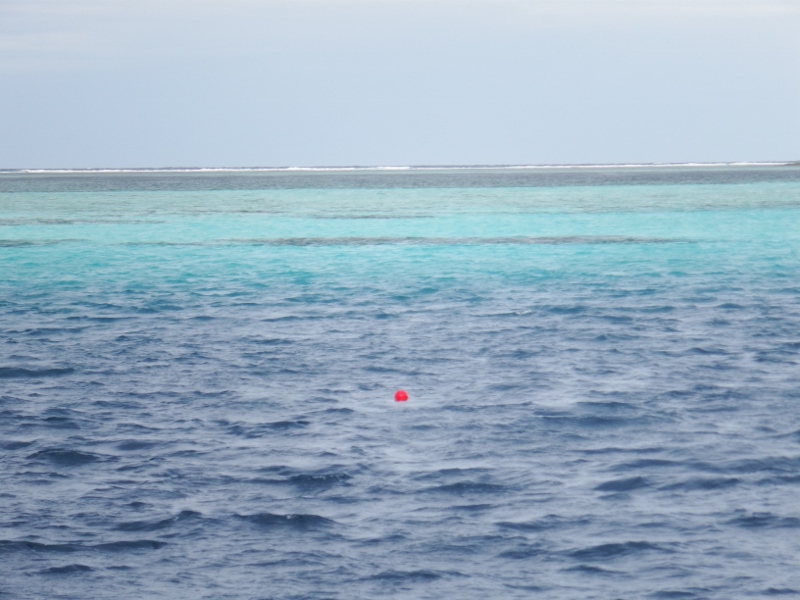
The little red buoy with the fateful reef behind it

Bringing the anchor warp back on board
At daybreak we motored back to our anchoring spot to see if we could recover the stern anchor. Amazingly it was still attached to the red buoy and we managed to lift it back on board on the windlass.
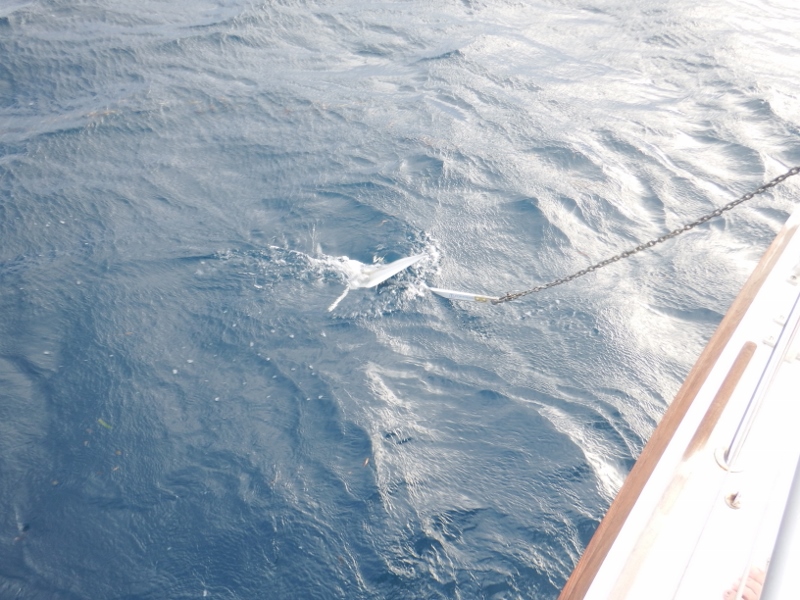
Hurray here comes the anchor

The last missing part
The final event was as we were motoring out of the area we noticed an orange buoy in the water with reflective tape wrapped round it, there was the float that Bill had marked the reef with that had floated away! I picked it up with the boat hook.
So everything present and correct. Another one of Camomiles nine lives used up.
North Male Atoll
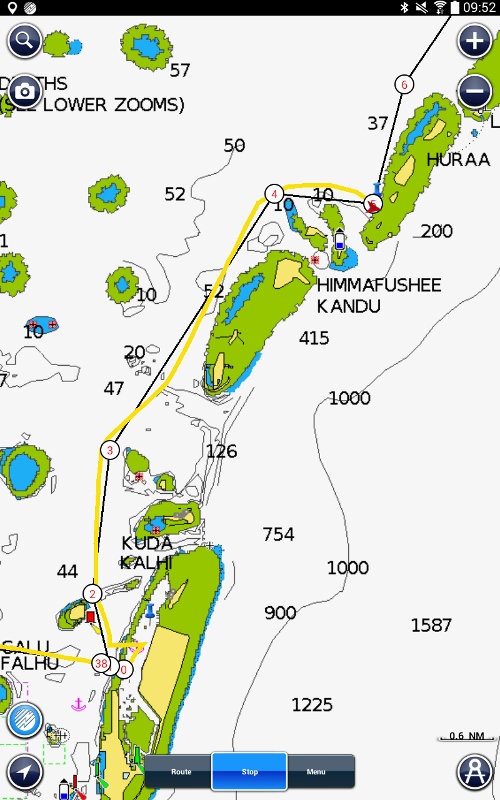
Our route north
After 3 days in Huhulmale Camomile and Norsa left to explore the north Male atoll. As we had come down the outside of the atoll we hadn’t had a chance to explore inside the atoll so the plan was to spend a week or two doing it together. On 23rd March, after a few last minute jobs, we headed north to Masleggihura island.
We anchored at
04 19.490N
073 35.502E
in 12metres of water on sand.

In front of resort
The overwater bungalows of the Four Seasons Kuda Huraa were just in front of us. It’s difficult to see in this photo but behind these bungalows are the surfing waves that come across the Indian Ocean hitting the shallows and bringing in a great right hander.
It was good to see our sailing buddies across the way from us.
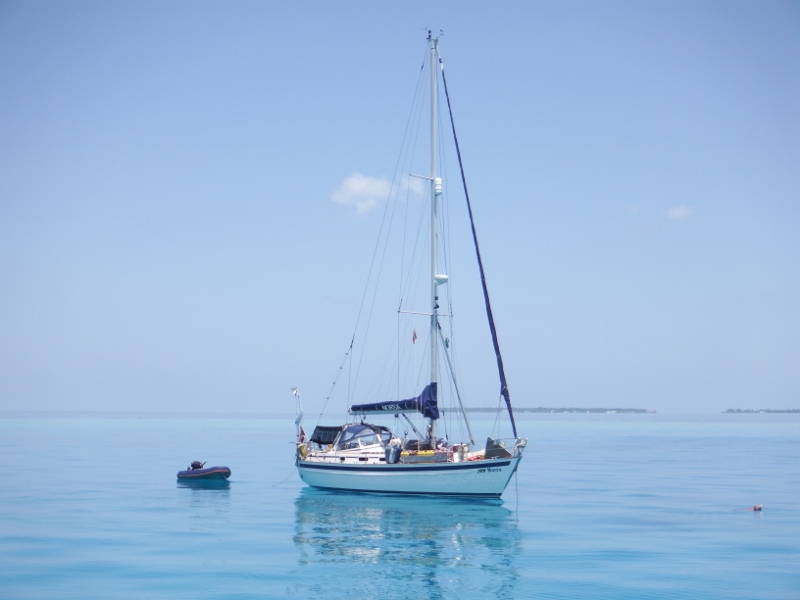
Norsa

The Asdhoo reef.
The next day both yachts continued north for about 2 hours to the Asdhoo reef.
Once again as you can see from our track the charts can’t be relied on here. The anchorage was a bit of a horseshoe in the reef and fitted our 2 boats snugly. We anchored at
04 27.69N
073 39.23E
We were on about 6 metres sand but you need to look at it on google earth first before you go in. a few bommies around but otherwise good. If you don’t feel brave enough to go in there’s a more open anchorage to our west (little blue pin) but we didn’t look at it.
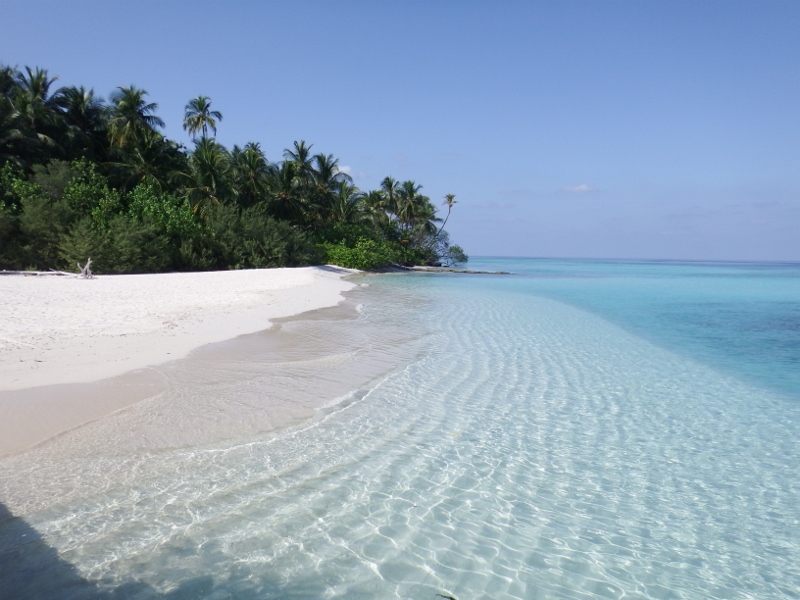
The beach on Asdhoo island
After lunch we took the dinghies across to Asdhoo island. We found a lovely little holiday village called Asdu Sun Island, a delightfully laid back resort without all the trappings of the luxury resorts you normally find in the Maldive BUT also without the costs. The tiny island has the most gorgeous beach surrounding it with little white painted concrete huts in among the trees. Very yachtie friendly they were quite happy for us to sit and have a beer (US$3.50) at their bar plus they were offering an evening buffet meal for $20 but as they didn’t serve it until 8pm we passed on that one. Our main objective was to check out the dive school to arrange a dive. We booked for the following afternoon.
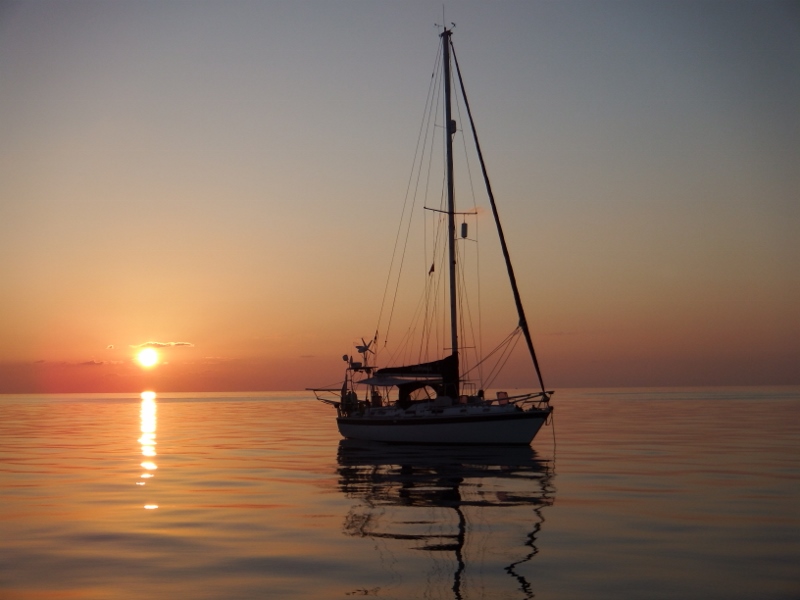
Going….
We went back to the boats for sundowners on Norsa. We had a great view of Camomile in the sunset.

going….

…gone.
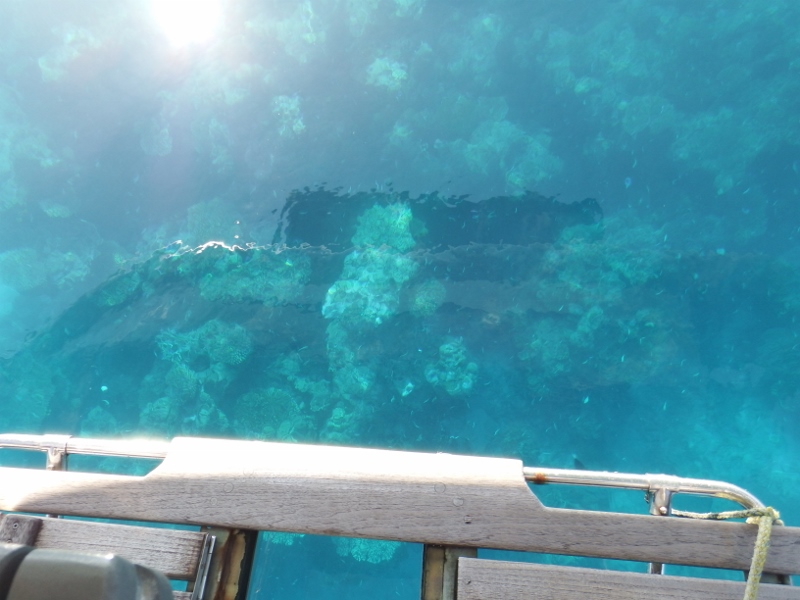
View off the bathing platform
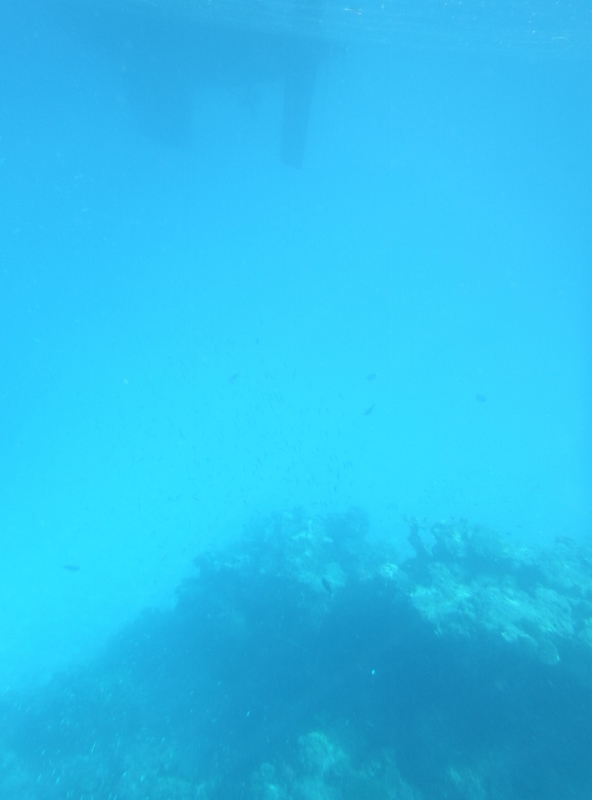
The bommie below the rudder
The next morning there wasn’t a breathe of wind and the water was so clear. This was the view from the bathing platform. It looked as though the reef was just under the surface but it was 3 or 4 metres below us and not a danger to us at all; amazing to see.
You can just about see the rudder at the top of the photo.
Practise dive
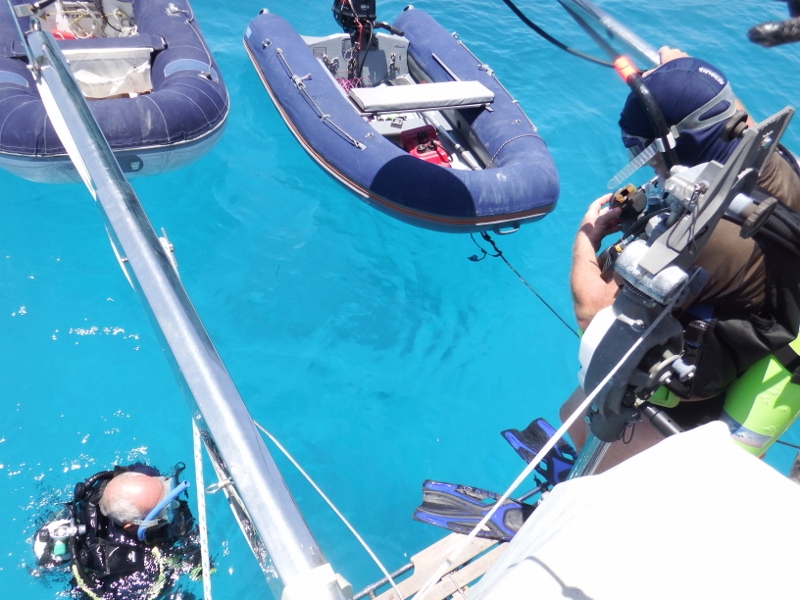
That morning Bill and Norman got their dive kits out partly to have a practise as it’s quite a few years since Norman has dived and partly because Norsa’s anchor chain had wrapped a bommie overnight and Bill and Norman thought it would be good chance to try out their kit before the dive in the afternoon. The water was nice and clear, all went well and the chain was freed. Sara also had a practise .
Asdu Sun Island resort
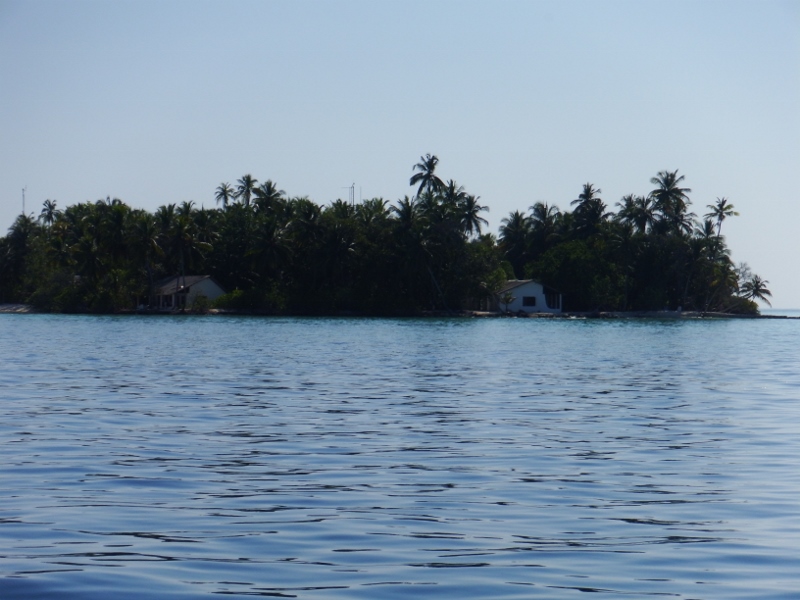
After lunch we went back to Ashdoo island for the dive. It took about an half hour to get everything sorted and loaded onto the dive boat and we were off. It was nice to be in someone else’s boat and not worry about where the reef was. The dive boat went around the back of the island and you can see the accommodation, it isn’t brilliant but good value for anyone that wants a budget holiday in the Maldives. It’s only about 2 hours on a ferry from Male.
Getting their kit ready
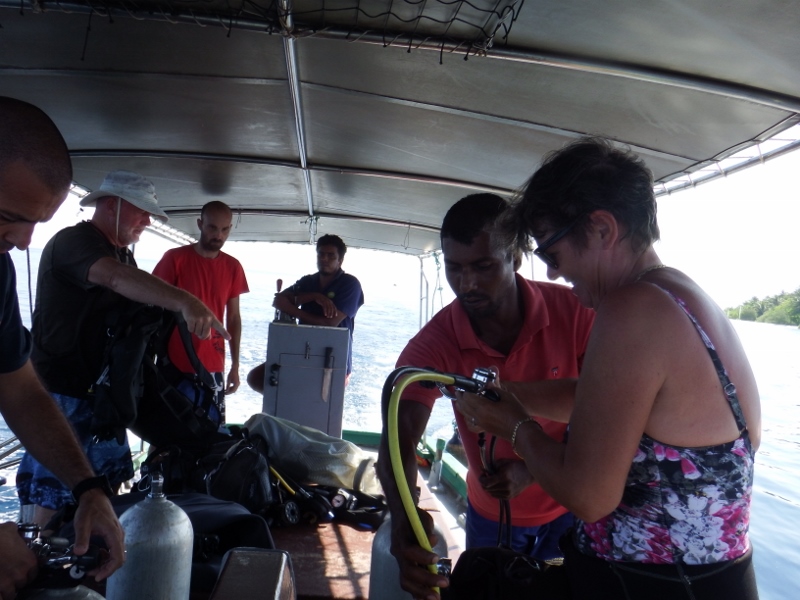
After about half an hour we stopped by the Panetone reef. The island has a lot of Italians staying there and the dive master was also Italian. Panetone means cake in Italian and apparently that’s what the reef is like – round with coral all around the edge. Luckily there was only Bill, Norman and Sara diving with 2 dive masters so it was good for their first dive.
In goes Bill
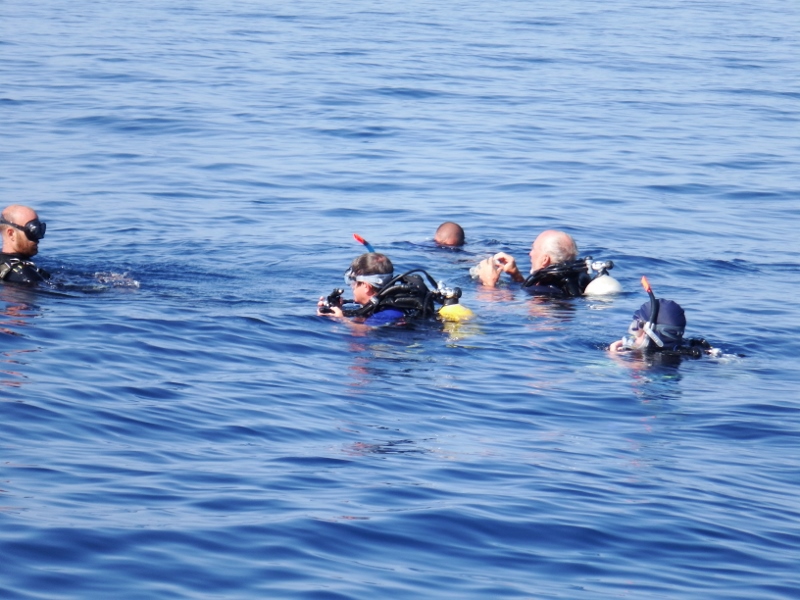
All ready to go down
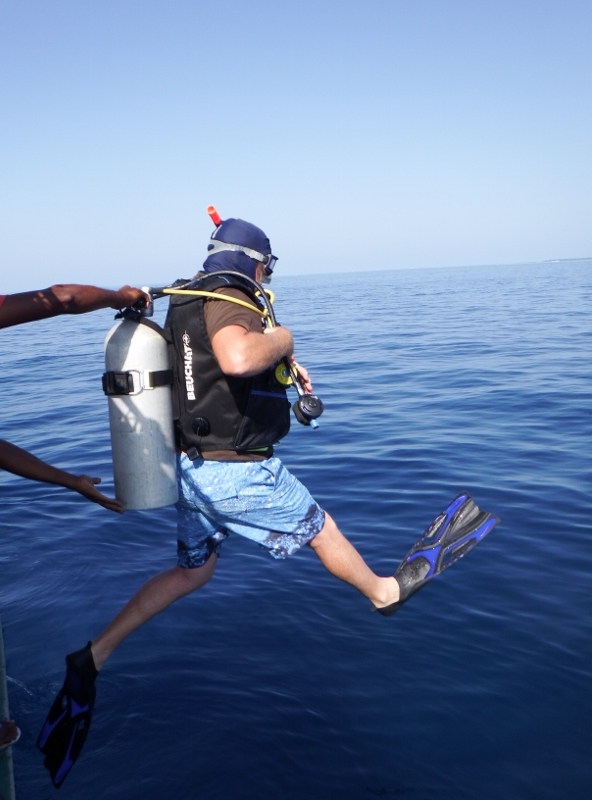
I don’t dive but had a bit of a snorkel over the top although it was a bit deep and the visibility wasn’t great. They all enjoyed their dive. After doing a circuit of ‘the cake’ they did a second circuit higher across the top and saw 4 turtles. I’d looked for them while snorkeling but hadn’t seen any. The cost was US$51 for Bill’s dive with his own equipment but Norman and Sara paid nearer $160 because they hired some things as well. When we got back Ken and Eiloo had arrives on Antares II so we all enjoyed a beer together at the bar.
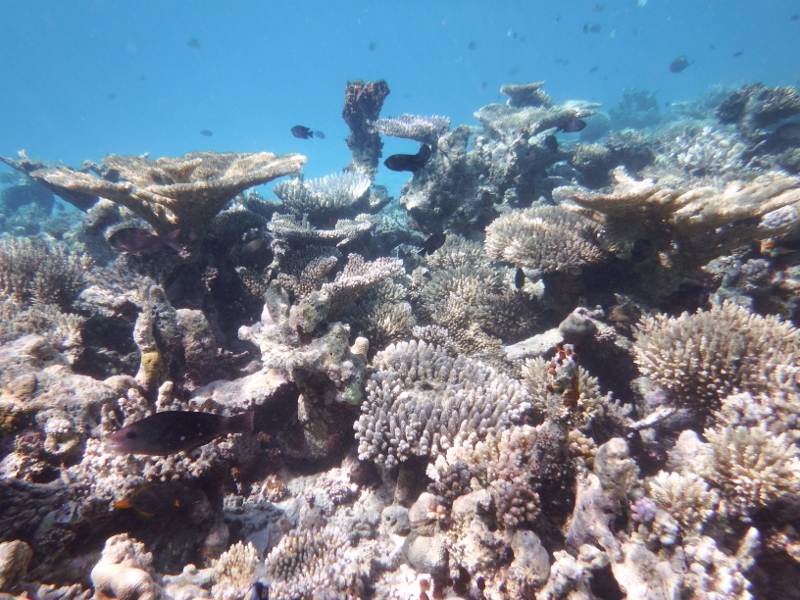
Lovely coral
It was such a lovely spot we stayed another day. On Saturday 26th, Easter Saturday, we had a wonderful snorkel. The boats were surrounded by reef on three sides so we were spoilt for choice. Wonderful coral.

More coral
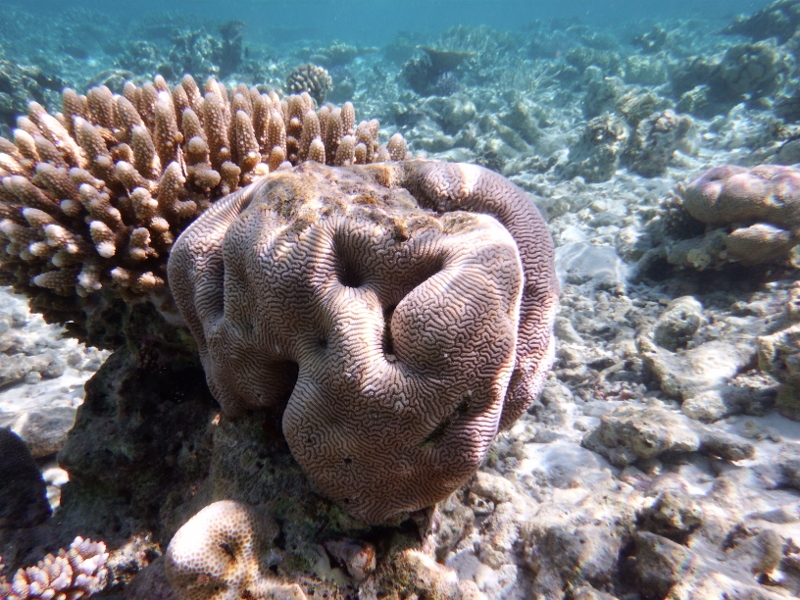
Brain coral
This is brain coral because as you can see it looks like a brain! It was about 2 feet high.
Lots of fish around.
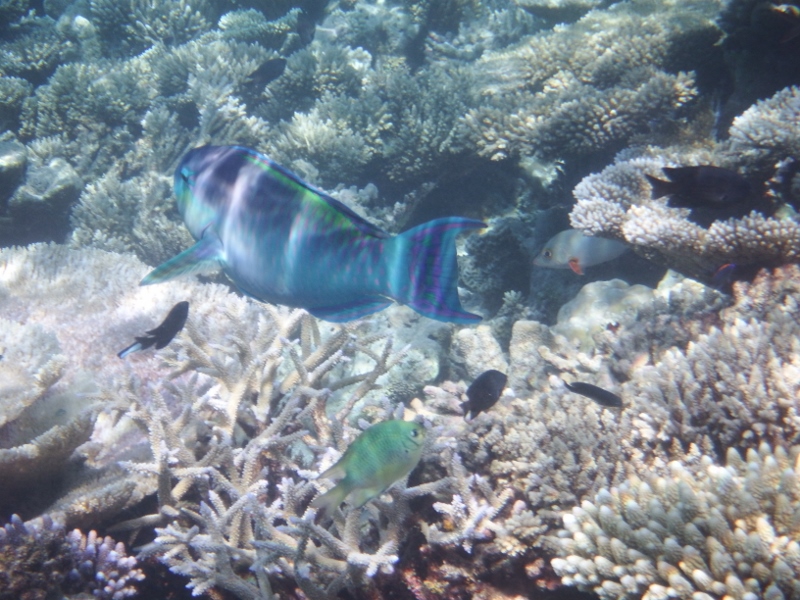
Beautiful iridescent blue parrot fish

A Royal Angelfish

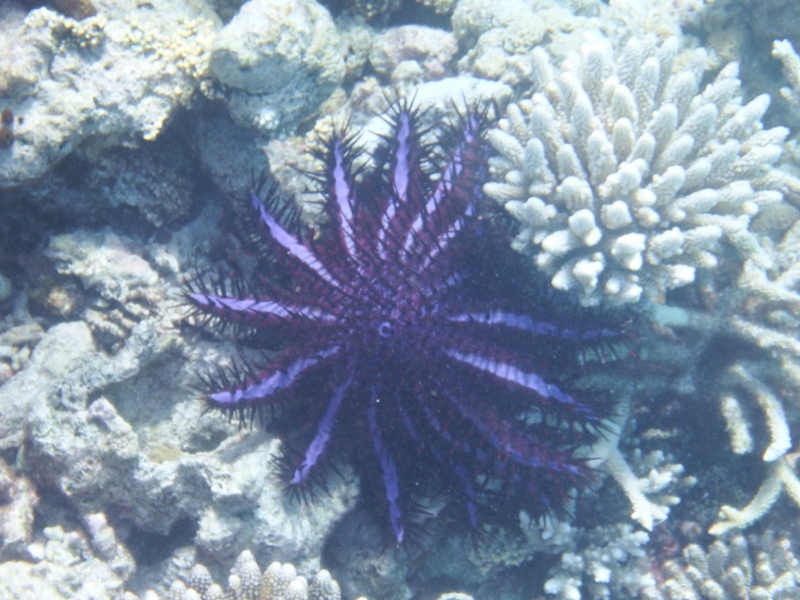
Crown of Thorns
Unfortunately these beautiful starfish are the enemy of the reef. They are called Crown of Thorns because they are covered in spiny thorns and are impossible to pick up. They eat the coral and we’ve seen whole areas devastated by them.
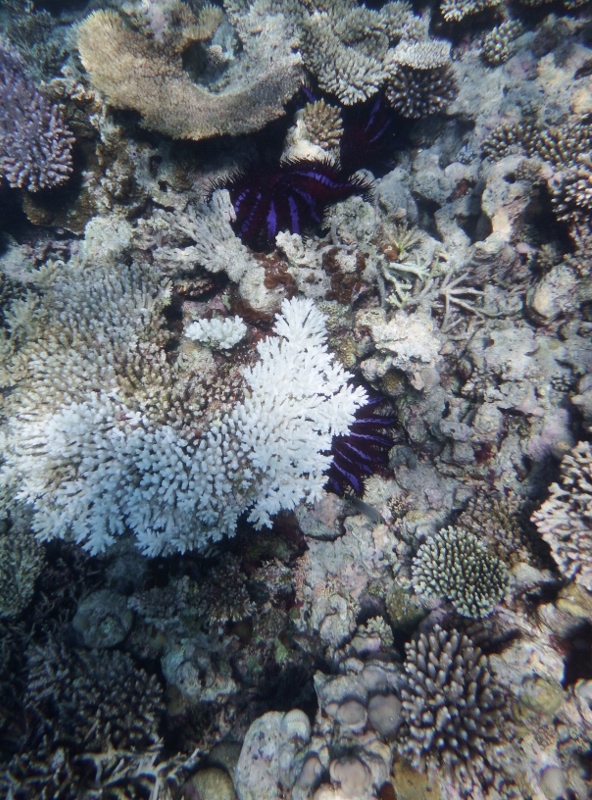
More crown of thorns
There are more crown of thorns in this photo and you can see the white coral in the middle of the picture is being gradually eaten by them. This area is suffering enough with the bleaching of the coral caused by the warm waters of El Nino it doesn’t need these creatures too.
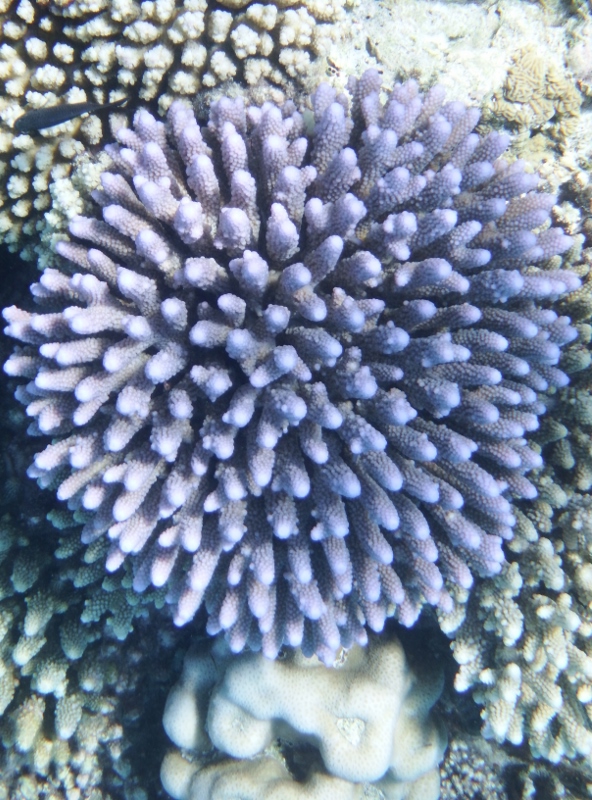
Beautiful lavender coloured coral
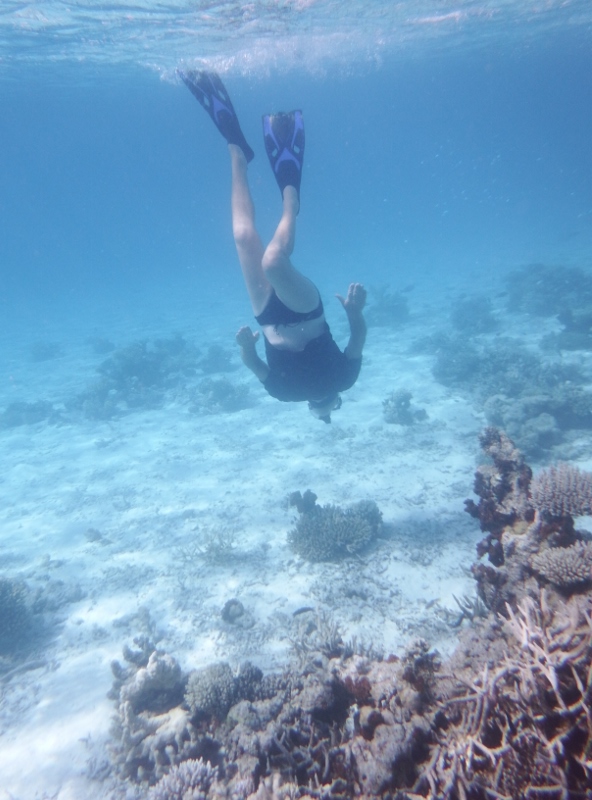
Bill swimming down for a closer look
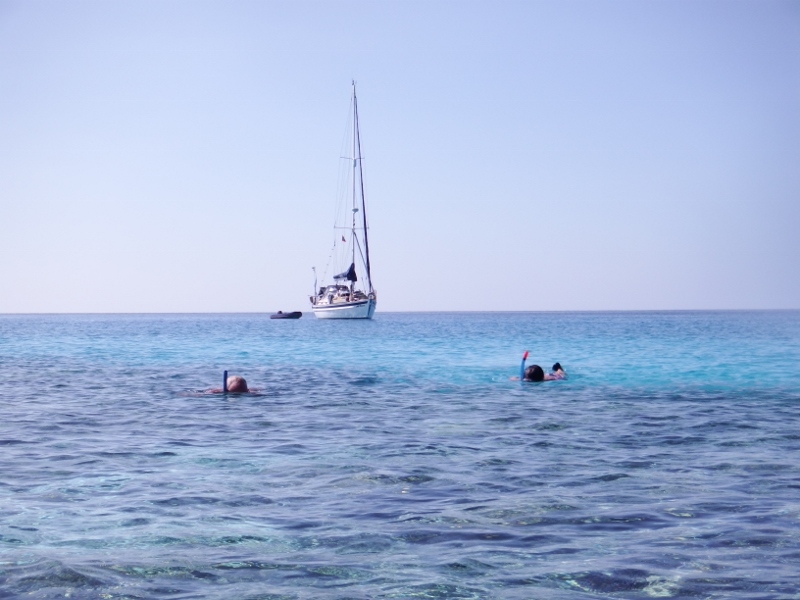
Norsa watching
Norman and Sara swam over to join us. We stayed in the water for a long time. The coral was very pretty with lots of fish but nothing big today.
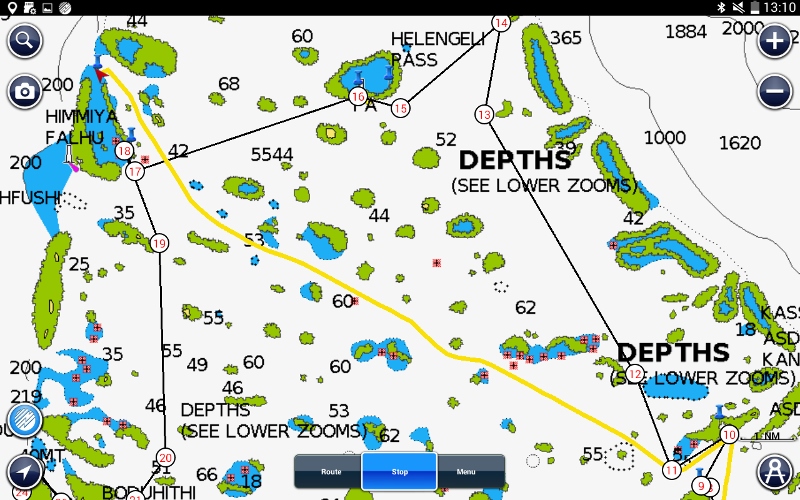
Our route across the atoll
The next day we heard on the net that Tintin and Inspiration Lady were arriving in the North Male atoll and, more importantly, Jacqui had mini easter eggs on board.
Originally we had planned to go to the resort at Helengeli then into the Maa Haa atoll then over to Himmiya but plans are designed to be changed so Camomile and Norsa went across the atoll to Himmiya instead.
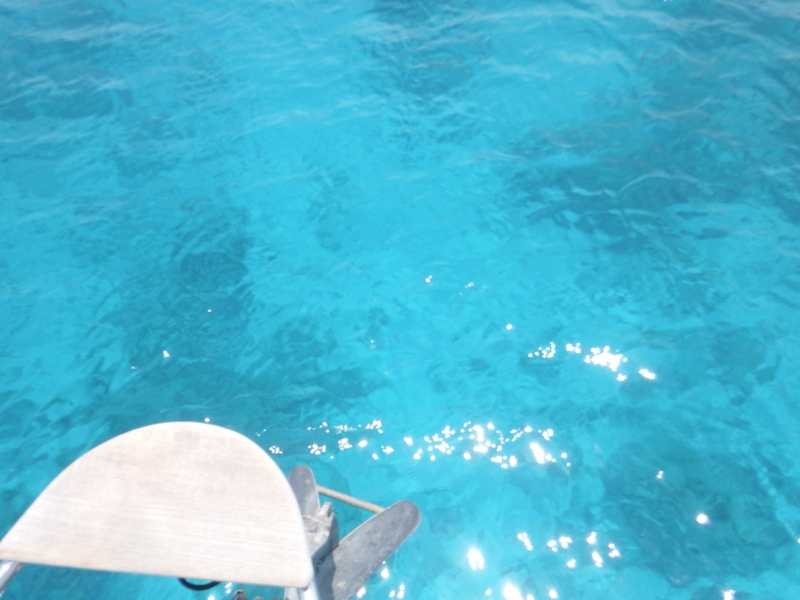
Coral under our bow
As we arrived I stood up on the bow watching the coral under us. The dark patches are coral, the light patches in between is sand. Fortunately nothing less than 6 metres and all good.
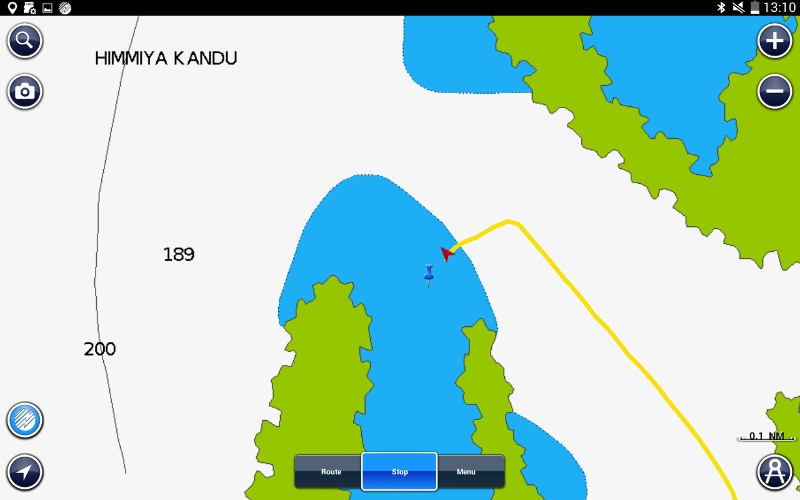
Our anchorage
We anchored at
04 36.539N
073 23.429E
It looks as though all of the northern area is open but it isn’t. There was a semi circle of coral right around the top and we crossed the reef just as we turned to port. There was an area there that was deeper than the rest. The chart is out again.

Norsa arriving
Norsa arrived just ahead of us. Inspiration Lady just behind them. Norman and Sara haven’t seen Jackie and Gary or Jacqui and Kevin in almost 2 years. After the anchors settled we all headed across to a nearby resort for lunch.
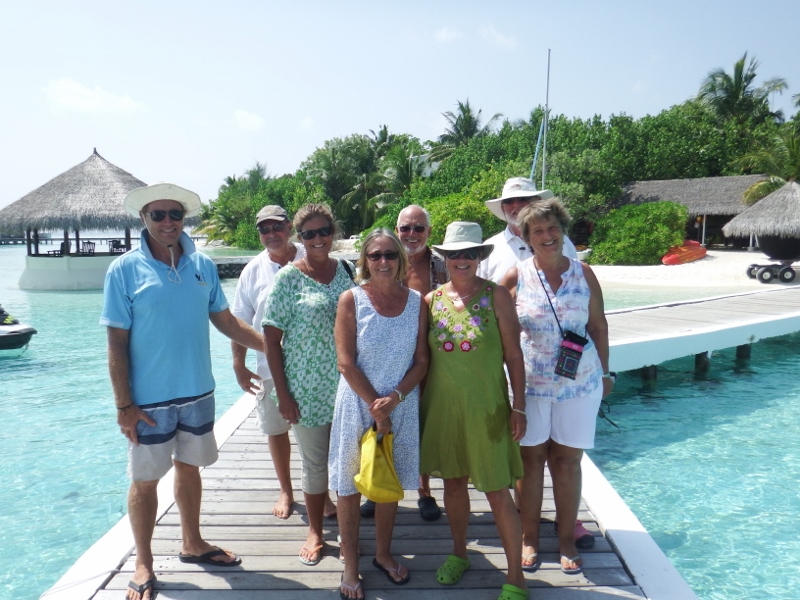
l-r Kevin, Gary, Jacqui, Jackie, Norman, Sara, Bill and Sue

We shared a club sandwich.
Great to have everyone together again. The resort was very nice and allowed yachties in (a lot of them don’t) but it was fairly expensive with beers at US$6 and that was only a can. Jacqui treated herself to a cocktail but we just drank water. We shared a club sandwich and even that was $20++ I can buy a lot of groceries with that sort of money.

Eriyadu resort

Our view
The resort was very relaxing though and we sat and chatted for the afternoon.
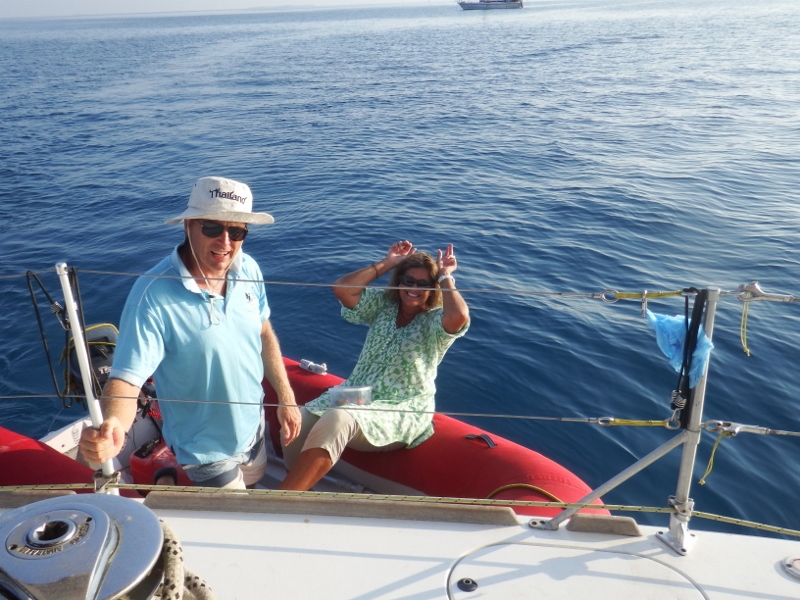
Jacqui doing her impression of the Easter bunny.
When we got back to the boats Kevin and Jacqui came round all the boats with Jacqui doing her Easter bunny impression and handing out Cadbury’s creme eggs. As I haven’t had so much as a sniff of an Easter egg this year or even any chocolate, it was very welcome and gone before they got back to Tintin!
Thank you Jacqui.

My Cadbury’s creme egg
The next morning we were all going about our jobs when not one but three different pods of dolphins came dancing through the anchorage. I was out there watching for about an hour. So wonderful to see.
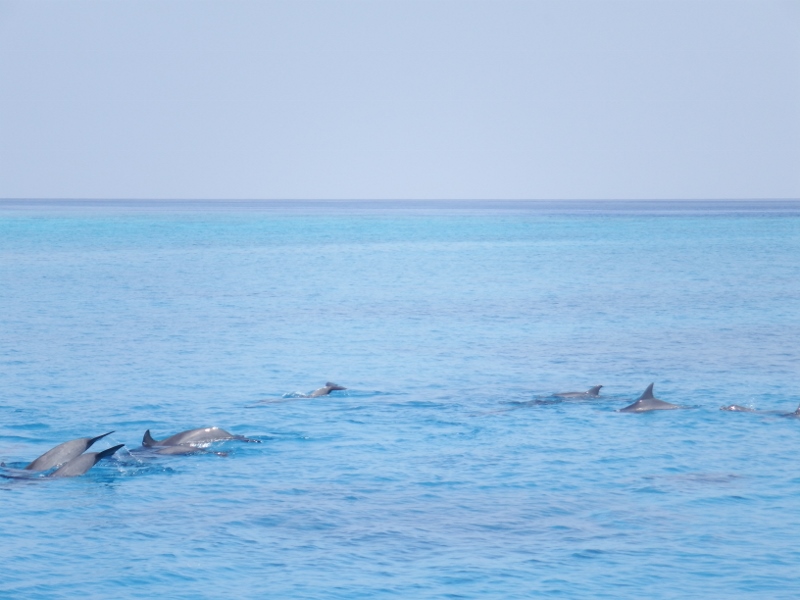
Dolphins

Giant stingray
Later that afternoon we all went snorkeling and as well as the usual fish darting about we spotted this big sting ray laying on the seabed trying to pretend he wasn’t there. It must have been 2 metres nose to tip. It’s difficult to make out but it’s laying across the picture with his nose and eyes on the left and his tail to the right. It didn’t seem to bother about us swimming around him.
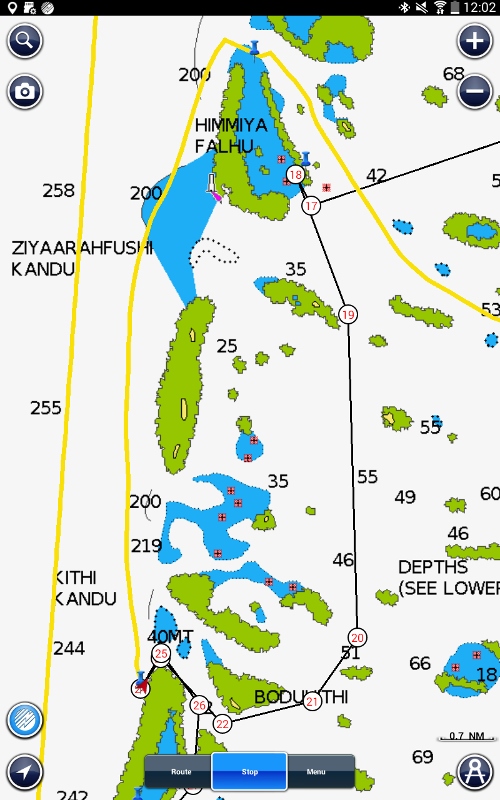
Our passage south on similar course
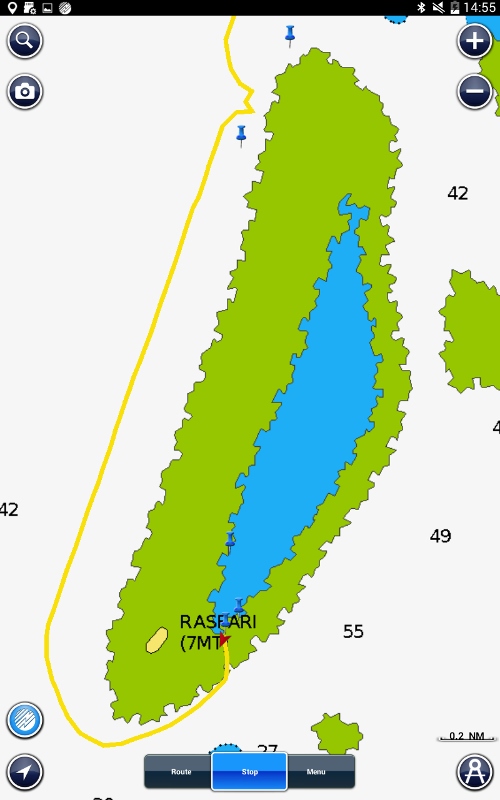
The Rasfari reef. Mantas at north west corner, anchored in south east

Norsa tied onto Camomile.
Tuesday 29th March Camomile and Norsa joined Tintin and Inspiration Lady to continue on their journey south to Male but we had one more stop the rasfari reef to see if we could see the Manta rays. Inspiration Lady and Tintin decided to keep going but we wanted to give it a go. We found a tiny patch of sand at
04 26.171N
073 21.557E (you can see the size of the sand patch around us)
If anyone is following behind us the weather needs to very calm to stop here because there’s no protection. There was only room for one boat on this patch but there were some more sand patches a bit further south. Once Bill was happy our anchor was holding Norsa came to tie onto us.
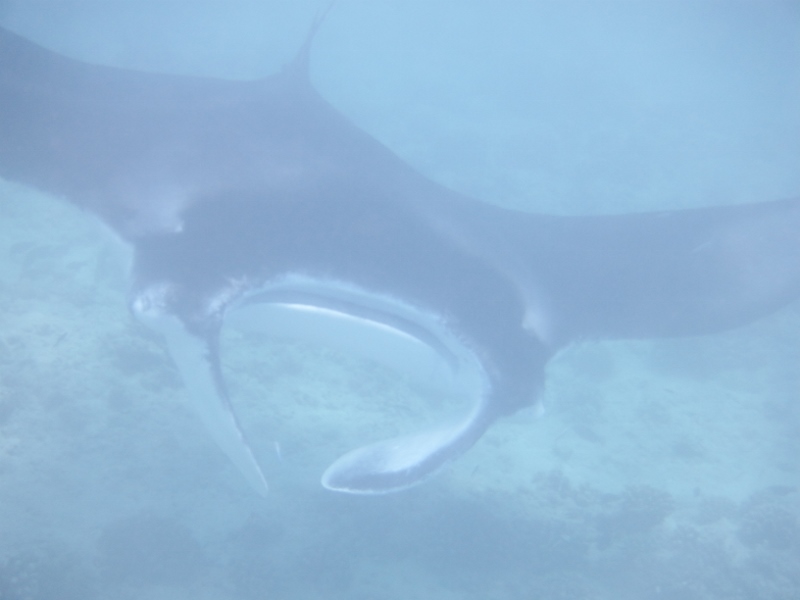
Manta ray
The area is a well known ‘cleaning station’. The mantas come into the shallow water so that the little carnivorous wrasse fish can eat the small parasites that live on the surface of the mantas.
We took the dinghies north of our position and got in the water to drift snorkel back towards the boats. We were almost back to the boats when we saw our first one. Among the most dramatic creatures in the ocean, mantas are cartilaginous fish – like flattened sharks.
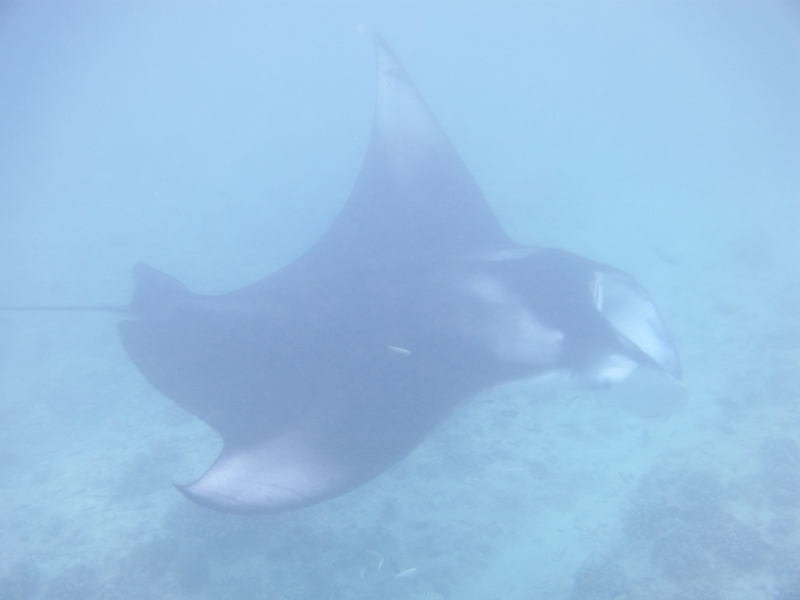
Manta ray

Manta ray
With a wingspan of about 4 metres these were quite formidable in the water. They are quite harmless although the barb on their tail is what you have to watch out for but you can’t get close enough for it to be a danger.
There were several of them swimming around us.
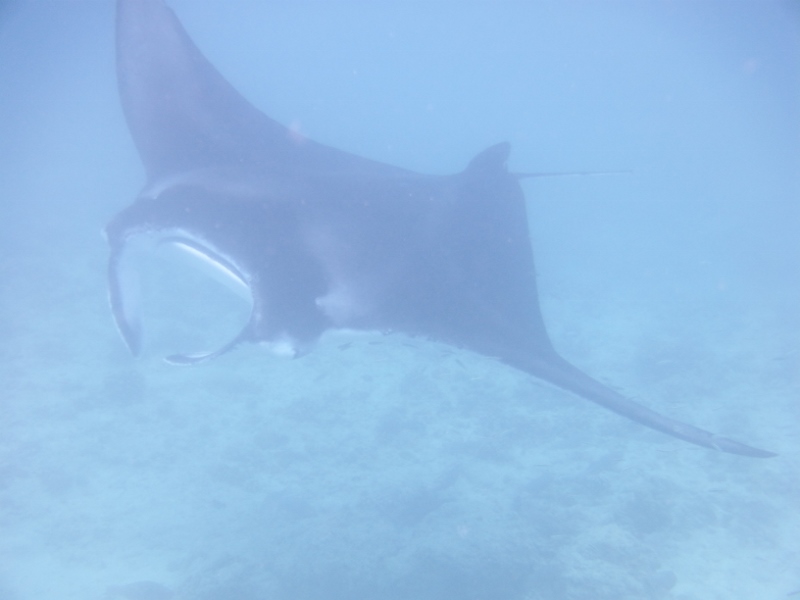
Manta ray
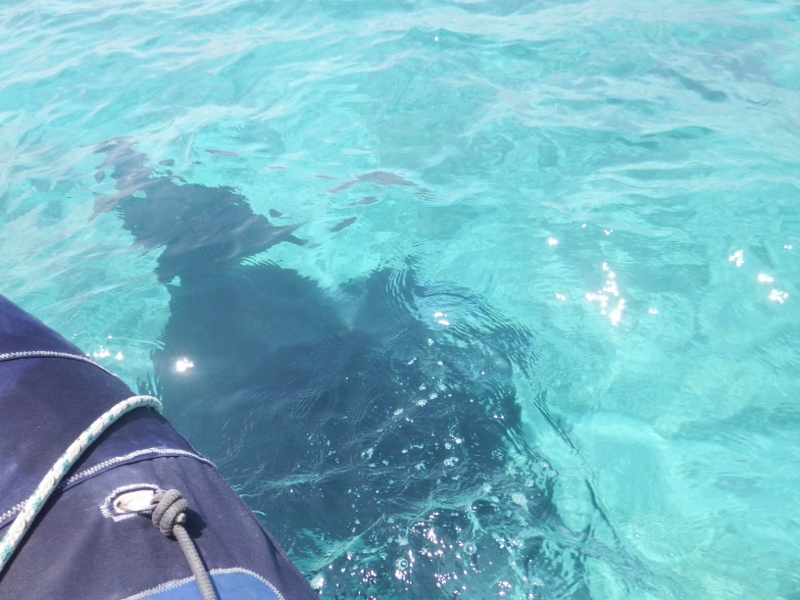
A manta under the dinghy
I managed to get several really good videos but Bill was worried they were getting too close so we got back in the dinghy and they continued to swim around us. We counted 4 altogether, several around us and one by Norsa’s dinghy.
We spent about an hour watching them then headed back to the boats and left.

Bill walking on the island
We carried on down the west side of the Rasfari reef in open water – away from dangers. We gave the southern reef a wide berth because it came out further than charted, and anchored south east of the little Rasfari island at
04 23.675N
073 24.415E
there were a few bommies around but plenty of sand to anchor in.
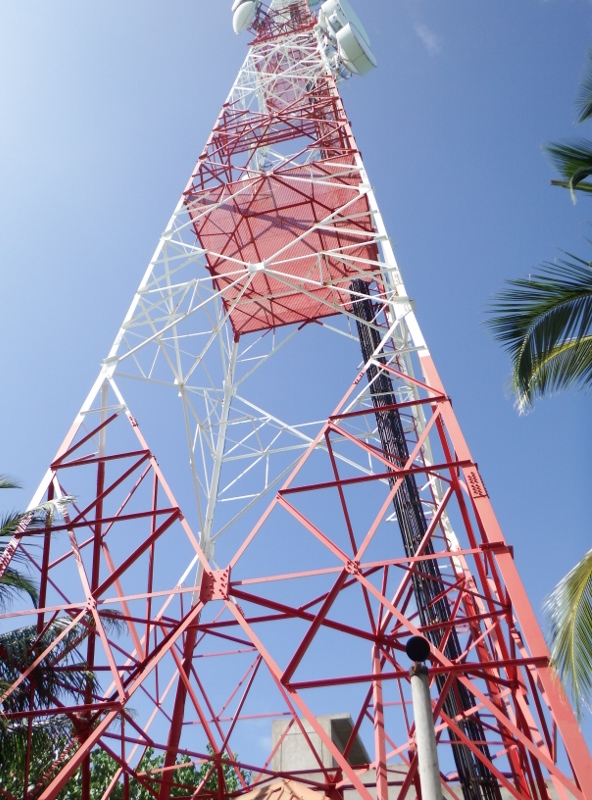
The phone mast
The little island is home to the local phone mast. There are an assortment of generators surrounding it and about half a dozen men maintaining it.
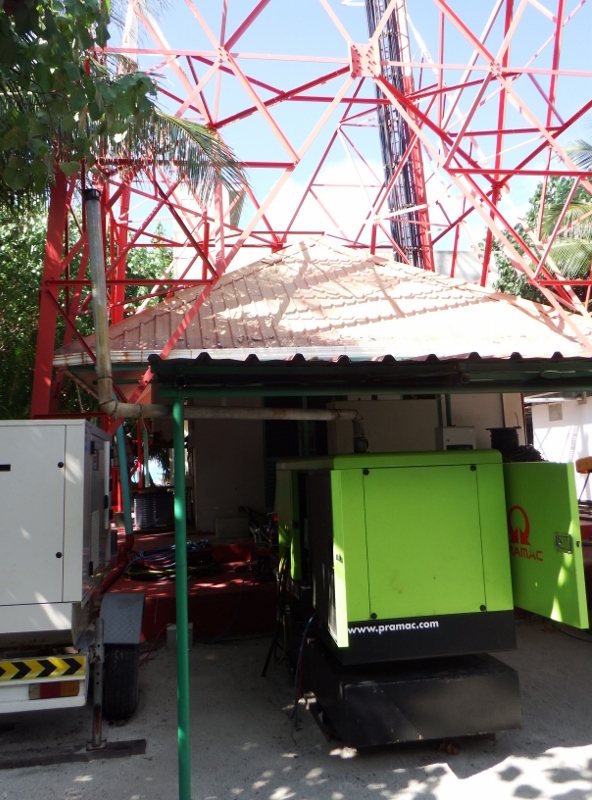
The generators
What an amazing place to work. The island was tiny but beautiful with a scenic sandspit on the southern end. a great place to take a 360 degree panoramic shot.

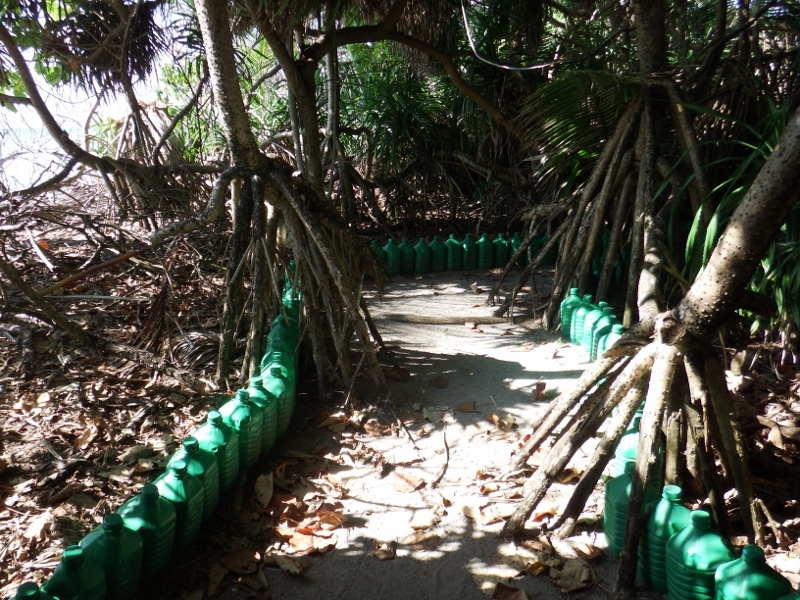
Man Made path
We walked back through the middle of the island along the little path the men have created out of plastic containers. They had rabbits and chickens running about although I’m not sure if they were pets or if they were going to eat them – everyone said it was the latter.
Inspiration Lady had headed on into Male but Tintin, Norsa and Camomile stayed one more today. It was a lovely spot.
On the 31st March we arrived back in Male for more shopping, washing and general jobs.
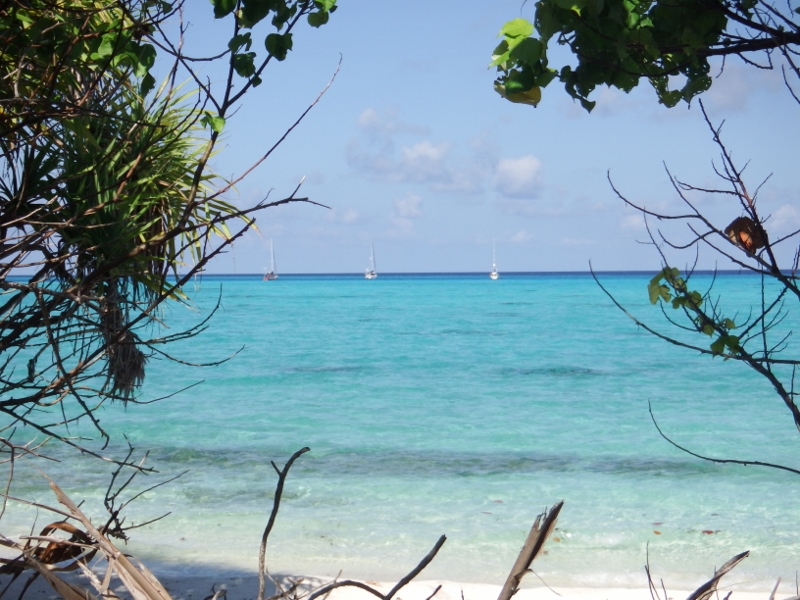
Tintin, camomile and Norsa off Rasfari island.
Male, the capital of the Maldives
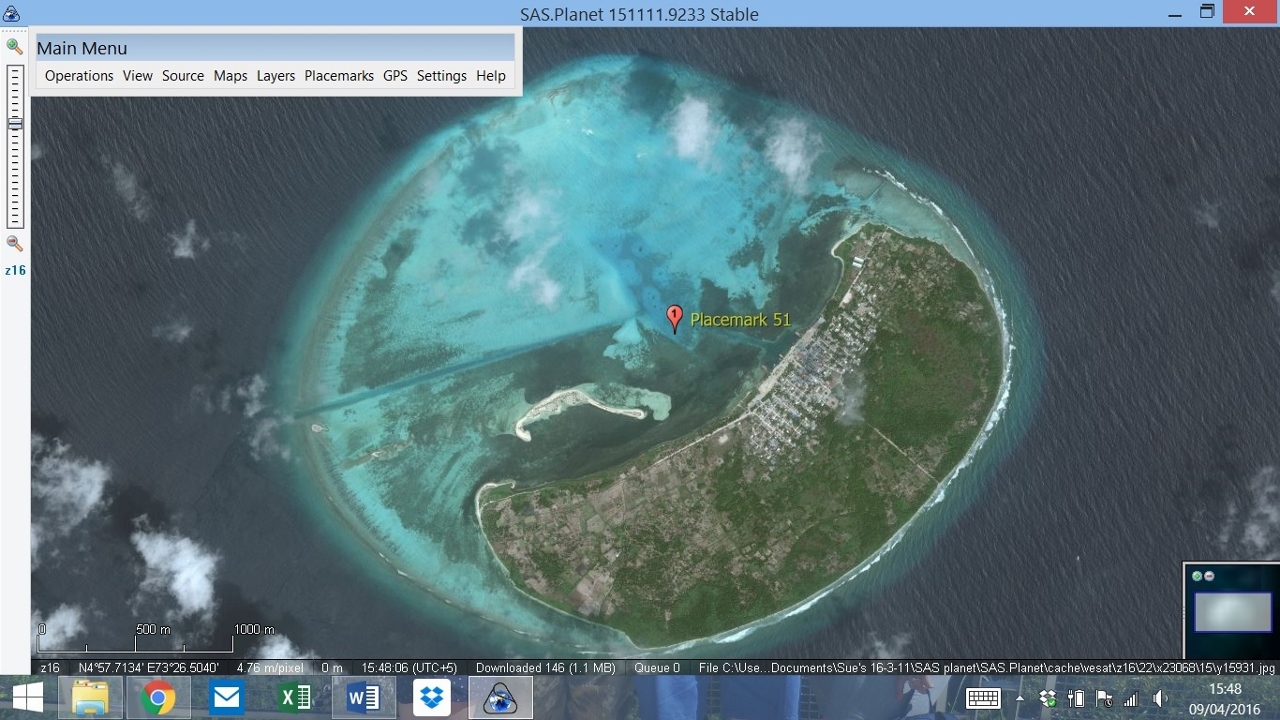
Kaashidhoo island
It took us 2 more days to get to Male.
On the 18th March we left Viha Faru reef and motored to the island of Kaashidhoo. This is an image from google earth. You can just see the entrance to the reef on the west side. We spent a very scary half hour motoring slowly up this channel in about 3 or 4 metres of water with broken coral under us. We dropped the anchor as soon as we got into the anchorage at
04 57.707N
073 27.400
Would have liked to have gone ashore but we needed to press on.
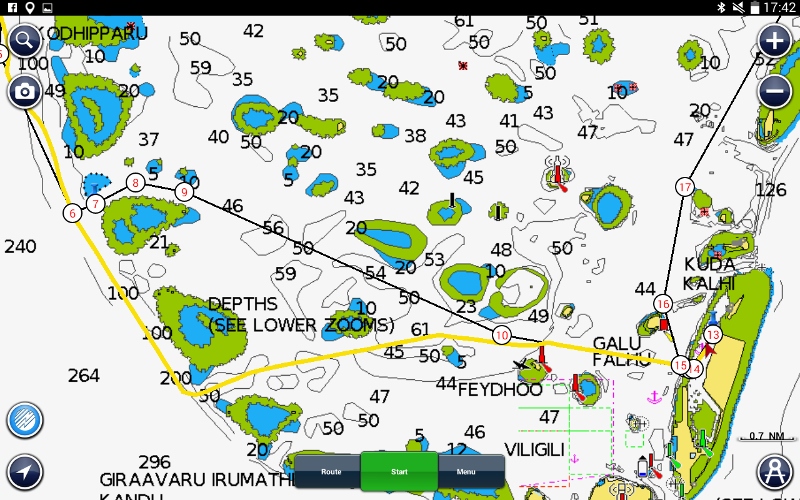
The last part of the journey across north Male atoll
The next day we carefully motored back through the reef at 06.00. By 09.30 the wind started to blow so up went the sails in time for my SSB net and we sailed for the rest of the day. Norsa had reported they had arrived at Hulhumale but were having some serious electrical issues.
We had a wonderful sail and went further south than we had planned. At 15.00 we took the sails down and put the engine on to motor across the bottom of North Male atoll. The plan was to stay in Male for 4 or 5 days then do a circuit of the atoll with Norsa and hopefully meet Tintin and Inspiration Lady on their way down.
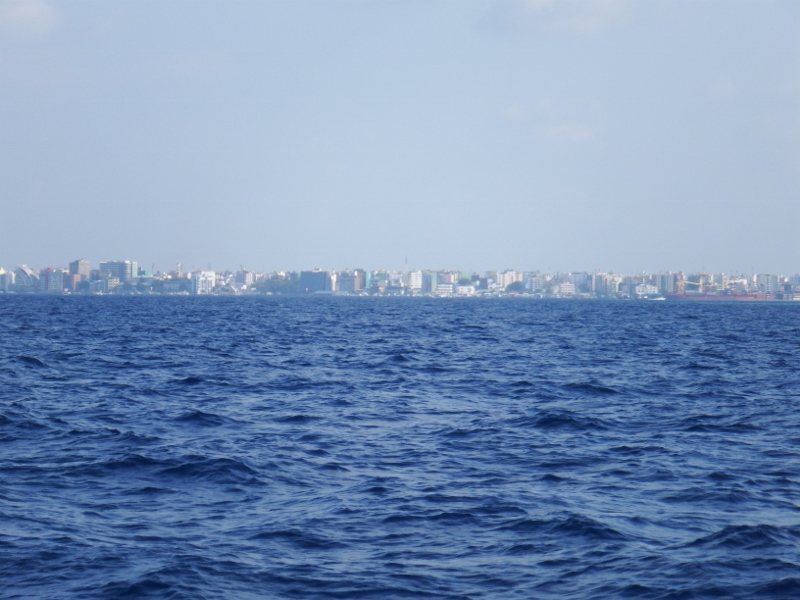
First view of Male

The anchorage at Hulhumale
The waters around the island that Male is built on are deep. Male is a check in port but it means anchoring in 30 metres plus while waiting for the officials. Most people just hover, no one wants to anchor that deep. Uligan in the north is best for your check in. Once checked in or if you are arriving from the north the only place to anchor is off the island north of Male called Hulhumale. This island is the future of Male. It’s been created to relieve the pressure of growth on Male. The anchorage is at 04 13.14N
073 32.17E on sand and about 10 metres.
It was great to see Norman and Sara on Norsa again. The next day Bill and Norman managed to get Norsa sorted out and it wasn’t as bad as was first thought.
Looking at the screenshot of Hulhumale again there is a dinghy dock right next to where Camomile is anchored (red arrow) and 100 feet from that is the ferry into Male. It cost about 50p and is the only way to get into Male. You can’t take your own dinghy, there isn’t anywhere safe to leave it.
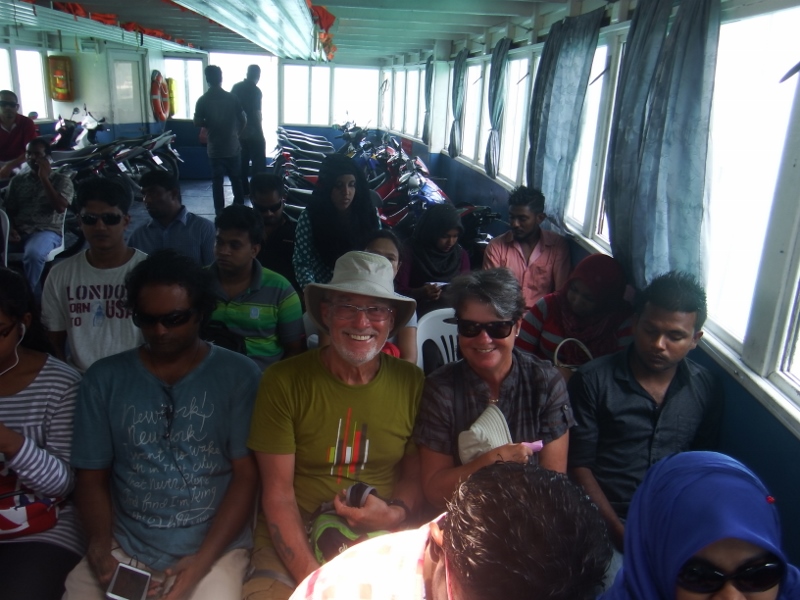
Norman and Sara on the ferry
On 21st March the four of us headed for the ferry to take us into Male. It was a bit of a scramble for seats but we all got in and sat down. Note the motorbikes at the back of the ferry.
No – there wasn’t a safety briefing!
The chairs were just plastic garden chairs screwed to the floor.
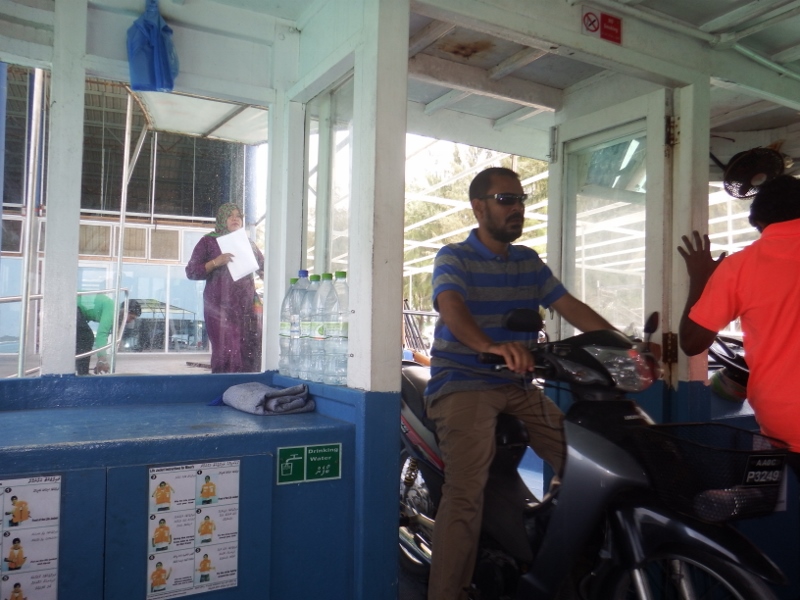
Motorbike coming onto the ferry
Once it was loaded it took about 20 minutes to make the passage. It was quite a nice way to arrive in the capital. There were some nice views of the city as we approached. Back in the 1920s the population was estimated as just 5000 but as tourism grew from the 1970s the growth emerged as a problem. Male has been extended as far as it can with land reclamation so now Hulhumale is being developed to accommodate the overspill.

View of Male from the ferry
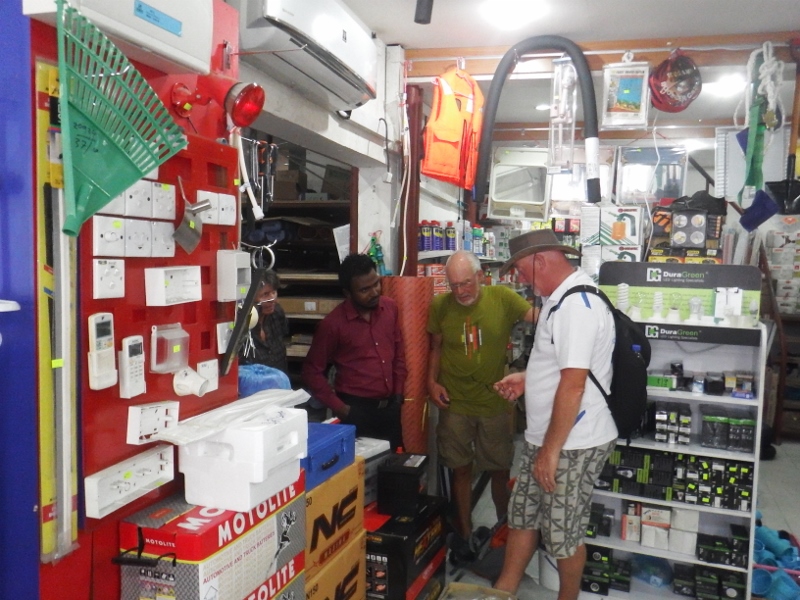
Bill and Norman shopping.
The first job was to find a hardware store – can you believe that?! Although Norsa’s electrical problems were sorted out Norman wanted to get a spare engine start battery. We had been given various addresses and eventually we found one. There’s a surprising amount available in Male. There were lots of hardware stores, a couple of chandleries and several really good supermarkets. The fantasy supermarket sold lots of western products although it was a bit expensive.
We also got the dive tanks serviced and filled during our stay.

A side street in Male
This photo shows the contrast between some of the buildings. A lot of Male has been rebuilt or in the process of it but there are still some old properties around.
Motorbikes, motorbikes, motorbikes everywhere! This line of them seemed to go on for ever. They are a real problem but just imagine if the owners all owned cars.
There were several good markets on the north side of Male. A fruit and veg one….
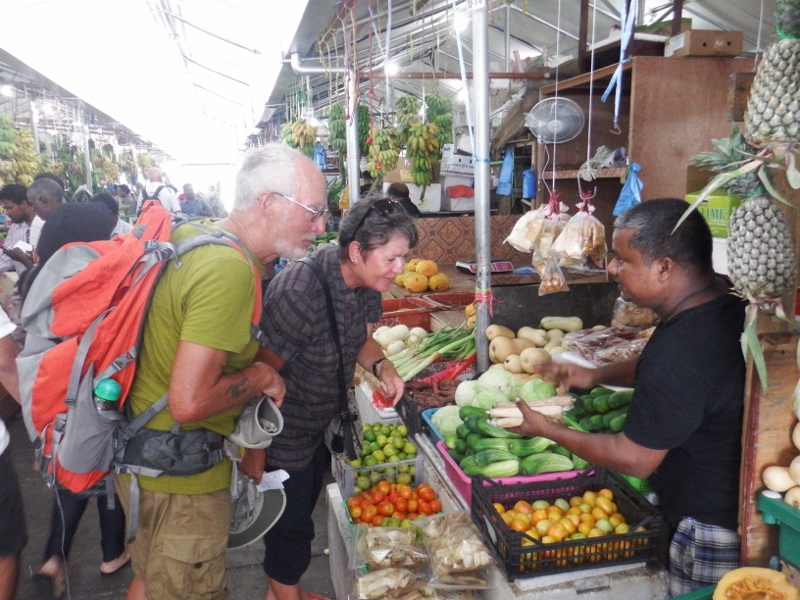
Norman and Sara inspecting the veg.
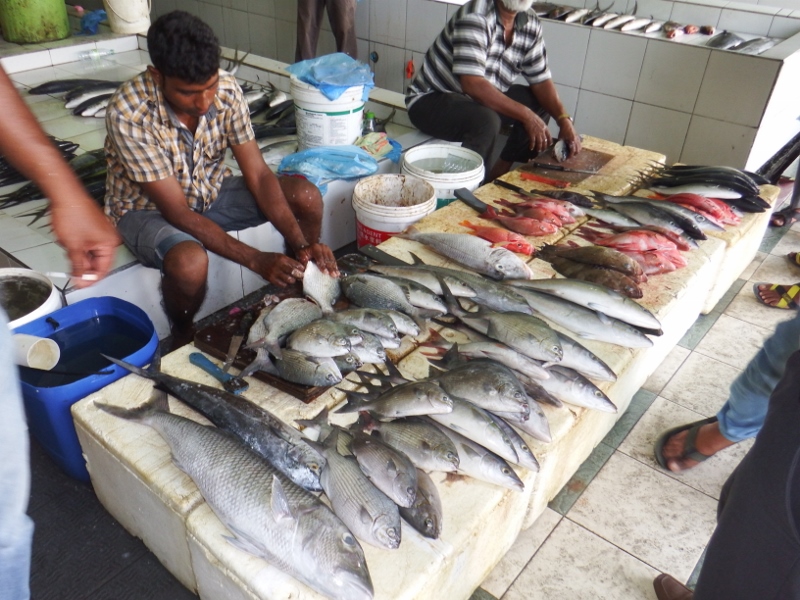
The fish market
…..and a huge fish market next door. The local boats backed onto the quay in front of the market and unloaded their wares straight onto the stalls. Fishing and the fish market is a man’s world here, woman don’t usually venture into these areas. Very wise the sight of all the entrails was a bit disconcerting. Surprisingly it didn’t smell. I don’t think you would be able to buy fresher fish.
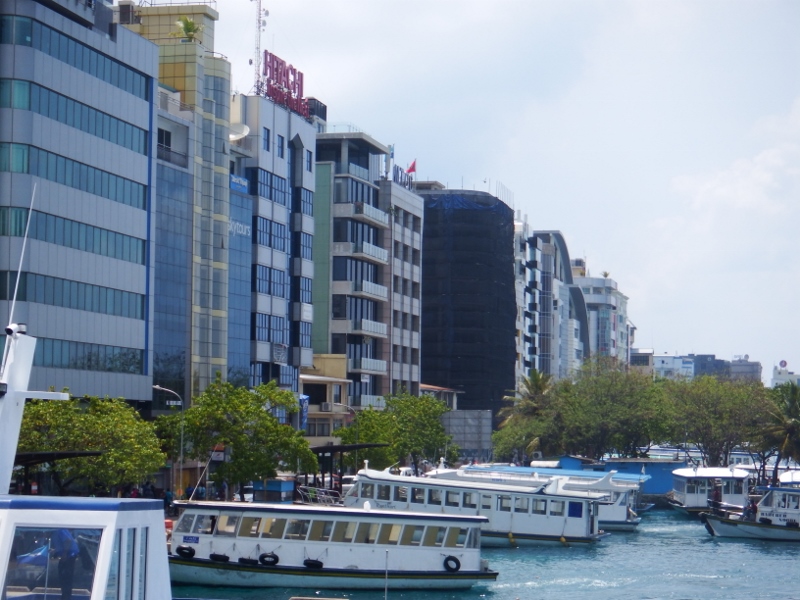
Great views from the Seahouse
Male has been referred to as ‘The Venice of the South’. I’m not sure I would go that far but it’s an interesting city. This is the great view of the boats in the harbour from the Seahouse, a very nice cafe above the ferry terminal. They do a very nice and reasonable buffet lunch Sunday to Thursday and reasonable evening meals. It’s not cordon bleu but for good value local food you can’t go wrong. It doesn’t have windows so it can get a bit breezy but as far as I was concerned that was a plus.
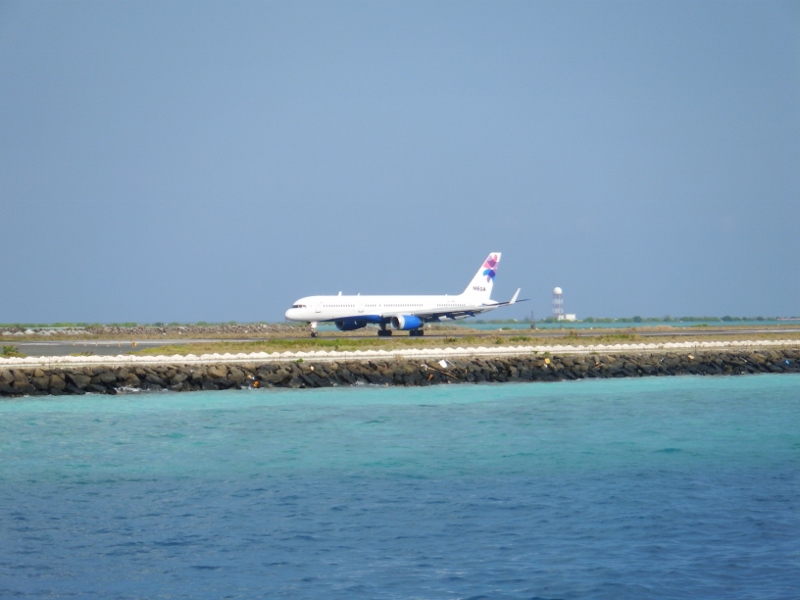
The airport runway
After our busy days shopping we took the ferry back to Hulhumale. The island/reef in between Male and Hulhumale to home to the international airport. Must be a great place to land if a little nerve wracking because the runway is literally right on the edge of the reef. We watched the planes coming and going from the ferry.
Back in the anchorage the boats were waiting for us.

Hulhumale anchorage.
Miladhunmadulu Atoll
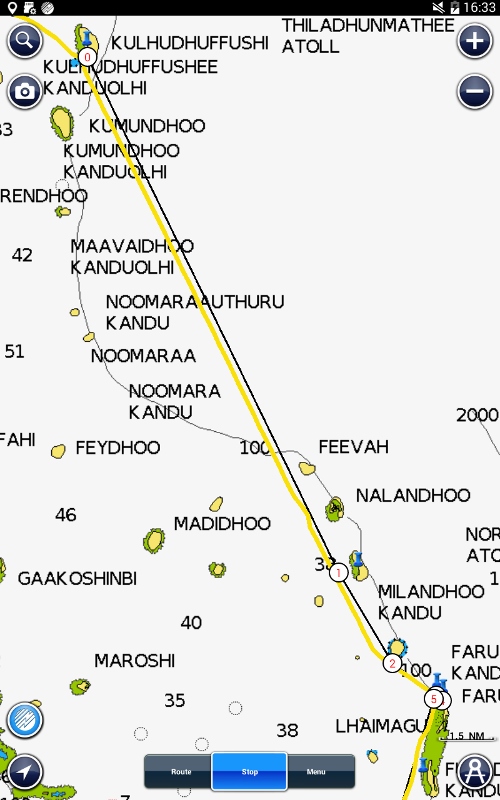
The route from Kulhuduffushi
Camomile, Tintin and Inspiration Lady left Kulhuduffushi harbour in the Thiladhunmathee atoll on 14th March. Once into the deep water we put the genny out and sailed south. Makes a change from motoring. I run a net on the SSB radio on 4036 (the old BWR 4A) every morning at 05.00 utc or 10.00 Maldives time and I can hear vessels calling in better with the engine off. We managed to chat to Sara on Norsa this morning. It was good to hear her voice.

The continuing journey
At 13.00 Camomile arrived at Farukolhu in the Miladhunmadulu atoll. I had looked at it on google earth and we had waypoints for a passage across the reef. Bill started to manually steer us in while I stood on the bow watching the coral getting closer under the boat. We were down to 2.8 metres of water with .8 under the keel in a half metre swell when Bill decided it was too dangerous. We could see clear water up ahead and the lagoon looked superb but it wasn’t worth putting Camomile on the rocks for it so Bill carefully reversed out. There might have been a way in a bit further north but the swell was more there so the entrance was aborted.
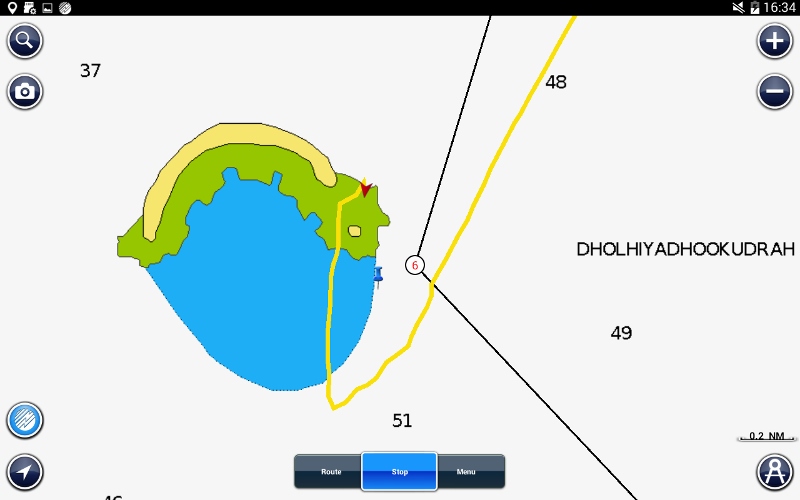
Dholhiyadhoo island
We continued south to Dholhiyadhoo island. There was an extensive reef to the south which we skirted round and then headed north when we could see clear water. You can see by this screenshot that the chart is out because we were anchored south of the island in front of the derelict resort and the screenshot puts us out to the east. You need mark one eyeball to navigate here.

The derelict resort
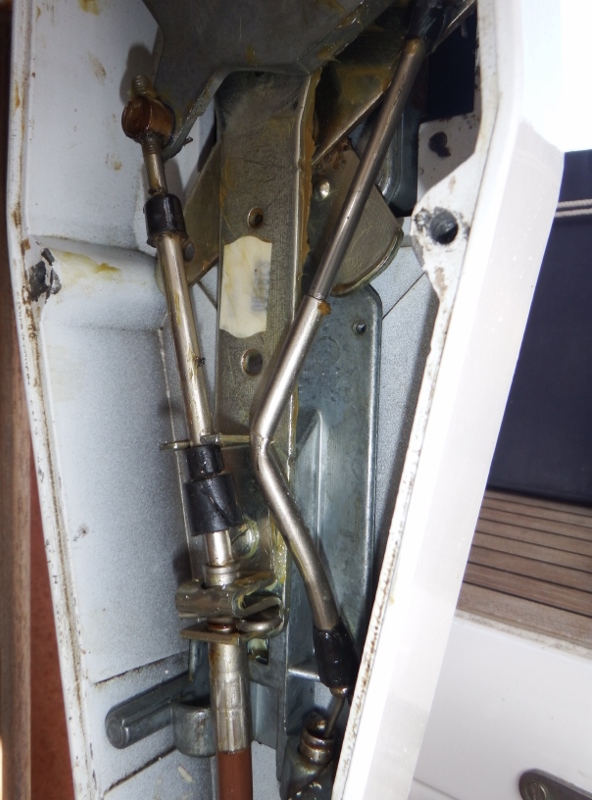
Oh dear!
Tintin were in first so they were able to let us know on the vhf what the anchorage was like. Inspiration Lady and Camomile crossed the reef together and anchored either side of Tintin. Then we had a problem. Bill had dropped the anchor but when he tried to reverse the engine to get the anchor to set he had no control of the steering. At first he thought the gearbox had broken!
Bill looked in the engine bay and said the gearbox looked ok and it must be further up. When he opened the side of the binnacle where the throttle and gear cables are this is what he found. The tube on the right is supposed to be straight. It was the gear cable. As this has happened before we carry a spare so Bill set about fixing it. At that moment we had no control of the boat and if the wind picked up overnight or the anchor dragged onto the reef there would be nothing we could do so it needed to be fixed straight away.
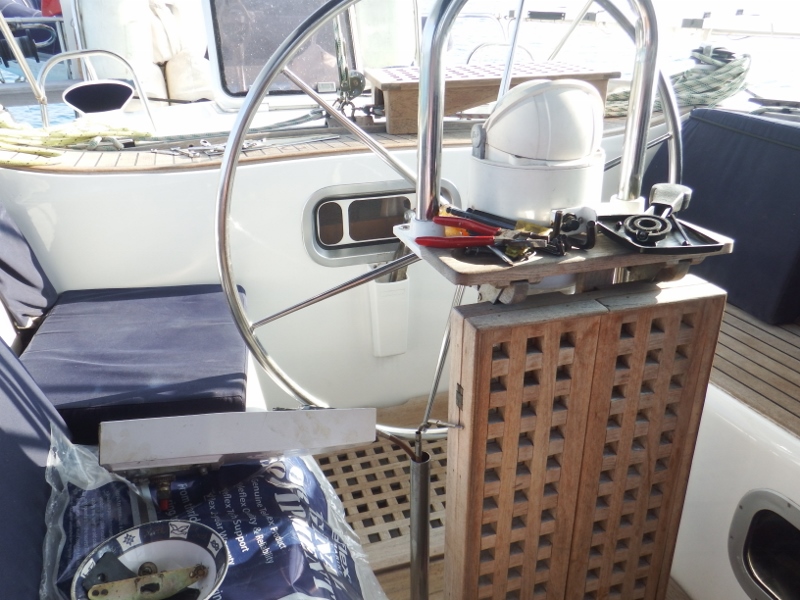
Fixing the gear cable
Bill and I spent the rest of the afternoon and into the evening trying to route the cable through into the gear box below. Unfortunately as the old one was broken it was really difficult to thread it through. I was trying to poke it through the hole and Bill was trying to catch it coming through into the engine bay. Sounds easy but as you need to be a deformed midget to do anything inside the engine bay it wasn’t. The cable kept going behind the fuel tank and as usual a 0ne hour job became a day and a night job but we managed it eventually.
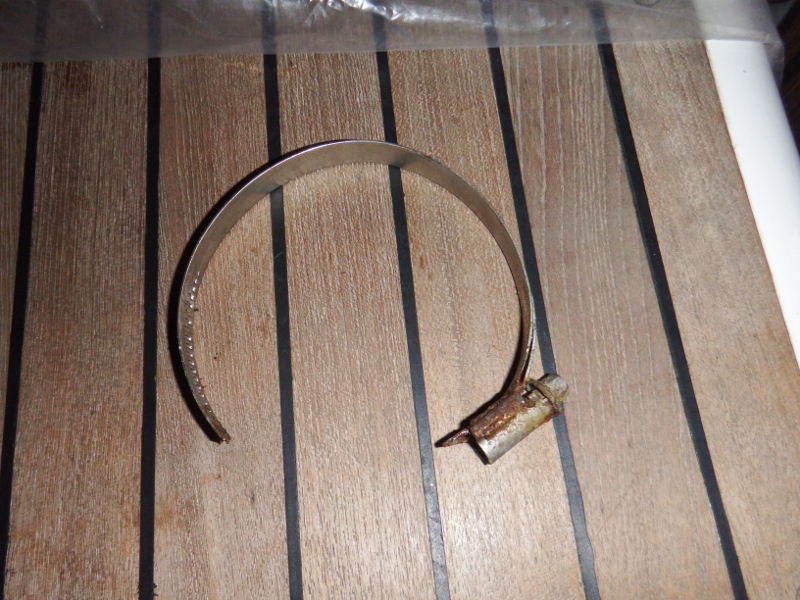
Broken jubilee clip.
While Bill was grovelling around the engine he noticed another breakage. This should be around the stern tube and is the only thing stopping the boat flooding and sinking. Fortunately Bill always has 2 jubilee clips on all the external hoses so we weren’t in danger of sinking but it will need to go on the shopping list for Male.
Bill wasn’t happy with our position so with the gear cable fixed we re-anchored the boat our position was
05 59.5N
073 13.3E
The island mosque
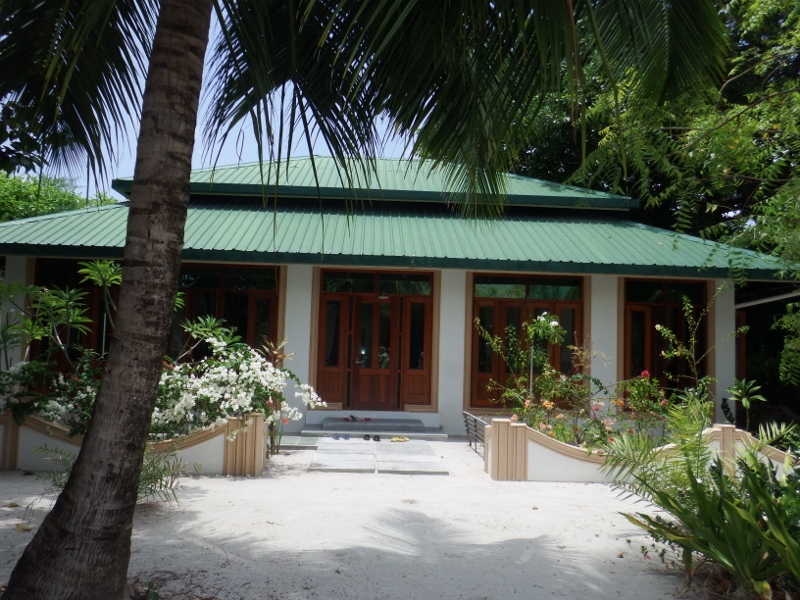
Having spent a day and a half sorting the boat we decided to go for a walk. The beautiful crescent island of Dholhiyadhoo has a half finished resort on it which was probably started about 6 or 7 years ago looking at the timbers on some of the buildings and the dilapidation in general. Tintin and Camomile took their dinghies to the jetty on the west side of the island. This is where the staff quarters are built and it looked fairly finished. The little mosque taking pride of place.
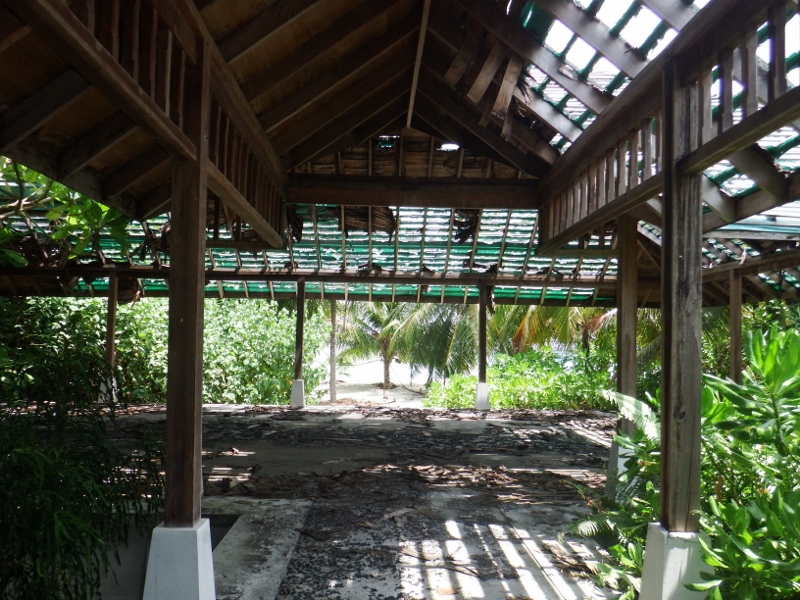
This was going to be the restaurant
As we walked further into the resort it was obvious it would never open. The buildings were so derelict that a new owner would need to take them to ground level before they could rebuild. The restaurant had gaping holes in the roof. The kitchen, the only building with a metal roof, was just being used for storage.
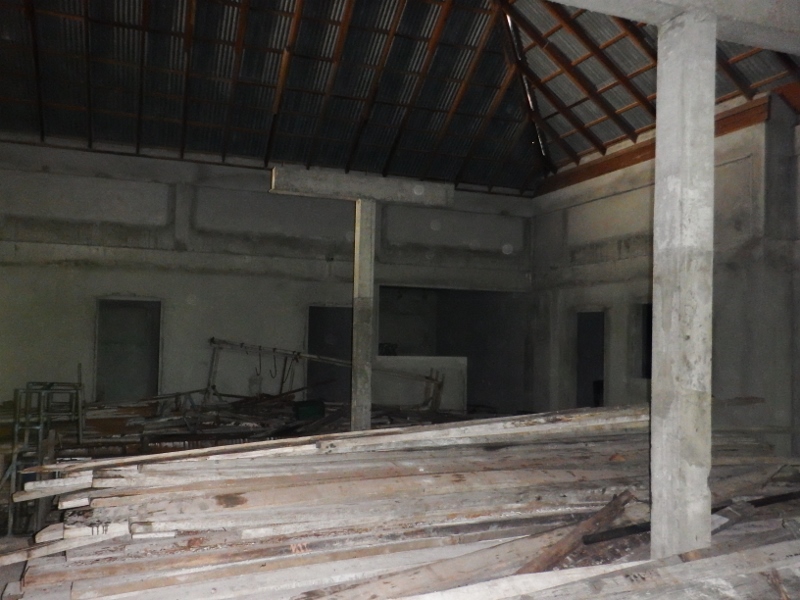
The kitchen
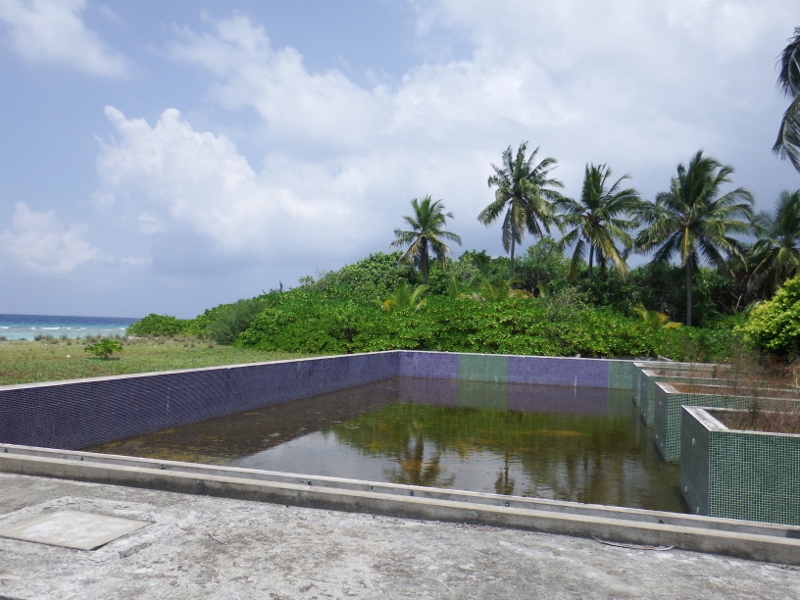
The derelict pool
Even though it looked like everyone was going to have their own pool there was still a big pool that faced north which had a number of buildings surrounding it that were probably intended to be a bar and spa. The rainwater that had collected in it was full of mosquitoes.
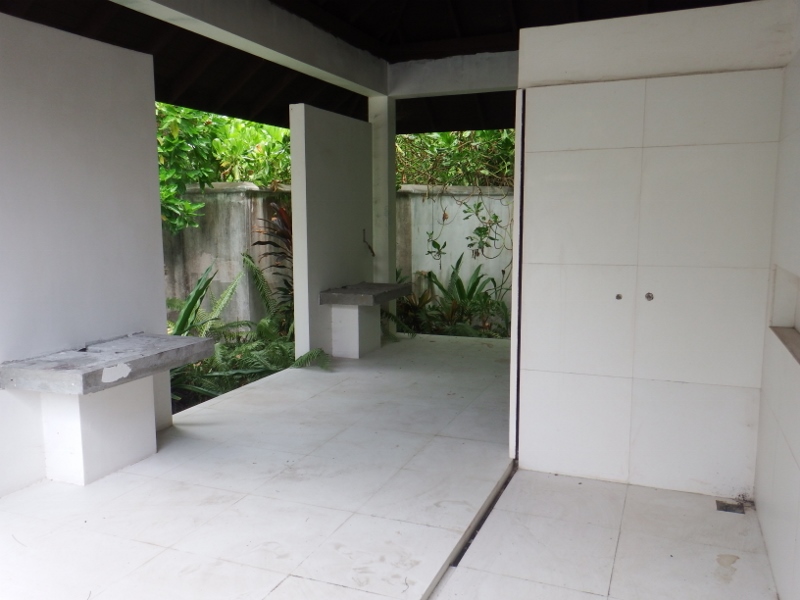

The finished outside bathroom
The accommodation built on the north side of the island was based on land and not overwater so it was possible to look inside them. They were all derelict except villa No 2. It had been finished to presumably show potential buyers what they could look like. It seemed futile considering the state of the rest of the resort but it was an indication of how the finished buildings could look like. The photo above shows how most of them looked but this is the finished outside bathroom with his and hers basins.
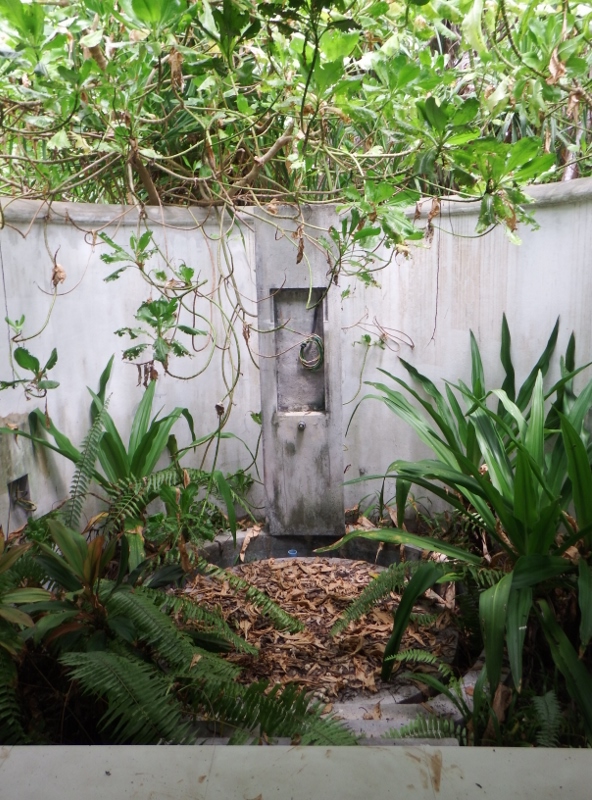
The overgrown outside shower

The finished outside shower

The bedroom/sitting room

Big bed
The photo above is looking out across the bedroom. This photo is taken from the corner looking across the room to the bed. The curtains were drawn to prevent the sun getting in. Also behind the wall behind the bed was an amazing dressing room with an enviable set of wardrobes.

Fancy a swim?
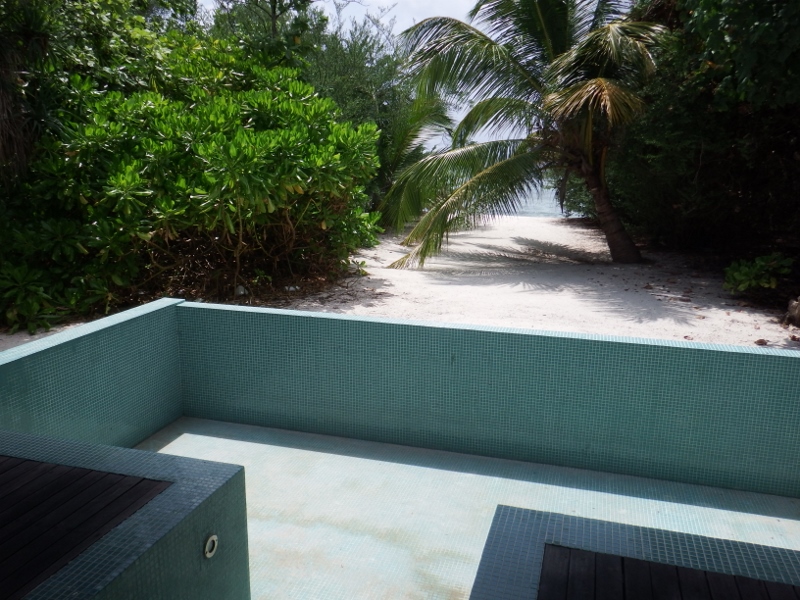
Your own personal plunge pool
Each villa was going to have it’s own pool but most of the pools were full of dirty water but at villa no 2 it was being kept drained and clean. It looked out onto the beach.
All the overwater bungalows were derelict and you couldn’t get any where near them.
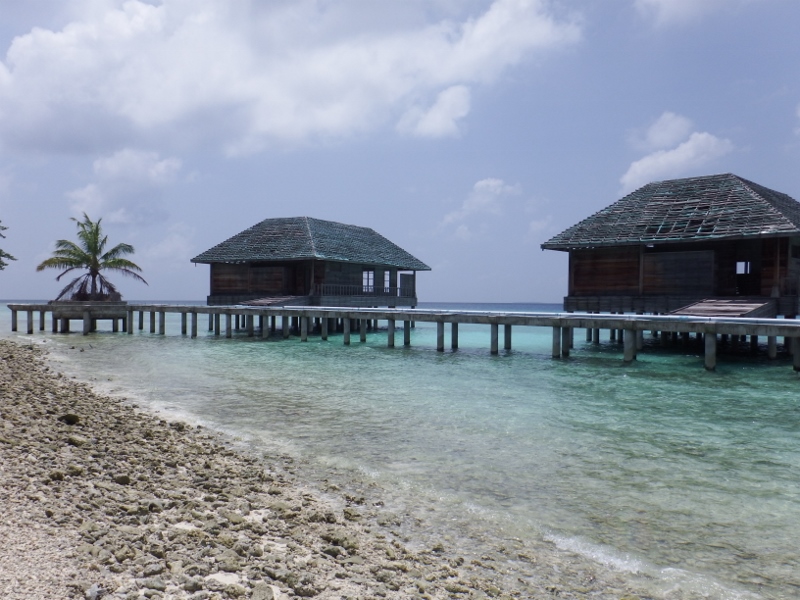
Derelict overwater bungalows

Anchored off the Viha Faru reef
The next day we left Dholhiyadhoo island and Inspiration Lady and Tintin. Norsa had reported on the net that they had electrical problems and we decided to head to Male to meet them when they arrived. There wasn’t any wind so we motored for 4 hours to the Viha Faru reef at
05 40.89N
073 16.422E
The anchorage was good for an overnight stop.
Thiladhunmathee Atoll

One of the batches of overwater bungalows
Wednesday 9th March we weighed anchor and left our beautiful island passing the Waldorf Astoria resort on our way out of the Ihavandhippolhu atoll and heading in a southerly direction from now on. They had certainly made good use of the mother island. There were over water bungalows coming out of the north and south sides of the island and jetties coming out of the east and west, it probably depends on the weather on how they land their clients or there’s always the bright red sea plane that was sitting there waiting for passengers. How the other half live!
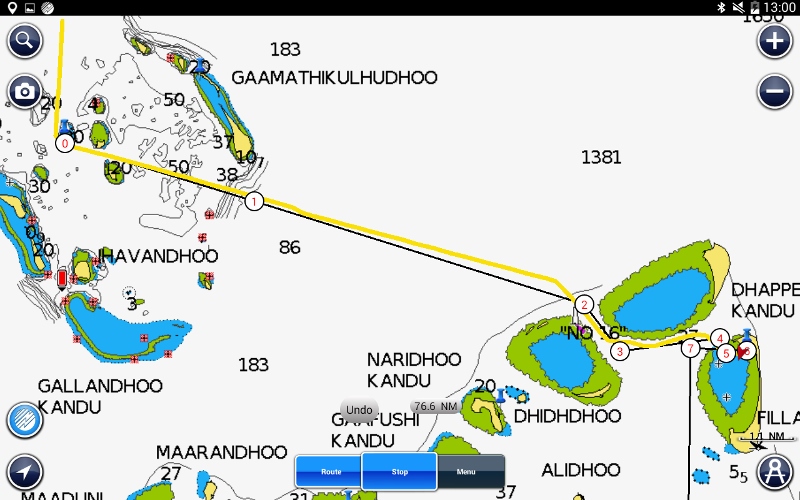
Our passage across to Thiladhunmathee atoll
We sailed, or motored, back into the deep water and on towards the Thiladhumathee Atoll. The numbers on the chart are depth of water in metres. Once we go over the edge our depth gauge won’t pick up depths much more than 150 metres and just flashes in a ‘computer says no’ sort of way. Coming back into the next atoll is a bit unnerving but the reefs are quite clearly visible as we approach. The straight black lines are our planned route and again the yellow line is the track we took.
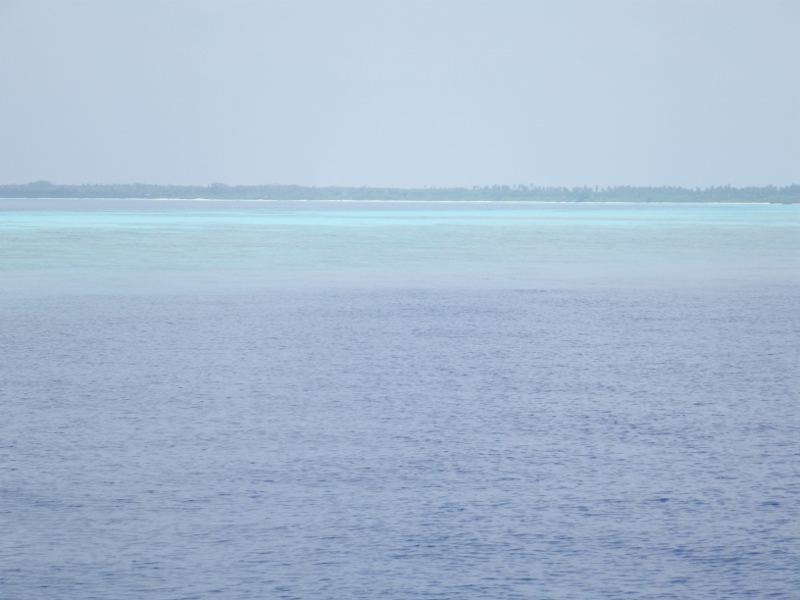
The edge of the reef
The islands are just basically sand bars and don’t have any height so you don’t see them until you’re quite close. It would be dangerous to do a night sail around this area.
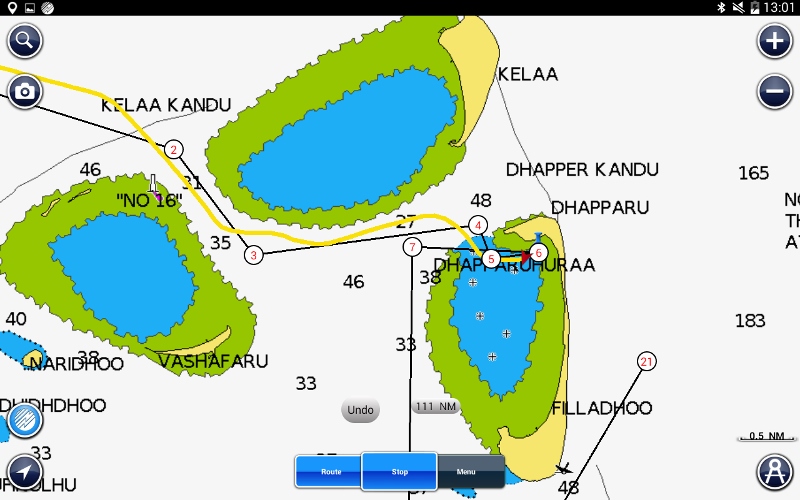
Our track in
The island just above where we stayed is called Kelaa and was the northern British base during WWII.
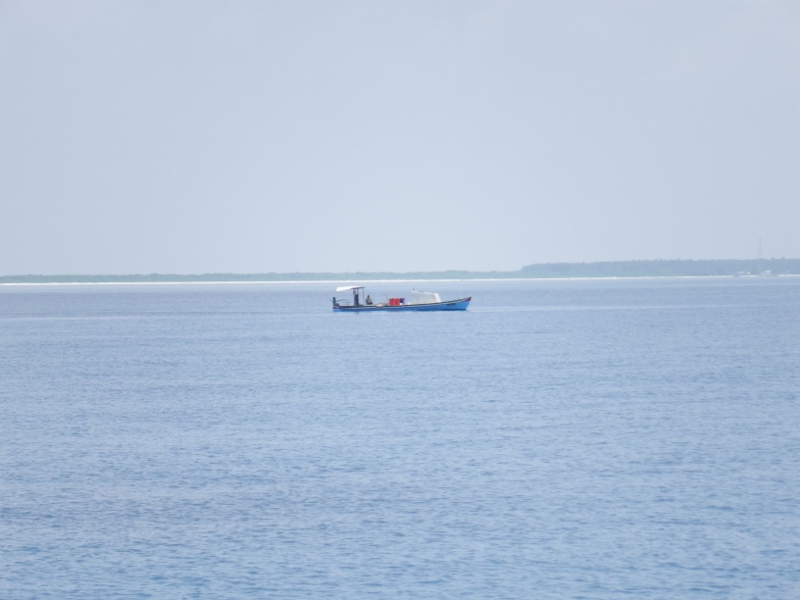
Local fishing boat
This local fishing boat had come from there. Unfortunately there’s no way in for a keel boat drawing 2 metres so we continued on to the lagoon in front of Dhapparu. Where we found Inspiration Lady and Tintin. Our position was
06 54.93N
073 13.6E in 10.8 metres sand.

Tintin and Inspiration Lady
Not sure I would recommend this anchorage because the snorkeling wasn’t very good and the beach is full of mosquitoes but Inspiration lady and Tintin had a nice visit at the village on the island of Filladhoo to the south east of the anchorage.
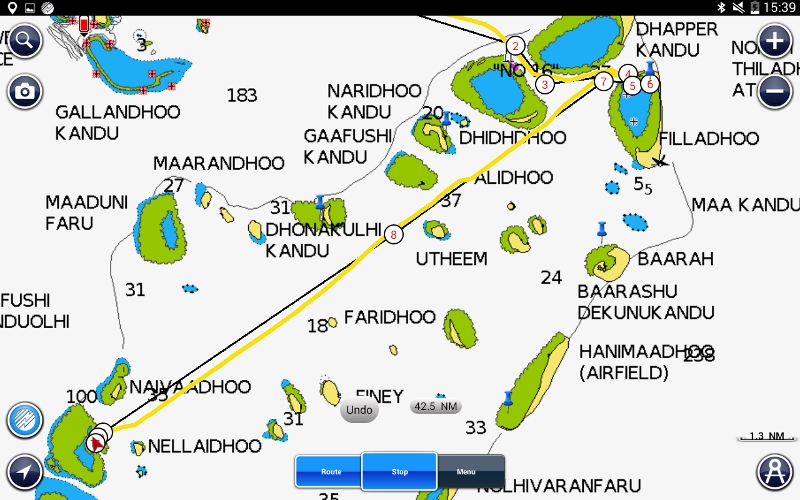
Our passage trough the reef
Thursday 10th we left Dhappura and headed southwest to the Rasfari reef. There was a gentle breeze from the north east so we put the twin headsails out and sailed there. So far we haven’t come across any uncharted reefs and the charted reefs are easy to see with the change in the colour of the water. Some of the islands have been a bit off set according to the radar.

Our track shows us going over the reef
This photo shows our track over the edge of the Rasfari reef, the green area is reef which means we shouldn’t cross it but you can clearly see our track takes us straight across it. I had checked it out on google earth which showed a clear passage through the reef plus we had some waypoints from other cruiser that had already visited. When we arrived I stood on the bow looking out for the deep water. The passage was narrow but there was plenty of room for us. It is a deep anchorage but we managed to find one of the few 18 metre spots there.
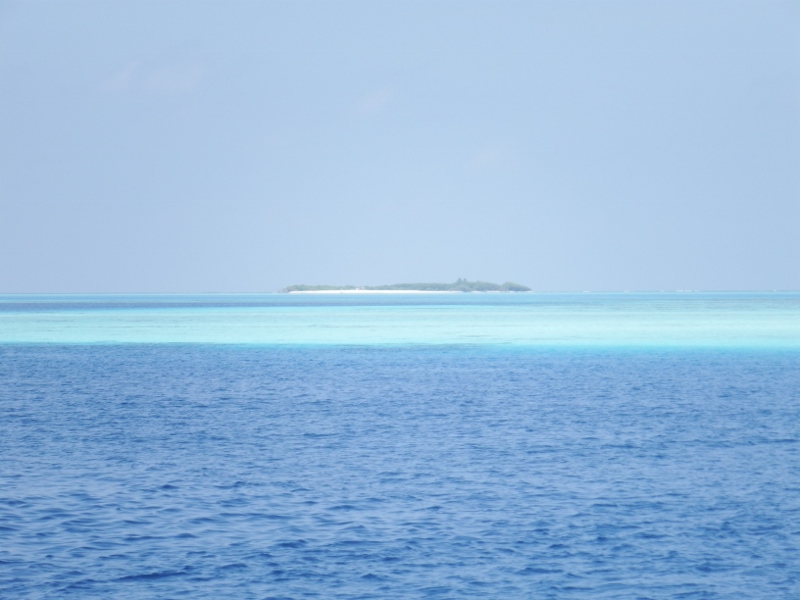
Looking across the reef to the nearest island.
We anchored in position
06 43.082N
072 55.422E
It was a stunning spot. We were over two miles from the nearest island but the reefs were giving us protection.
There was a reef to our port and starboard sides and a few hundred metres in front of us. So the dinghy was lowered and off we went.
WOW the snorkeling was amazing. I have so many photos and found it difficult to choose which ones to post on here so I’m just going to post lots of them.

The plate coral was the best we’ve seen since Fiji
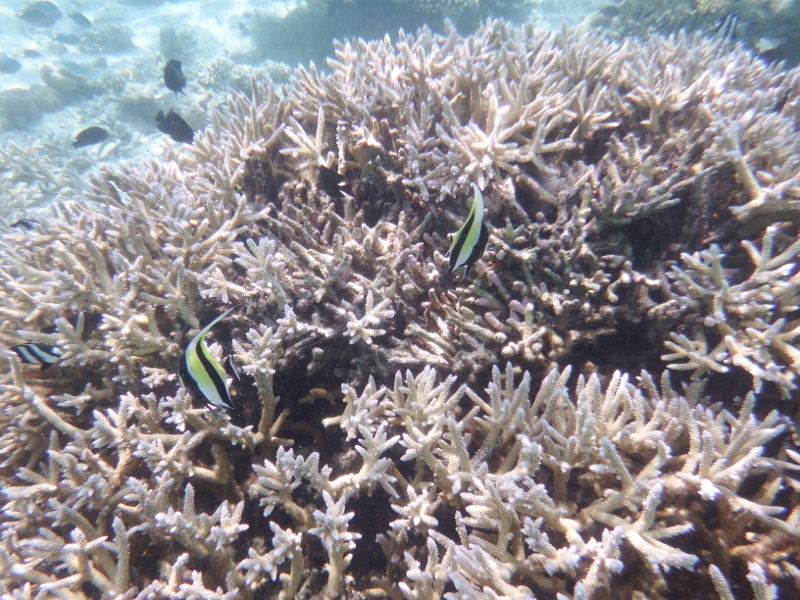
Lots of stag coral too. Can you spot the Angel fish.
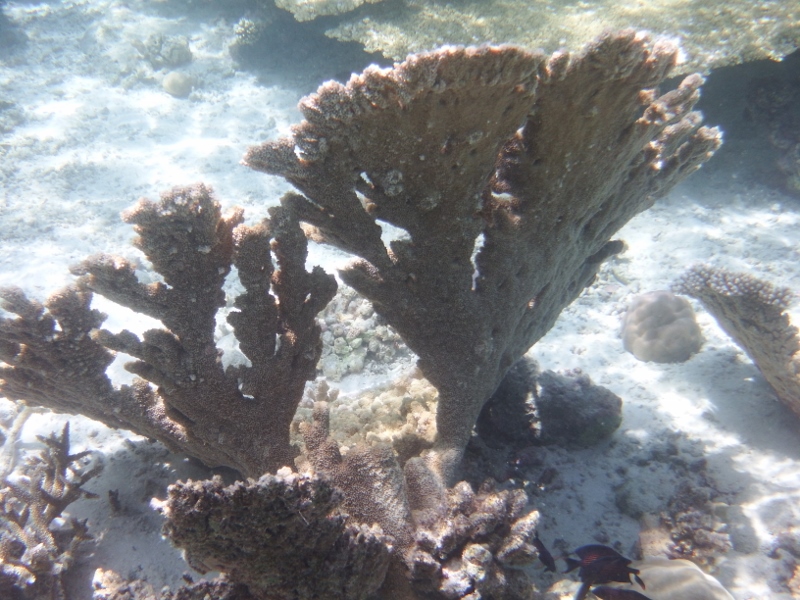
More hard coral
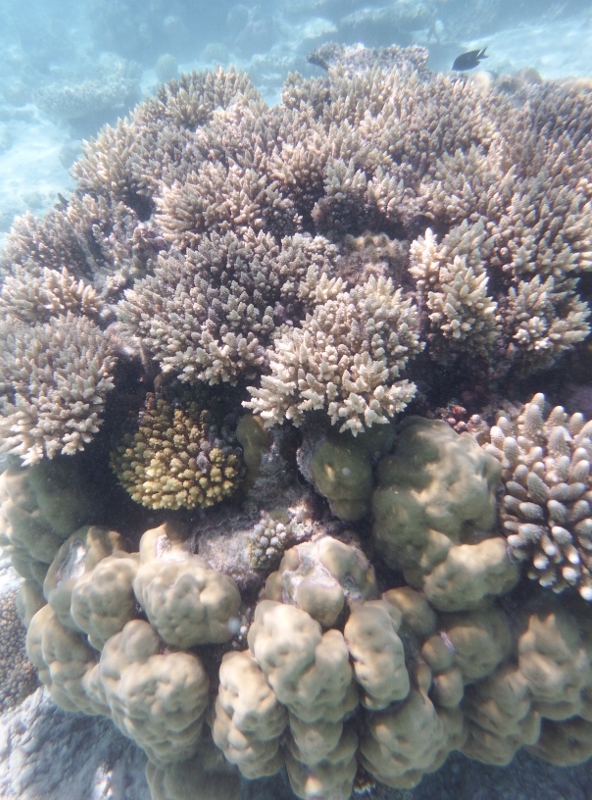
Beautiful coral
All of these photos were taken at the reef to the east of us.
The next day we went forward to the reef to the south and west of us and the fish life was astounding. Snorkeling along the edge of the dropoff was the best. The fish hang around waiting for the nutrients to float off the reef. So many fish.

Unicorn fish
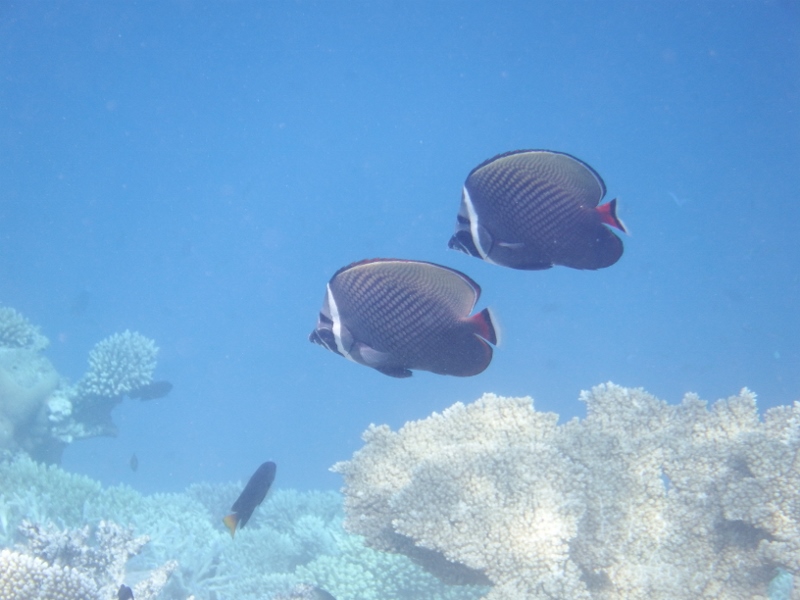
Bat fish I think
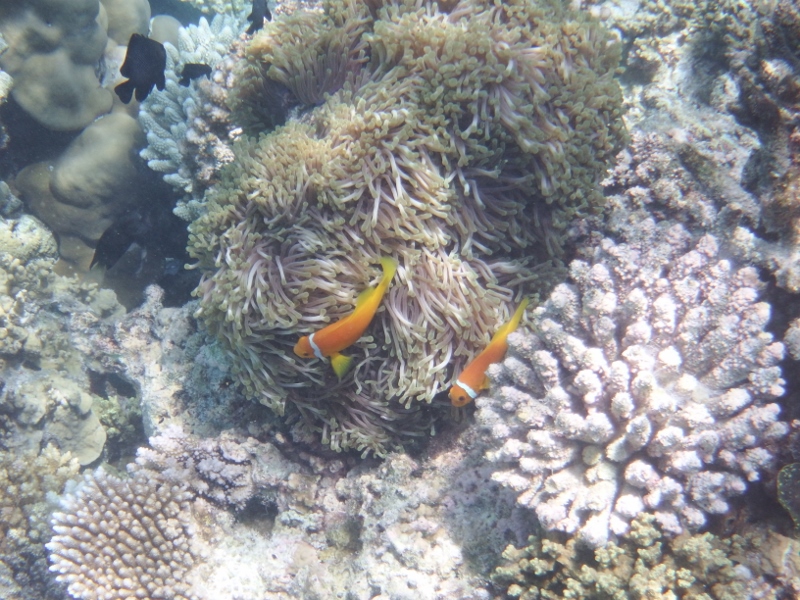
Clown fish or Nemo
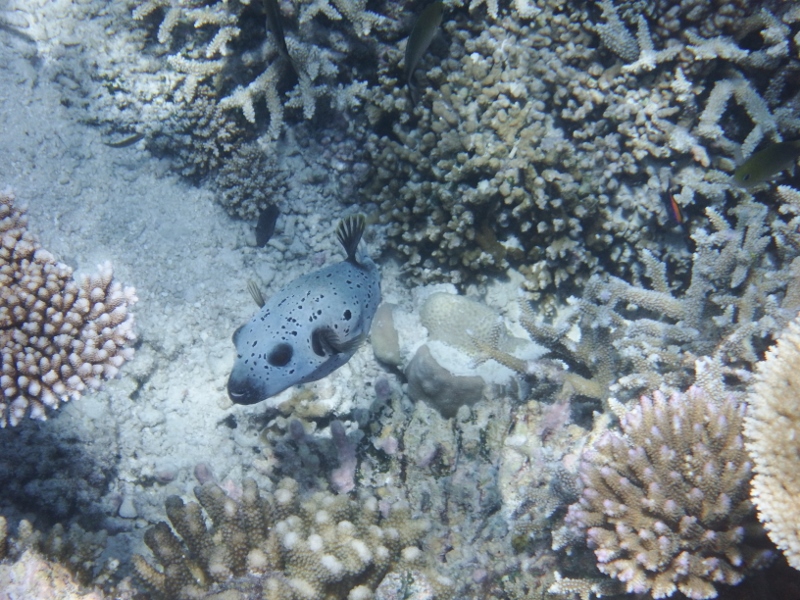
A puffer fish
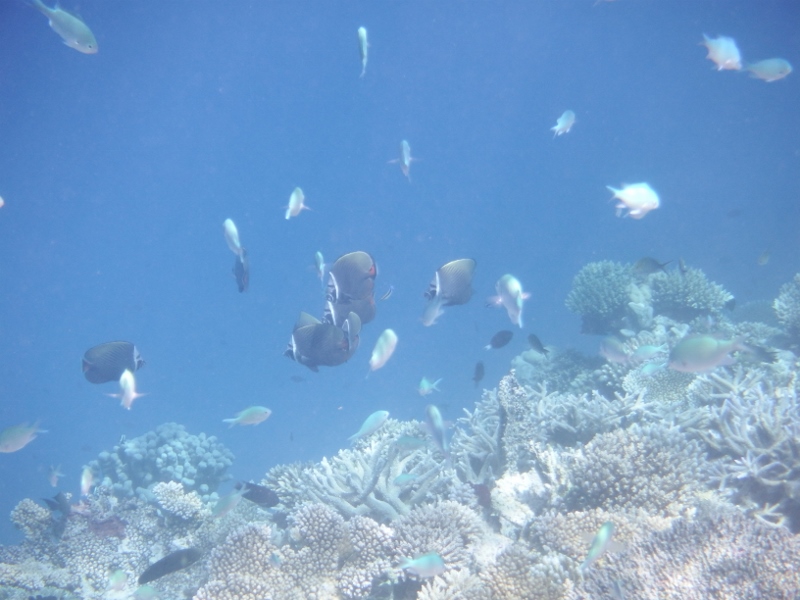
So many fish
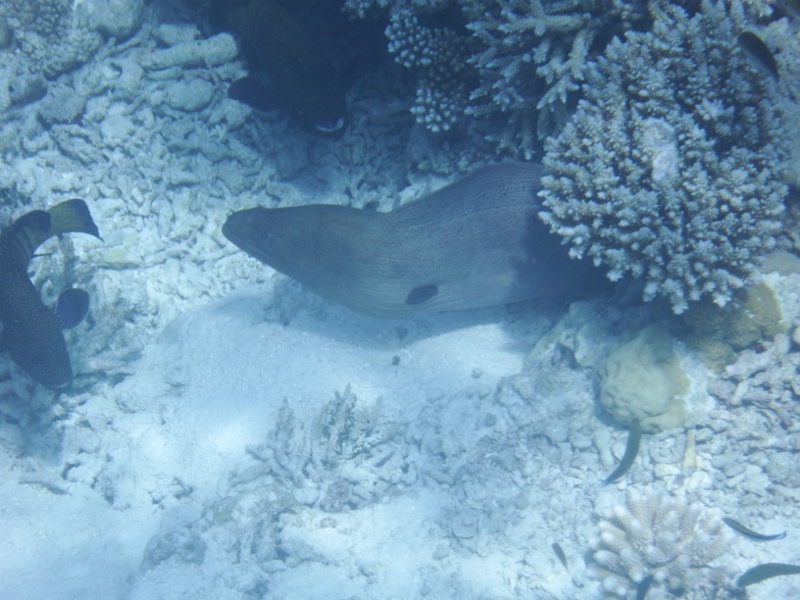
Moray eel
Then we spotted this big boy lurking under the rocks – a moray eel.
Quite lucky it see it because it blends in with rocks and it was quite a way down, about 4 or 5 metres. He came out of his hiding place and slithered under the next rock. It was a good metre and a bit long.
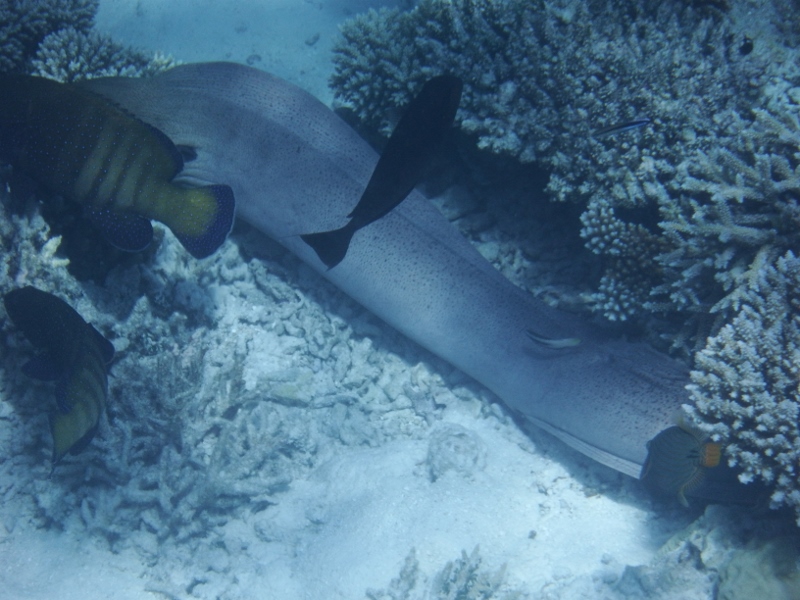
Moving on
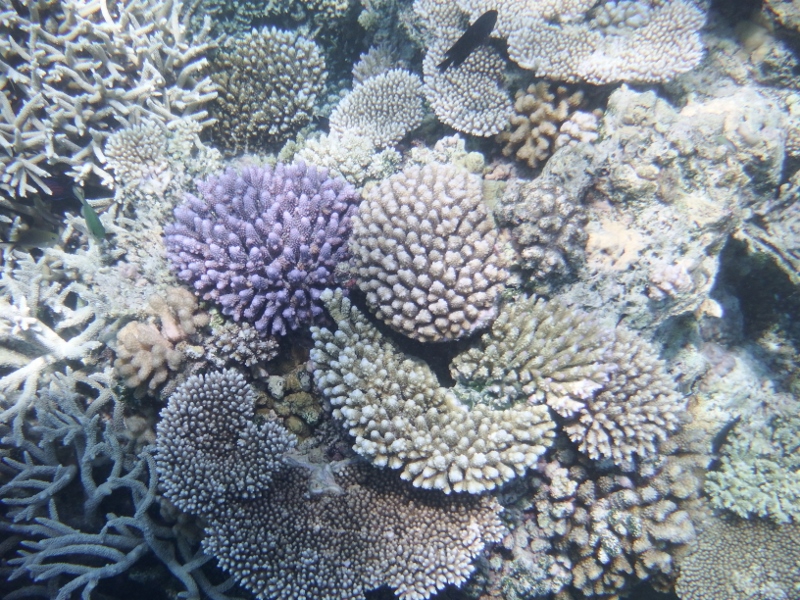
More coral
Some of the little coral heads are so pretty and colourful. This one was mauve, pink and white.
Then we spotted a big 3 metre nose to tip of tail sting ray. This wasn’t one of those tame ones you can feed in the resorts but a real wild one. A bit scary really.

A large stingray with a long tail.
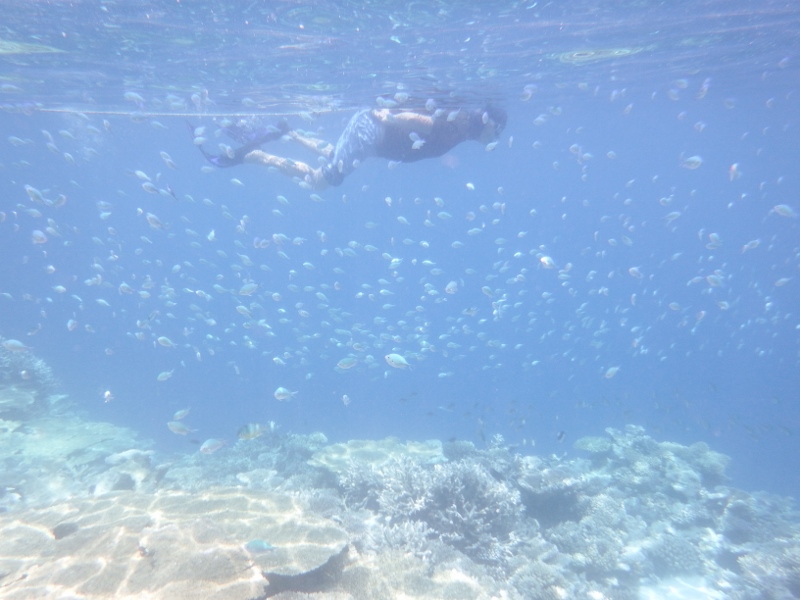
Bill swimming with 100s of fish following him.
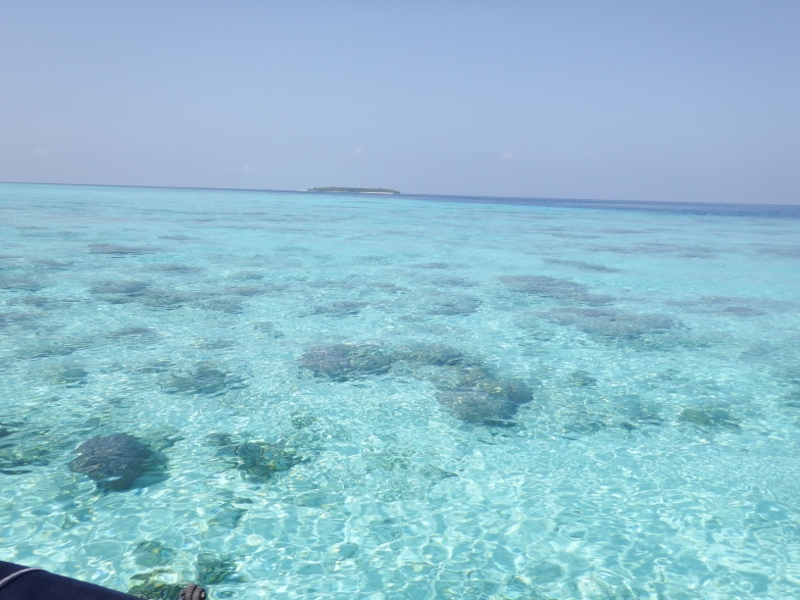
Looking at the reef from the dinghy
Back in the dinghy and motoring to the reef to our south. The colour of the water here is astounding The bommies were further apart in the middle of the reef. While motoring over the lagoon we could see a spot where we could have anchored in 3metres in sand but getting over the reef is the tricky bit. I think we’ll leave Camomile where she is. She’s quite happy watching us have fun.
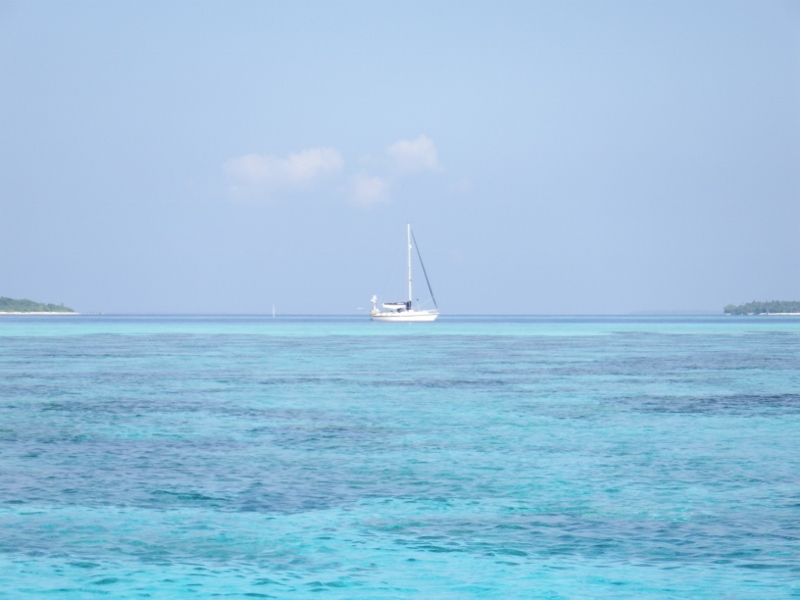
Camomile across the reef.
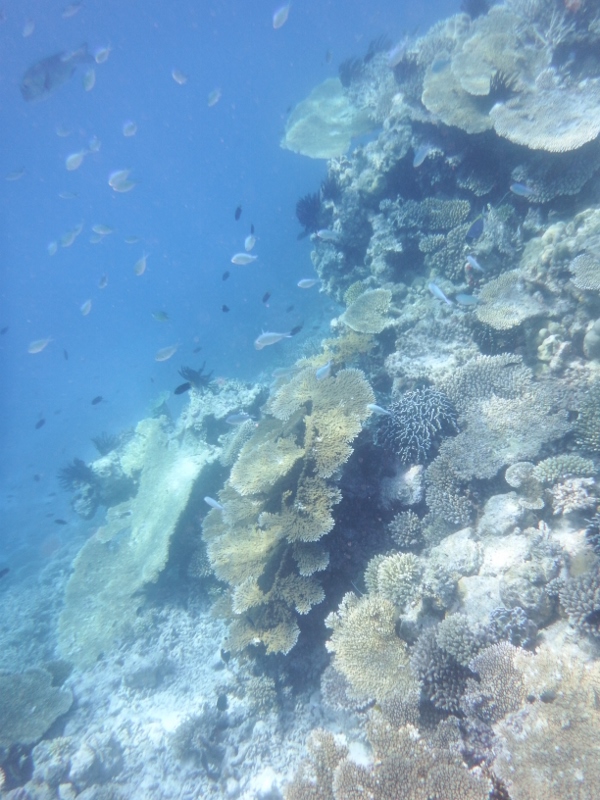
Looking over the edge
For the boats coming behind us. From the anchor spot look to the south west you’ll see a red dinghy buoy which the fisherman often use with a white buoy near it (hope it hasn’t gone) when you’ve travelling in your dinghy on the west side of the reef keep those two buoys in line and head directly south. You’ll come across another buoy just before you get to the reef (it’s difficult to see) that reef in front of you is the best. An amazing drop off.
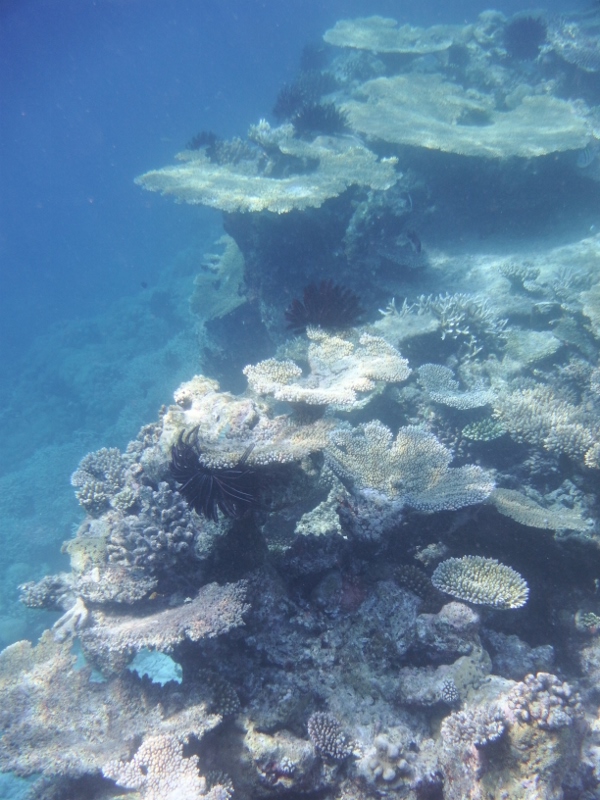
Amazing coral
When you’re swimming along the reef looking over the edge it feels like flying as you look down 10 to 20 metres into the deep blue. It’s a divers paradise.
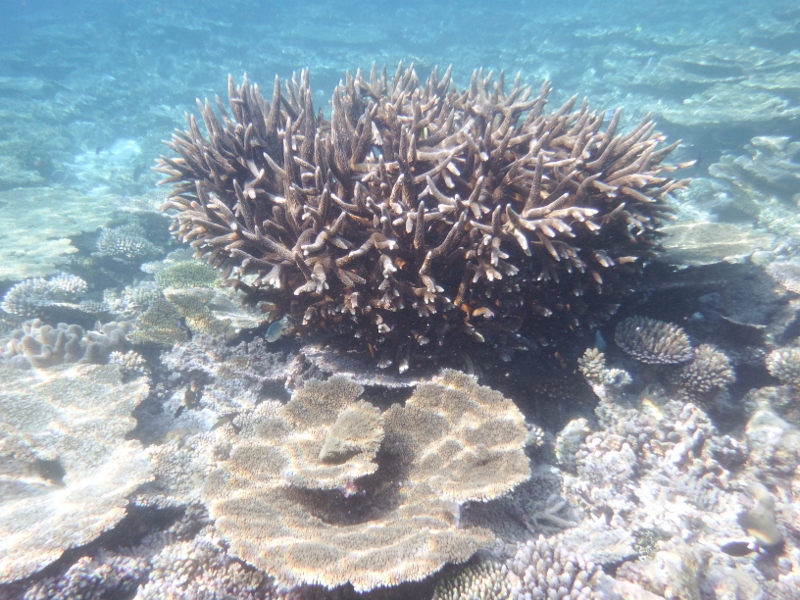
Beautiful stag coral rising up from the plate coral
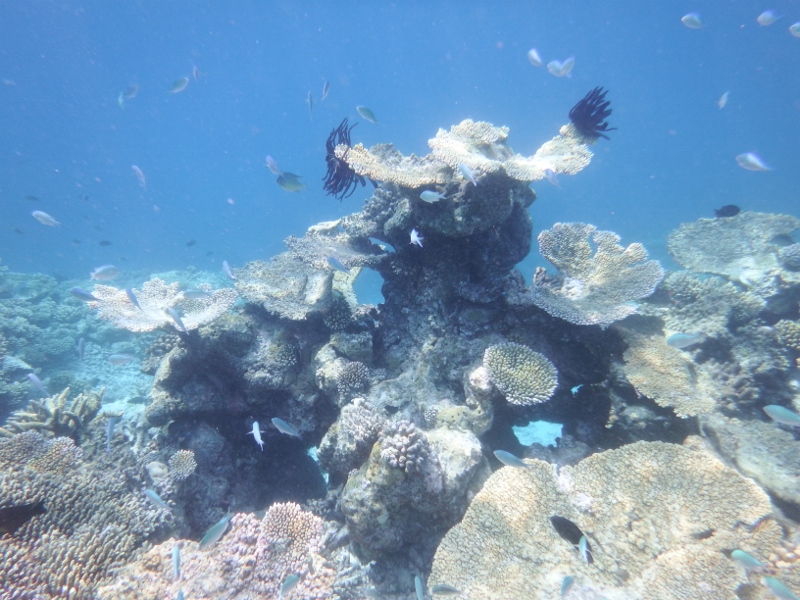
Last coral picture. Looks like a sea monster with horns.

Our route to Kulhudhuffushi
Saturday 12th we left the Rasfushi reef on our way to Kulhudhuffushi where we were meeting up with Inspiration Lady and Tintin again. After an early morning start we got to the harbour at roughly the same time as Inspiration Lady. It’s possible to tie to the wharf but Bill wasn’t happy doing that so we went in and dropped our anchor. Unfortunately we were drifting too close to the shallow area by the wall. Bill tried to bring the anchor up quick but it jammed and wouldn’t go up or down. Gary was planning to go up against the wall and suggested we tie alongside them which we did so Bill was able to sort out the anchor chain. Tintin came in about an hour later and also tied to the wall.
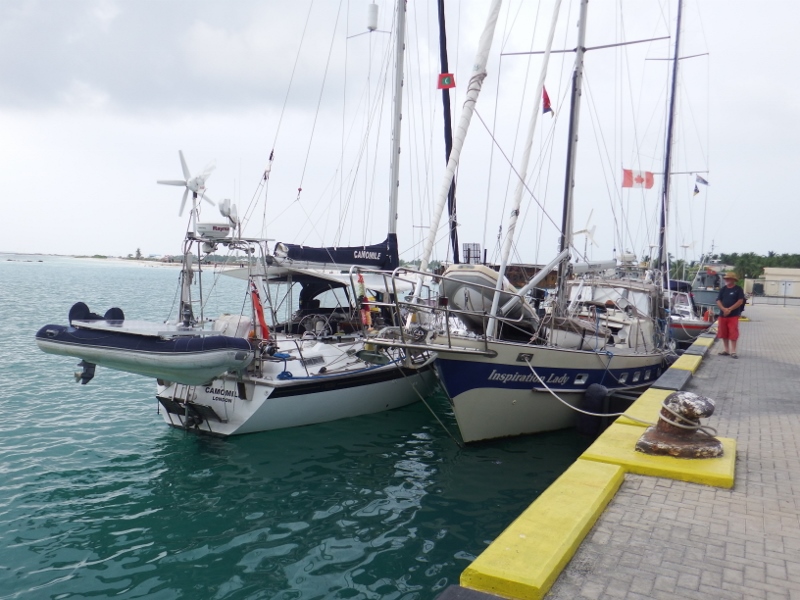
Camomile alongside Inspiration Lady
Our position
06 36.9N
073 03.9E
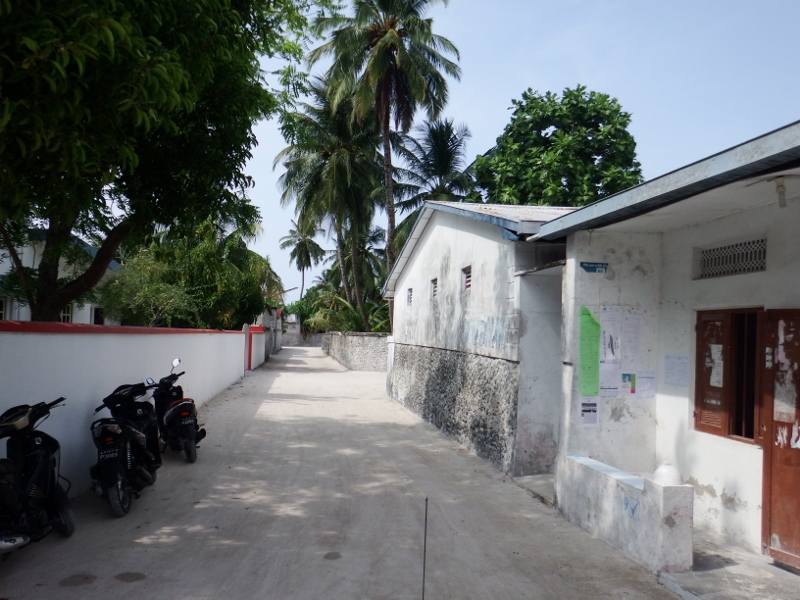
More coral houses here
It was only US$12 to go into the harbour which was very reasonable and saved us anchoring in the deep water outside. The town wasn’t very big but had an ATM so we were able to get some local currency. It also had some groceries stores and a couple of places to eat. It was Jackie’s birthday and we all went out to celebrate (camera left behind).
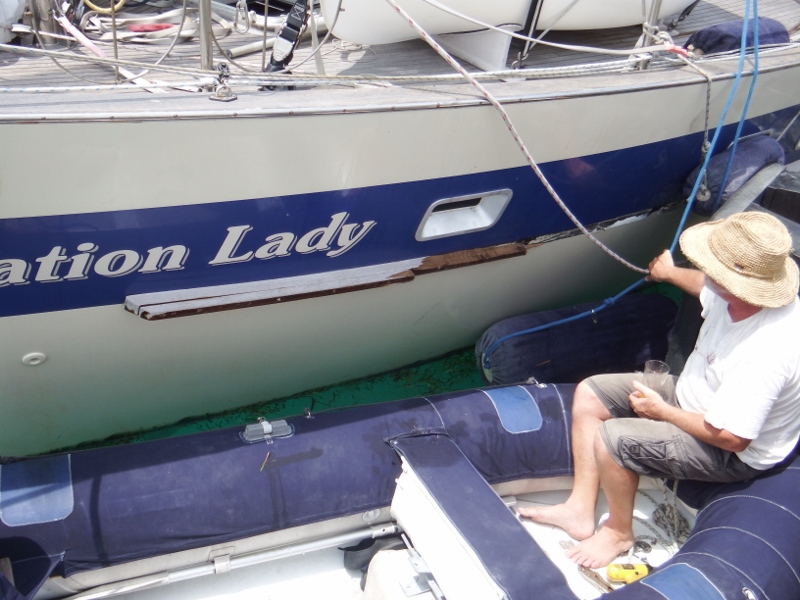
The damage to Inspiration Lady
The tide dropped overnight and unfortunately Inspiration Lady’s rub rail managed to get under the big rubber fender that is permanently attached to the wall of the wharf and as the tide was coming back up it ripped part of it off. The fenders had bounced out of the way. Poor Gary. Bill helped him remove the old wood but he has a serious repair to do.
We stayed there two nights then headed out on 14th March to continue south and into Miladhunmadulu atoll.
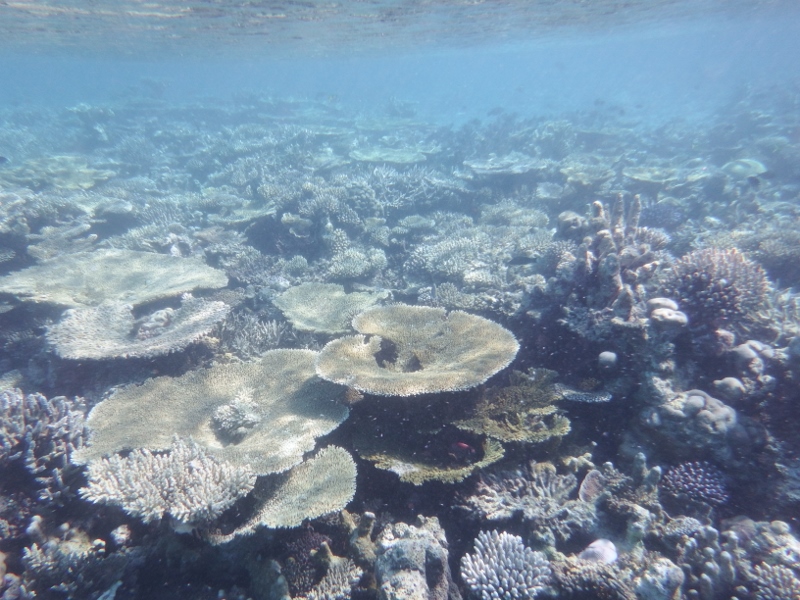
One last coral picture.
 Camomile