Author Archives: yachtcamomile
Noumea to NZ – day 3
Wednesday 26th October
Our position at 06.00 this morning
26 02.8 south
167 49.4 east
131 miles covered in the last 24 hours
We had a good night but we had a weak front come through at 23.00 which brought a wind shift. We had to put a reef back in the main but the good news is that we are heading more towards our destination – always a good thing. The bad news is the wind died at midday so we had to motor for 2 hours but at least it charged the batteries. The wind came back and we are now whizzing along with full sails up. We are still close hauled but not heeling quite as badly as we were. Without over sharing too much you need 3 hands to put your knickers on in the morning. Try putting your leg in a pant with one hand and then pulling them up whilst hanging on, it’s very difficult, but if you let go when standing on one leg you full straight over, it’s not very dignified! I have to wedge myself in some where; trousers are even worse. The temperature is starting to drop but it’s still 22C so not bad really. It’s spring in NZ and we are earlier than last year so it will be chilly for a few weeks. The sea is now only 18.3C so I won’t be going swimming. My evening watch is lovely because I get to see the sunset and with the evenings drawing out as we head south it stays lighter longer. Once the sun has gone down the stars come out and the luminescence in our wake is magical.
Noumea to NZ day 2
Tuesday 25th October
Our position at 06.00 this morning
24 13.8 south
167 01.9 east
127 miles covered in the last 24 hours
We had a reasonable night as reasonable as one can traveling along at 30 degrees. The wind calmed down and it’s now a F4 but still ESE. As we are now 24 degrees south we are officially out of the tropics having passed over the tropic of Capricorn over night. We can still wear shorts and t-shirts during the day but the nights are getting chilly. The sea is not so choppy but we still have the long swells coming from the Tasman sea. About 4 boats left at the same time as us and the rest are leaving today. We have a boat called Mediterraneo with Stefan on board just behind us and we are able to keep contact on the VHF but as it’s an Island Packet I’m sure he’ll pull ahead in the next few days. I always listen to the SSB at 8am to see where the other boats are and have a chat with them. We had a boat cross our stern this afternoon and we discovered we knew them. It was called Panache having a lovely down wind sail from Fiji to Sydney, we had had a meal with them at Vuda point in Fiji – it’s a small world even on big oceans.
Noumea to New Zealand – Days 1
We have had a wonderful season in the South Pacific islands but the cyclone season is coming and it’s time to head south. I’ve got lots of diary entries to write up for the website when we get back to NZ.
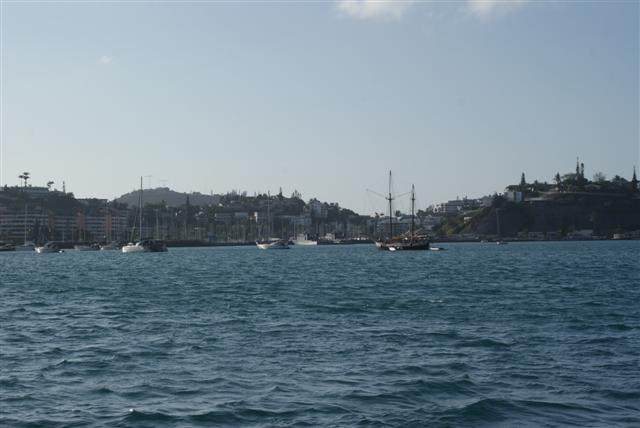
Leaving Noumea
We left from Noumea in New Caledonia early Monday morning 24th October, after the Rugby. New Caledonia is French territory so it was an interesting evening. The rally was invited to the CNC yacht club to watch the game. There were 2 other Brits, about half a dozen Americans, a couple of Canadians and about 30 kiwis on one side of the room and the French on the other. The kiwis had brought in the flags off their boats and some painted their faces. When the French scored a try I thought the roof was going to cave in with the noise, which was just as bad when the All Blacks scored. The last 10 minutes or so were very tense when the All Blacks were trying to keep possession of the ball and when the final whistle was blown the kiwis went mad. The French took it very well and shook our hands but the town was very quiet that evening without the repeat of the fireworks we had had the previous week when they won the semi final.
Day 1 We left from 22 17.1 south 166 25.9 east
We had checked out of customs on the Friday so we were clear to leave first thing in the morning. We lifted the anchor at 6am but then put our clocks forward 2 hours to bring us in line with NZST. It was a sunny day but the forecast 22 knots was nearer 28kts. We motor sailed and sailed the 3 hour passage across the lagoon out to the Amedee light house which marks the edge of the reef. The waves were breaking across the reef at either side of us. Once outside the depth dropped off to more than 200 metres quite quickly so the depth sounder immediately went into a sulk. The wind was cleaner once we were clear of the little islands and reefs inside the lagoon and the sea more settled. The wind was coming from the ESE and we were heading south east – so we were facing an 892 mile beat, oh deep joy, I loooovvveee passage making.
Niuatoputapu to Fiji June 2011
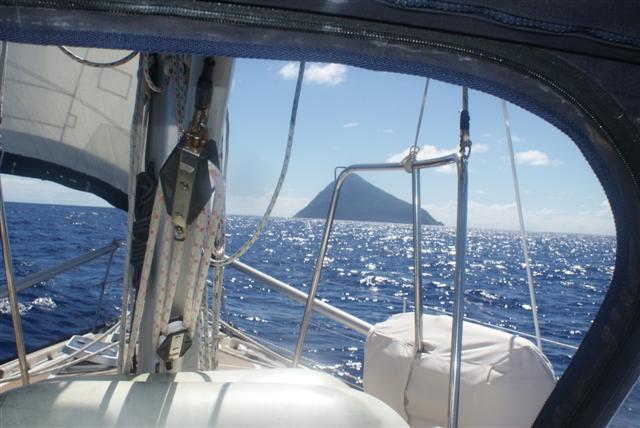
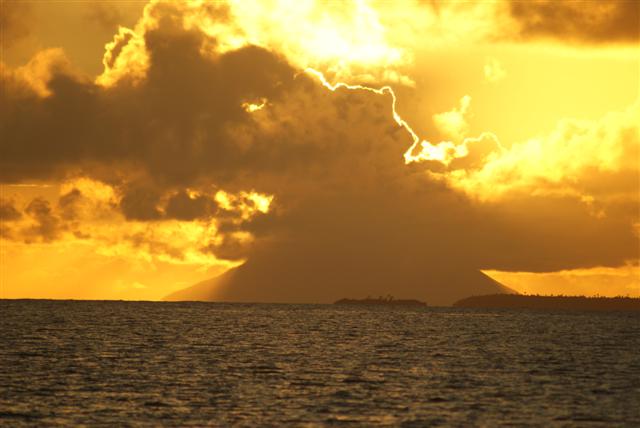
Volcanic tip of Niuatoputapu
Although we had checked out of Tonga there was one more Island we planned to visit. Niuatoputapu (nicknamed new potatoes by cruisers) is about 200 miles north of the Vava’u group, which meant an overnight sail. We left at 3.30 in the morning and sailed most of the day with the cruising chute up in very light winds. The other rally boats gradually passed us, some with engines on but we enjoyed a lovely peaceful sail. The wind dropped overnight and we had to motorsail until 2.00 in the morning when the sails were out again. The volcanic tip of the island was visible for quite a time before we arrived at lunchtime.
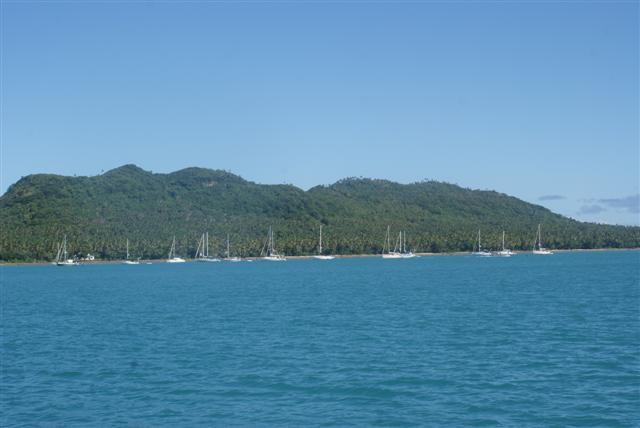
All the rally boats in the anchorage
We were the last boat to arrive and were dismayed to see the sight of all the boats anchored in the beautiful anchorage, one of the downsides of being in a rally. That evening everyone took their dinghies to a little island in the lagoon for sundowners. The damage from the tsunami earlier in the year was evident.
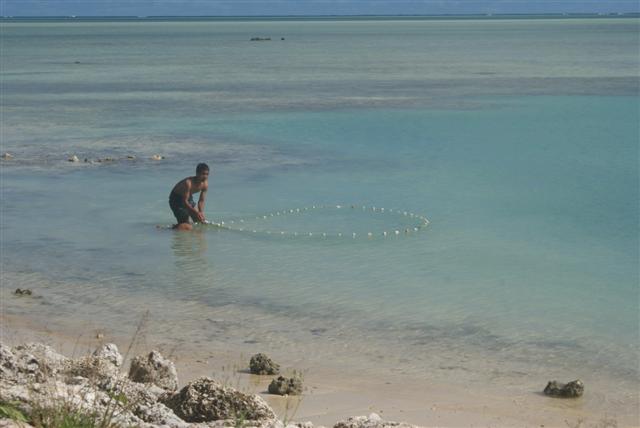
Local boy fishing
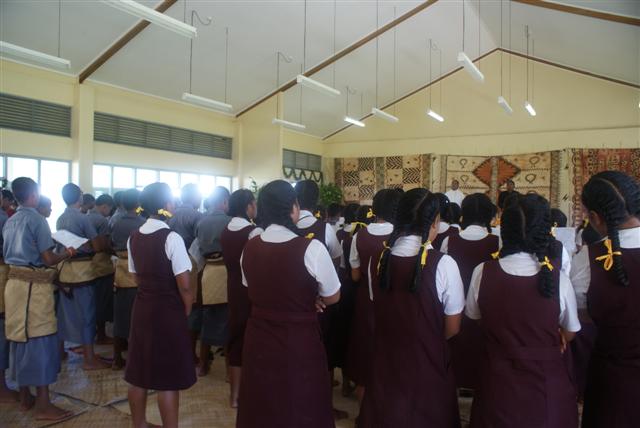
Children in assembly
The next day the local school invited us to join them in celebrating their school festival. We were invited into the school hall to watch their assembly and listen to their singing. It was a lovely service although it was mostly in Tongan. The preacher spoke some English and welcomed us to the school. The children had a very strict uniform code right down to the girl’s hairstyles and ribbons in their hair.
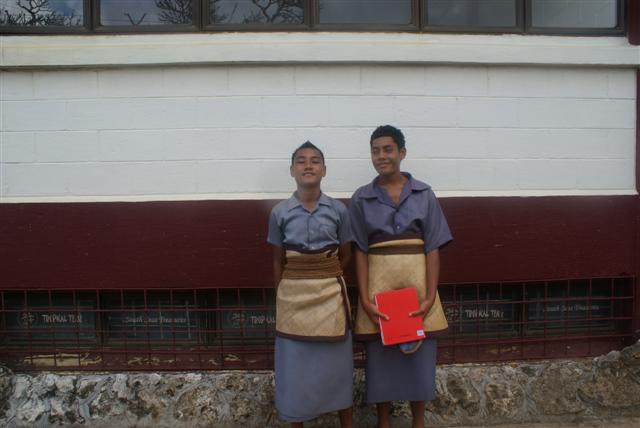
Local school boys wear a 'Sula'
The boys, like the adult men, don’t wear trousers but a wrap around ‘sula’ topped by a piece of coconut matting held in place by a length of cord. None of the children had shoes on which was bizarre.

View from the school hall
The view from the hall out across the grounds was amazing and, at times, quite distracting. We made our way back to the boat past their little houses. This was the furthest north we’ve travelled since the Marquesas Islands and it was now time to head west towards Fiji. The other boats stayed for a few more days but we had to leave for Fiji so I could catch my flight back to the UK.
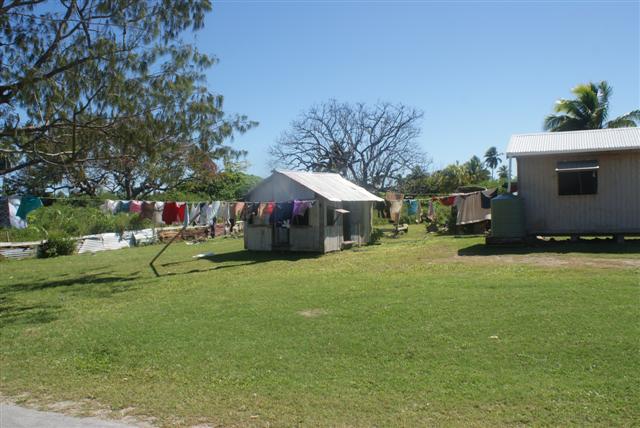
Local houses in the village
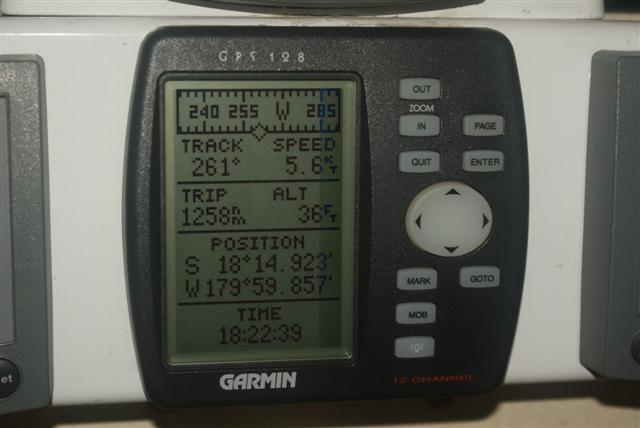
GPS showing us still west of meridian line
We left at 15.30 with our twizzle rig flying sailing directly down wind for as long as we could before the wind dropped. The engine went on at midday the following day as we couldn’t afford to slow down. The temperature was 35C so we tipped buckets of seawater over each other to cool down but even the sea was warm. For the next 48 hours the engine was on then the wind picked up again.
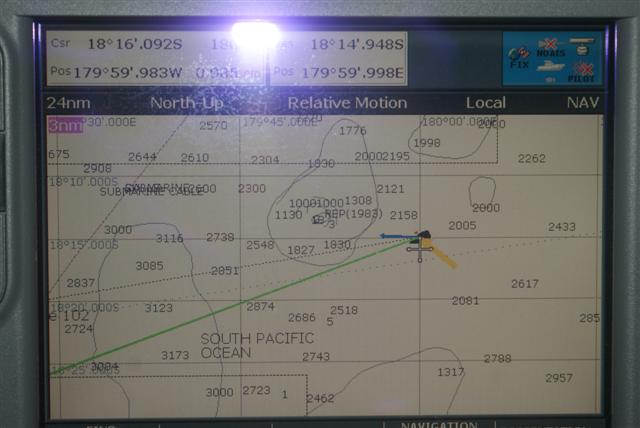
Crossing the meridian line
At 18.30 on the third day we crossed the east/west meridian line, it’s fascinating to watch the GPS swap from west to east, just as the wind returned enabling us to start sailing again.

GPS showing us east of the meridian line
The wind was very light but with the main up and the cruising chute flying we were able to maintain the 5kts necessary as we sailed around the south of the main island of Viti Levu on our way to Lautoka for our check-in.
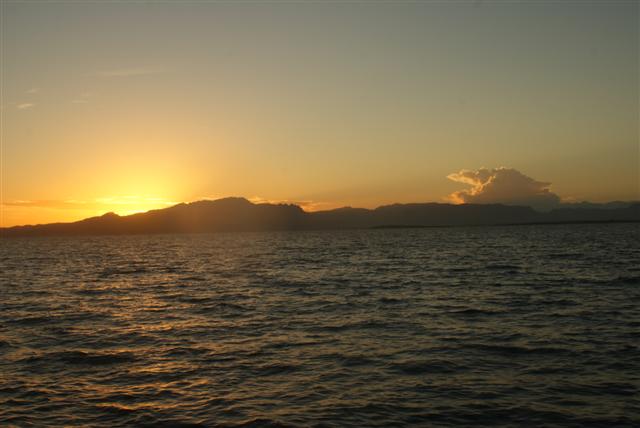
Early morning arrival in Fiji
After our forth night at sea we entered the Navula passage through the reef to be greeted by a fabulous sunrise, finally dropping our anchor at 9.30am on Thursday 23rd June.

The sun just appearing over the hills

Tim and Rebekah aboard their Westerly called Kittiwake
Most of that day was spent in customs, immigration, gaining quarantine clearance and obtaining our cruising permit. Gabby and Richard from Riga II were there also (we’d met them in Tonga) so it great catching up with their news while we were waiting for the various officials. We were delayed in town and were late back to customs to finalise our clearance but I think it was meant to be because when we returned to the customs building we bumped into our great English friends Tim and Rebekah who we haven’t seen since Gibraltar in October 2009. They were just checking out of Fiji and planned to leave the next day so it was meant to be. We all enjoyed a great meal together catching up on the last 2 years including looking at their wedding photos from the previous year.
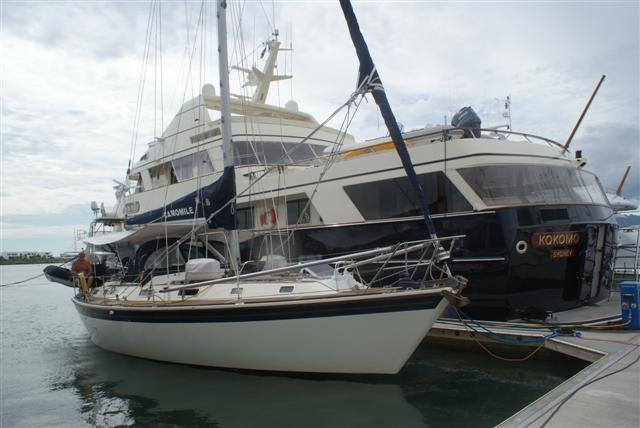
Camomile's sunshade in Port Denerau
The next 3 days was spent in a whirlwind of provisioning for Bill, washing and packing ready for my trip back to the UK while we were moored in Port Denerau (we had our own personal sunshade). Camomile was later moored to a buoy while I was away which was cheaper. Bill also had her lifted for annual maintenance so I got to miss all that – lucky me.
Vava’u, Tonga
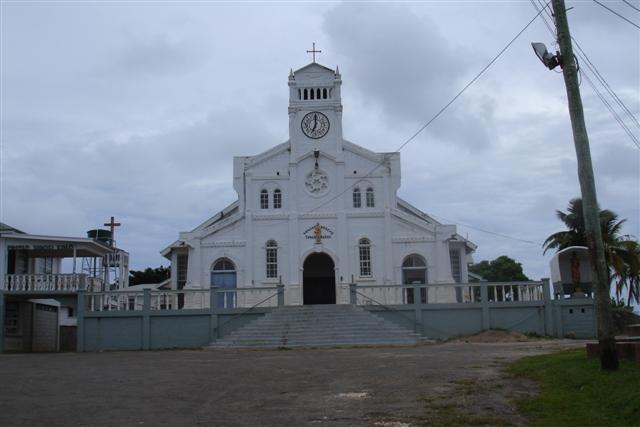 Our position on Saturday 21st May
18 39.4 south
173 53.9 west
We left Pangai Saturday 21stMay to sail overnight to the Vava’u group of islands. We had a F3/4 southeasterly; perfect trade winds. We motored out of the reef and hoisted the sails for an overnight sail. There was a boat following us all the way and when we got into Neiafu, the main town in Vava’u, we discovered it was Riga II a Swiss boat we last saw at Big Mama’s in Nuku’alofa with Gaby and Richard on board. We picked up a buoy in the harbour and went ashore to explore. Sunday’s are reserved for going to church inTonga and absolutely nothing was open. In the evening the big catholic church on the hill was broadcasting hymns accompanied by rock music across the Neiafu, it was bizarre.

The market
Neiafu isTonga’s second ‘city’, but it’s still a sleepy little town of 6000 inhabitants. It’s more colourful and appealing than Nuka’alofa. The next morning we all headed back into town to look at the shops and found a wonderful local market selling lots of bananas, pineapples, papayas, long beans, peppers, tomatoes, lettuce, cucumber, onions, and watermelons for very little money. It’s possible to get potatoes but most of the locals eat cassava, which is a root vegetable similar to sweet potato, but a bit of an acquired taste. The ladies on the market stalls were very friendly and even though we were charged tourist prices it’s still very cheap ranging from T$1 to T$3 (35p to £1) a bundle. Although it seems much cleaner here it’s still quite dirty. There is a strange assortment of shops in Neiafu, many owned by the local Chinese community. It isn’t possible to get all your shopping in one place. I spend ages looking around them all to see what they have for sale and then go back to buy it. They may have chicken in one of the freezers in one shop but that same shop may not have kidney beans or coffee. The word ‘shop’ is a very loose term any way because some of them are little more than large garden sheds with very poor lighting and just warehouse racking for shelves. 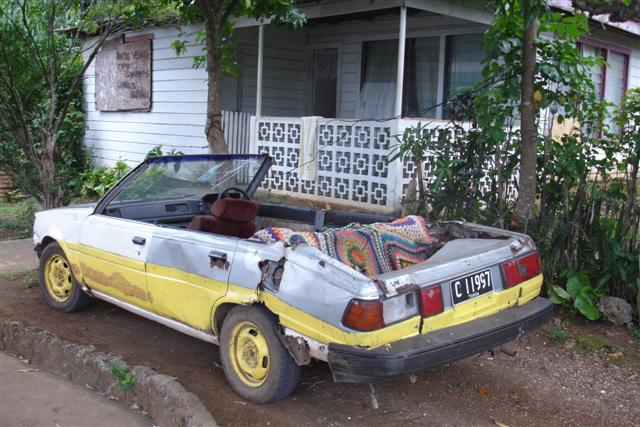
On walking further into the town we spotted this car, believe it or not its still being driven around.
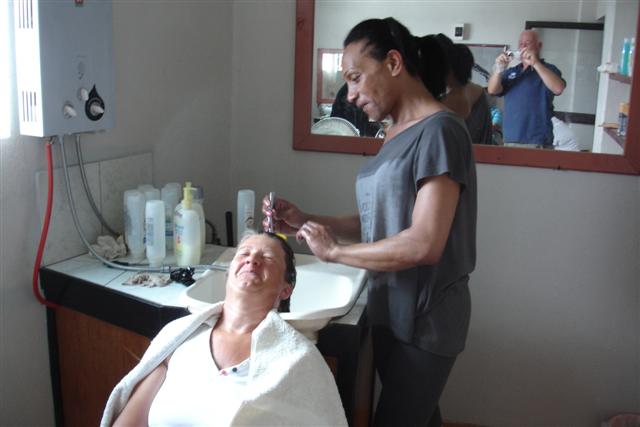
Gaby had the idea we should get our hair cut so we went into the local hairdressers where we found two ladyboys cutting hair. It was ok but not as good as the hairdresser in NZ, the up side was it only cost T$10 which is about £3.50!
We spent a week in Neiafu catching up with washing, interneting and boat maintenance. I spent a long time in the local internet café researching the possibility of flying back to the UK for a while to see everyone.
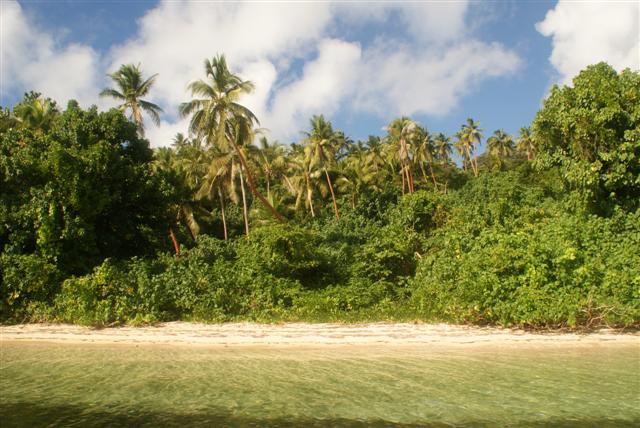
Kenutu beach
The anchorages around the Vava’u group are beautiful and we stopped at several but the best one was off the island of Kenutu, the most easterly of the islands. It has quite a difficult approach through the inner reef amongst the coral heads but, with difficulty, we found the entrance after half an hour of looking and were rewarded with a spectacular scene of the ocean waves exploding around the ends of the island.
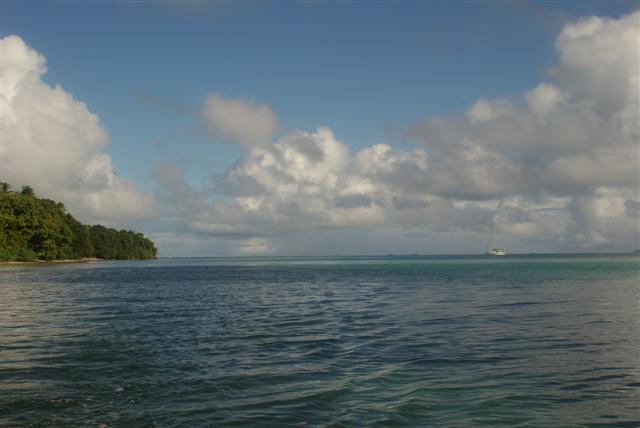
Camomile anchored off the beach
The anchorage off the beach was well sheltered even though the island was on the edge of the outer ocean reef. Beyond it was the South Pacific ocean with nothing between South America and us. The island is overgrown brush and trees, yet the beach is very attractive. At low tide the undercuts in the limestone are revealed. We found a path leading from the beach to the other side of the island.
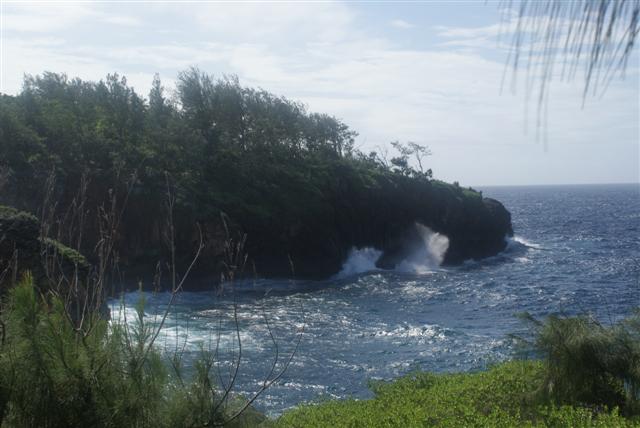
Waves crashing on the cliffs
There was a superb view of the surf crashing against the high cliffs on the other side of the island. We had heard the booms from the anchorage.
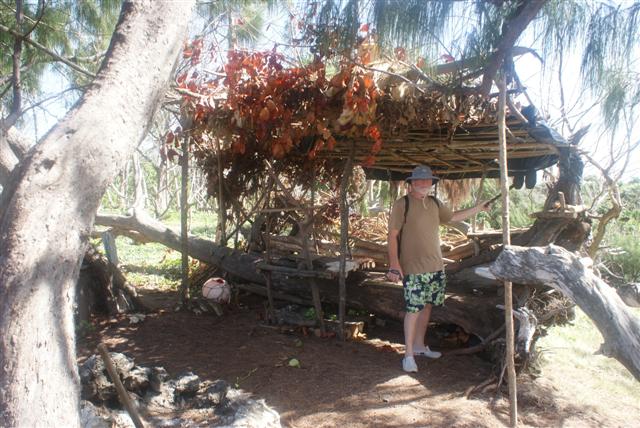
Pirates hideaway
Someone had made a hideout on top of the cliffs, it looked a bit like the bases the boys used to make when they were young.
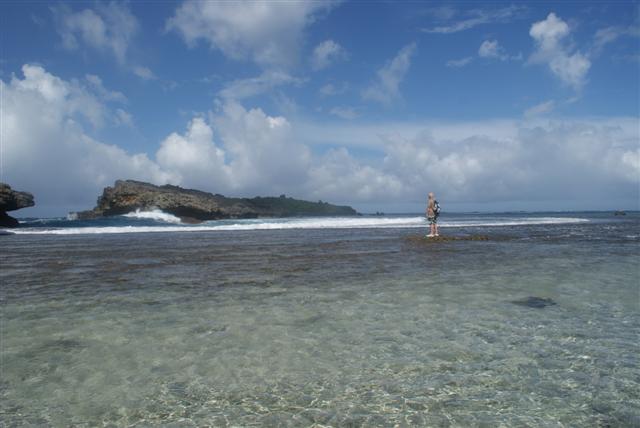
Bill standing on the edge of the reef
Back on our beach we walked out to the edge of the reef, it was an amazing feeling being that close to the crashing waves which spent their energy crossing the reef and ending up as mere ripples when they got to our toes. We had the anchorage to ourselves for a further two days before we made our way back through the coral heads to the anchorage at Nuku beach.
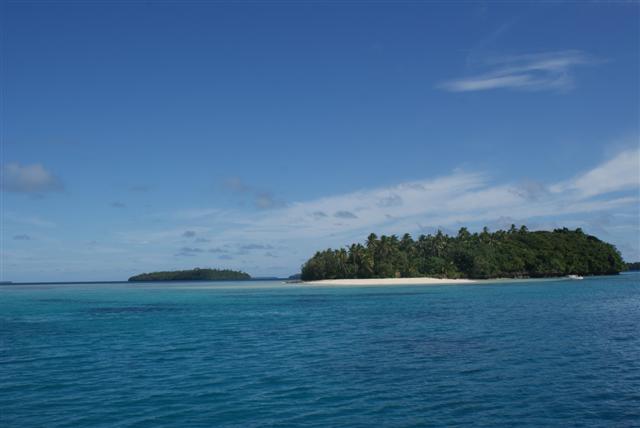
Nuku beach
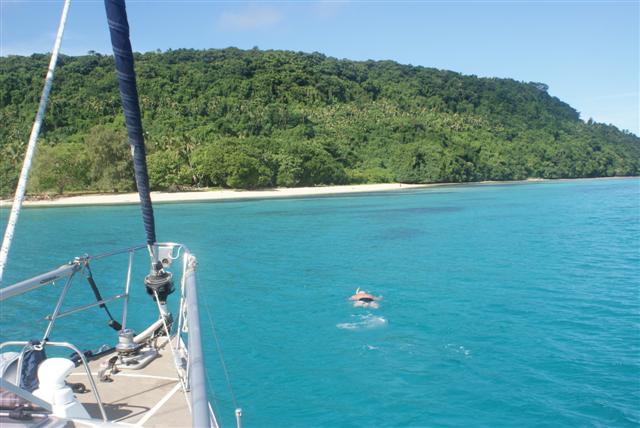
Bill snorkelling in the Blue lagoon
The BWR had a ‘pink’ party here last year for Charlie’s birthday when she 13, today it was deserted and it really felt like we were too late for the party. The sand was so soft under our feet as we walked around the island.
We moved to the anchorage in the middle of the blue lagoon. There seems to be a blue lagoon wherever we go but this one was truly blue. The snorkelling around the edge was superb, so much fish life and colourful coral.
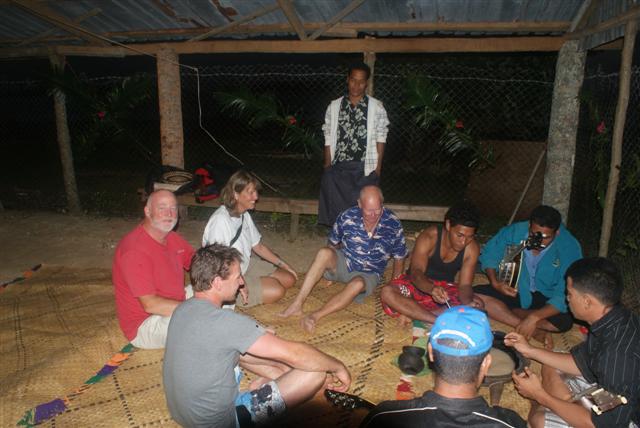 Up to this point we had the anchorages mostly to ourselves but we were hearing more and more boats on the vhf as the ICA fleet gradually caught up with us. We hadn’t signed up to join the rally until Fiji but we started meeting boats and joining in their activities. A Tongan feast was arranged one evening, which started with a kava session. Kava is made from the root of the ginger plant, which is soaked and strained, and then presented in coconut shells while sitting cross-legged. It looks like dish water but tastes worse and has a mild narcotic effect. Bill quite likes it but I worry where the water comes from it’s soaked in.
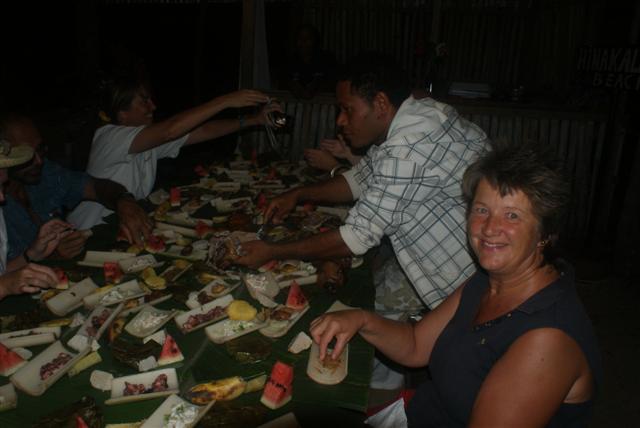
A Tongan feast
The ‘feast’ consisted of lots of ‘dishes’ served up on bamboo halves with a suckling pig in the centre. It was interesting trying new foods even though we didn’t recognise most of them.
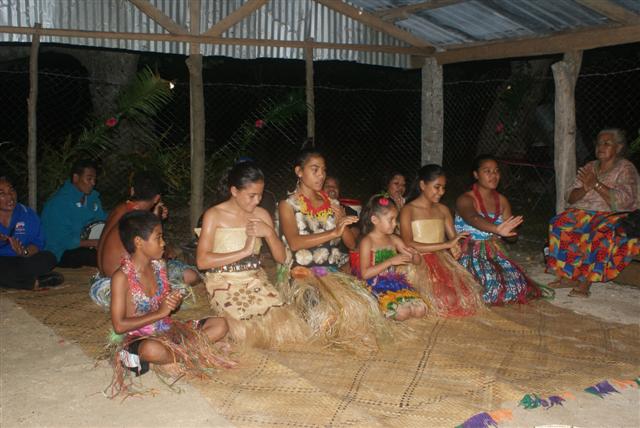
Traditional dancing
After we’d finished eating we were entertained by the local children with traditional dancing, which we all joined in with. Sharon from Larabeck had taken her violin and joined in with the band. We had a wonderful evening.
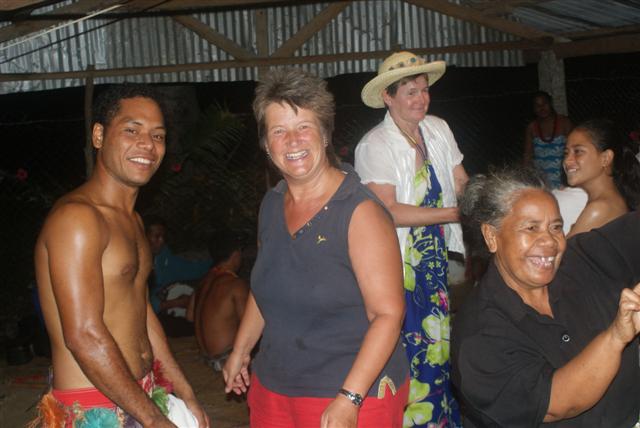
We all joined in
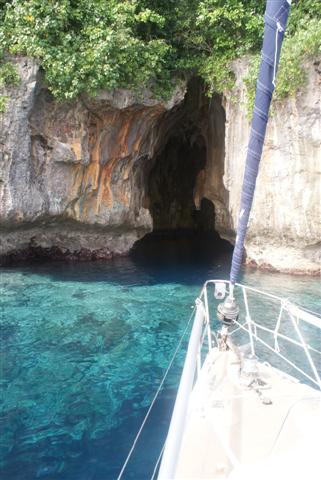
Swallows cave
We spent over three weeks in the Vava’u group but before we returned to Neiafu there was one last spot we wanted to check out, Swallows cave. Near the cave the depth is more than 40 metres so anchoring is impossible, there’s also a lot of coral around the edge so care needs to be taken. We poked Camomile’s bow in as close as we dare to take a look but then Bill’s dropped the dinghy so I could go inside while Bill stood off. The intense blue of the deep water was stunning. It was very dark inside and sadly covered in graffiti although some of it dates back to whaling days and so has a certain historical value.
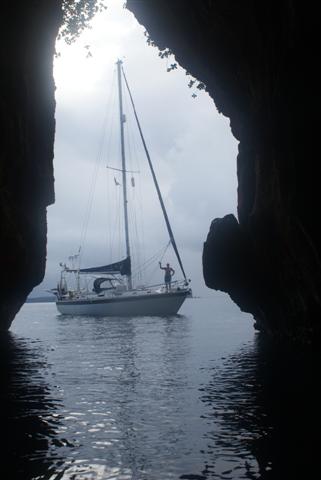
Camomile close to the entrance
The stalactites were just visible among the mud nests of the birds. Although it’s called Swallows cave they were in fact Starlings flying in and out. It’s possible to swim around inside but it was scary enough being in there on my own without getting in the water. There’s also an inner cave where it’s possible to crawl into but even though I haven’t seen the scary cave films there was no way I was doing that so I motored back out again.
We stayed in Neiafu for 3 days completing all the formalities, refuelling with duty free fuel and shopping for the next leg. The rally arranged for us to do a mass clearance, which can be a problem with so many skippers together, but it gave us a chance to have some nice chats and start to get to know the rallies, who already know each other. We left o.n 16th June
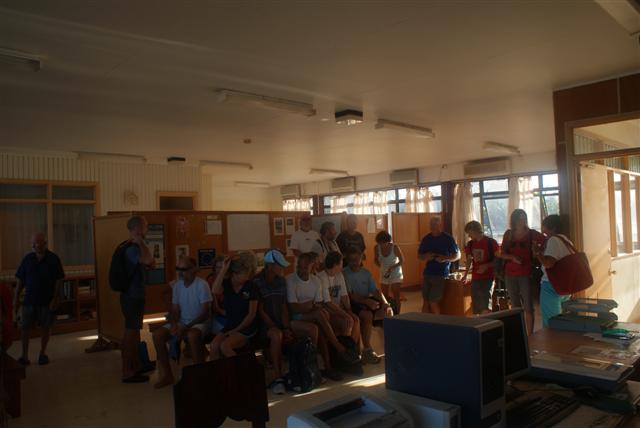
A rally checking out of immigration

The rally checking out of customs
The Eastern Ha’apai group, Tonga
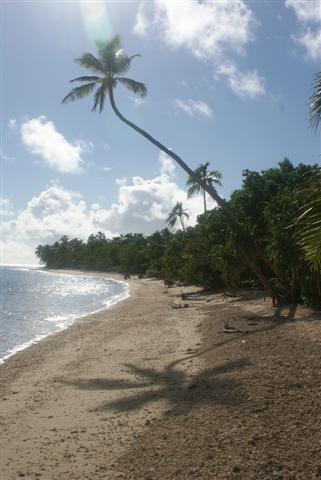
Shell beach on Tatafa
Our position on Sunday 15th May
19º 52.8 south – one more latitude nearer the equator.
174º 25.8 west
Sunday 15th May was a nice example of a day doing nothing in the tropics. We woke about 8am with the boat rocking quite badly in the swell. We had intended to go to church with Peter from the plantation but there was too much swell coming into the anchorage to leave Camomile at anchor so we had to leave. We left the same way we had come in the day before with our newly acquired fruit swinging in the new hammock Bill had set up under the solar panel. We had bacon and eggs for breakfast as we watched deserted islands slide by.
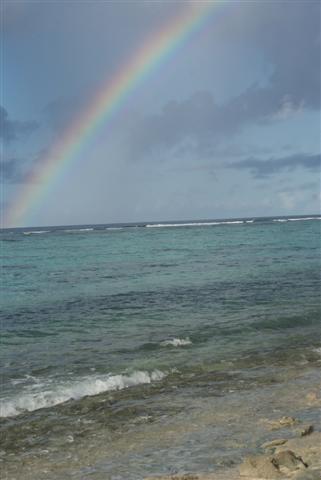
Rainbow over the reef
We anchored next to Tafata, which was uninhabited. I baked some bread for lunch alongwith some flapjacks, although it was 33C under the cockpit. We dinghyed over to the island and landed on the beach. It was mostly composed of shells and coral and it glimmered in the sunlight. We walked the two-mile circuit around the island, clothes were optional as usual, and it took about an hour. I collected quite a few unusual shells just lying in the sand, beautiful shapes and colours. On the far side of the island we watched the crystal clear water breaking over the reef and ending up in little ripples by our bare feet. We had a little shower of rain, which resulted in the usual beautiful rainbow. The island was covered in luxuriant green Hibiscus plants growing wild along the water line. We noticed some animal footprints in the sand and a bit further along came upon a wild pig but he ran off when he saw us.
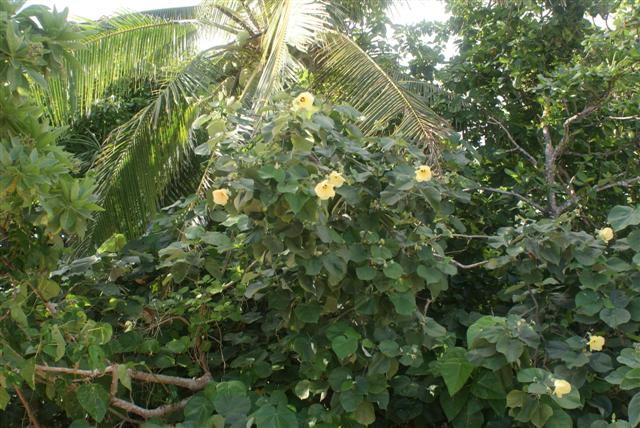
Hibiscus trees growing on the beach
We continued onto the dinghy then flopped in the water to cool off. Just as we were leaving Bill spotted this whales vertebra in the undergrowth. We got back to the boat about 4pm for tea and flapjacks.

Whales vertebra found on Tatafa beach
This is Camomile anchored off the beach sporting her new solar panels that tilt to the sun.
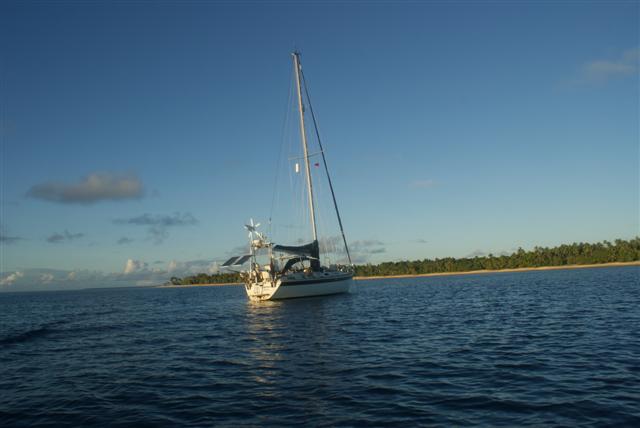
Camomile's new solar panels
We watched the local boats passing us overloaded with passengers from the neighbouring island on their way home after church.
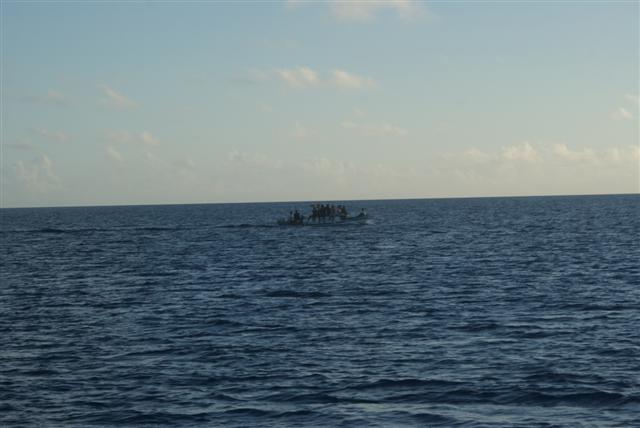
Commuter traffic Tongan style
We have 12-hour days in the tropics and the sun goes down about 6pm and is replaced by the moon. I usually cook our evening meal after sundown when it’s cooler. There isn’t any TV or radio here so we live in a beautiful but silent world.

Moon rise
So that’s our daily routine in the islands; tough life isn’t it!
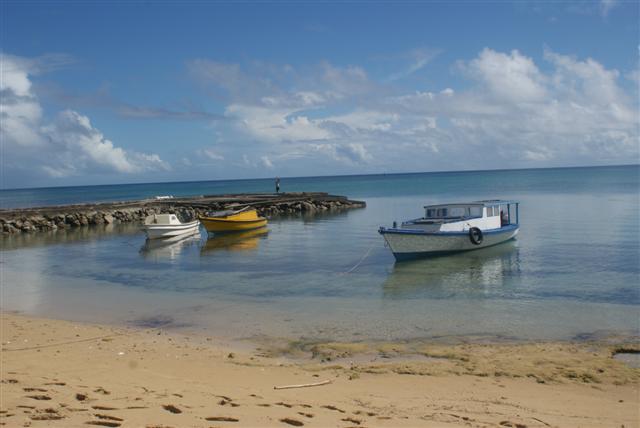
Small boat anchorage off Uhia
The Ha’apai group of islands inTonga are not often visited by yachts and indeed we haven’t seen a single other yacht so far. There aren’t any special features of tourist interest just beautiful beaches and a lush background of palm trees and calm blue water, everything that the south sea posters portray but the basic trappings of life that we take for granted in the western world is simply unavailable to these people. The next day we took the dinghy across to the neighbouring island of Uhia.
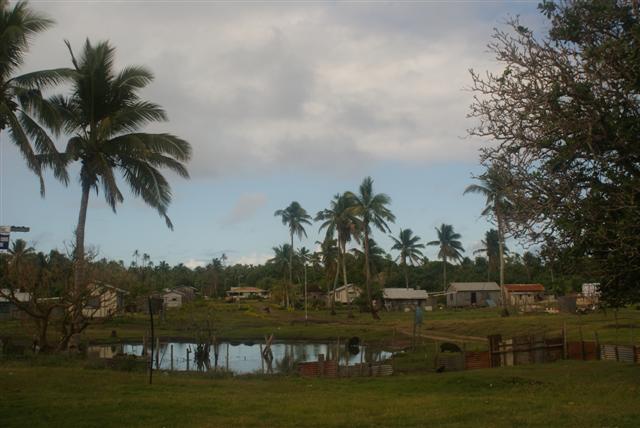
Houses grouped around a watering hole on Uhia
We wandered around the village, which depicts the simple life the islanders live. Their homes are little more than garden sheds. Unlike the Fijians the Tongans are very quiet and reserved. If you greet them they will greet you in return but otherwise they keep themselves to themselves.
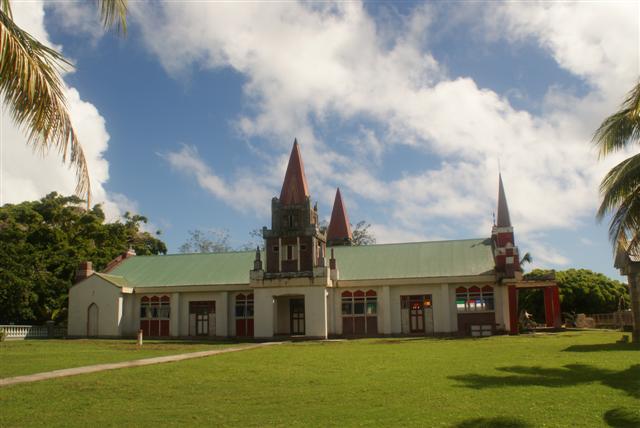
Church on UhiaLadies preparing leaves to make Tapa cloth
We continued along the ‘street’ and came upon some local ladies stripping leaves preparing them to make ‘Tapu’ cloth. They were happy to show us how they did it. They were also running a little shop where I bought some eggs. No egg boxes though they just placed them in a plastic bag. I managed to get them back to the boat without breaking them.
Surrounded by a storm
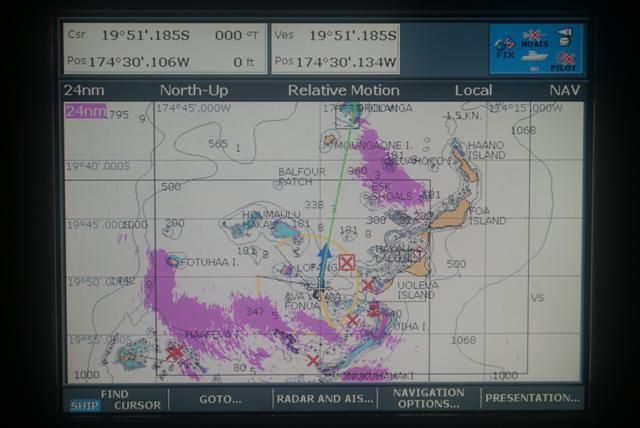
We spend the next few days visiting the islands of Uoleva and Pangai picking our way through the reefs to get to them. On the way to Pangai we encountered a mammoth thunderstorm. The forecast was for showers but after we set off the rain started getting heavier and it quickly became a tropical storm. We tracked it on the chartplotter and thought we had avoided it, the pink areas are storm clouds, but it turned at the last minute and crossed our path. The heavens just opened and it poured with rain. It was difficult to see more than 50 feet in front of us so we stopped the boat because we were too near the reefs. Fortunately it cleared within half an hour and we were back in the sunshine.
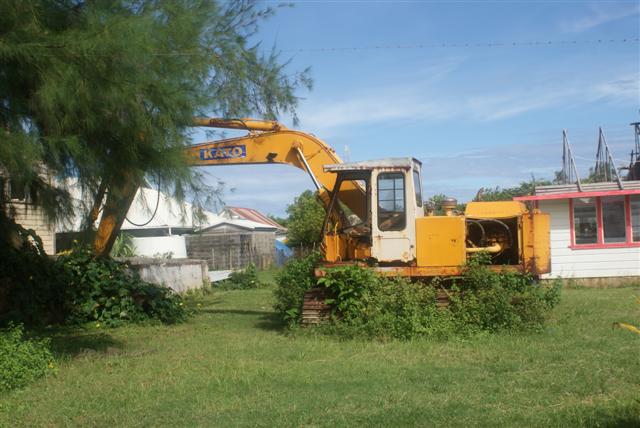
Abandoned digger on Pangai
We continued to Pangai, the ‘capital’ of the Ha’apai islands. There were several other yachts there so it was nice to have a chat with them. We were hoping to get some supplies but the market had very little for sale. There were a couple of little shops selling tinned goods but nothing fresh, I don’t know what these people live on. We’ll have to wait until we get to Neiafu. We wandered around the village and found this abandoned digger in someone’s garden.
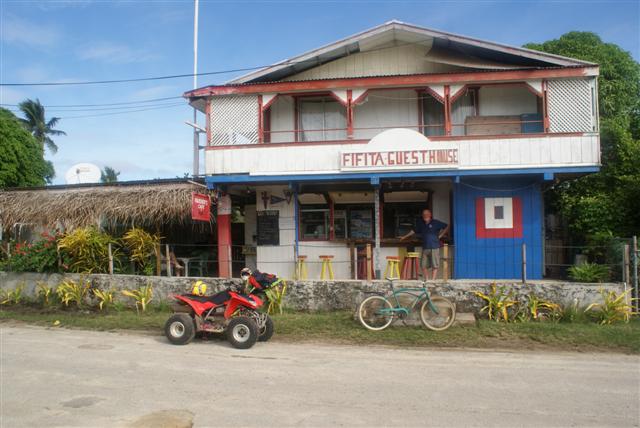
Internet cafe on Pangai
Further down the road we came across the Mariners café, which was run by a kiwi with his polish partner. It had a basic wifi system so we were able to log on and obtain our emails and managed to skype the boys; they also offered good beef burgers, which we enjoyed. We had thunder and lightening that night which made us swing around in the anchorage, the holding wasn’t very good so the next day we left the Ha’apai islands to head north to the Vava’u group of islands.





 Camomile