Author Archives: yachtcamomile
The beautiful Kuna Yala
After our horrendous journey of 5 days of total purgatory we arrived at Pourvenir in the San Blas islands with 14 other BWR boats to check in with customs. Even in this remote part of the world we still had to check in with customs and get our passports stamped.
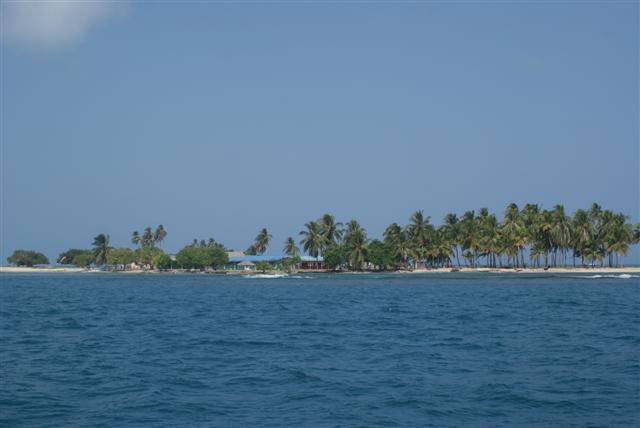
Pourvenir, the blue roof belongs to the hotel
Pourvenir is just an airstrip, the customs office and a very basic hotel. That evening we all went ashore to eat in the little hotel. The choice was chicken, rice & chips or fish, rice & chips. As the chickens were still running around round the back we decided that would be the freshest! We had a party to celebrate arriving safely.
The San Blas islands are a vast archipelago on Panama’s Caribbean coast. Home to the indigenous Kuna Indians it is one of the most untouched stretches of virgin rainforest and a cruising ground of incredible beauty. The kunas don’t like the name San Blas, given to them by the American’s, and prefer Kuna Yala, their own name for their land. The land is not divided into individual properties and fences are absent.

Bill walking through the village on Nalunega
The Kunas accept visitors but intermarrying is forbidden and foreigners can’t buy land or invest in Kuna Yala therefore it remains unspoilt. We visited the island of Nalunega to meet the Kunas with the crews of Enchantress, Bali Blue and Miss Tippy with their children. The Kunas are physically small but they are peaceful and crime is extremely rare.
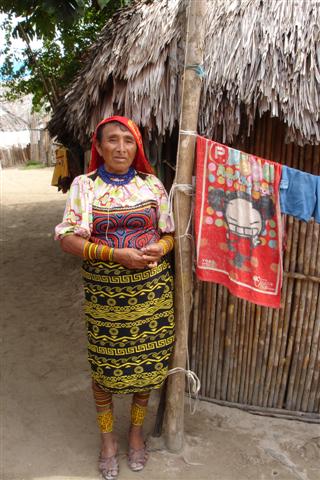
A Kuna Yala woman
The woman dress in very colourful, handmade clothes called Molas, which they were also selling. They have a strict hierarchy of tribal leaders and the chief or Sailas holds the highest authority. Sailas are more than leaders they are also holders of medicinal knowledge and history and they sit every evening in the Congresso surrounded by the people, woman and men, to discuss complaints or ideas. Kuna Yala is a matrilineal society, the women control the money and the husband moves into the woman’s family compound.
Nesta, a young man who spoke some English and who was keen to show us around his village, met us on the beach. The huts are made from renewable, fast growing materials; the floor is slightly elevated with compacted sand, while the walls are made of cane. The roof is made from a palm leaf found in the jungle. There are no nails, everything is held together by jungle creepers, and remarkably they remain dry when it rains.
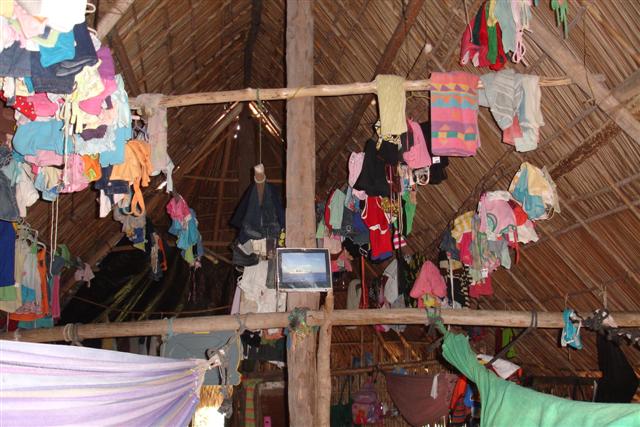
Inside Nesta’s house
Nesta’s home was very sparse with all their clothes stored in the rafters. There was a screen in the corner with a double bed behind it but the mattress was falling to bits and the pillow was very dirty, there was no sign of any sheets. The rest of his family sleep in hammocks of which there were about a dozen or so hanging from the rafters in the one hut that he shares with 3 generations of his family. Nesta’s wife and 2 small children were sitting swinging in a hammock, they were all smiles and happy for us to look around, they appeared to have so little, maybe we all have too much?

We took bubbles and trinkets
We had all taken gifts for them, Shelia took a bag full of clothes the girls had grown out of, we took bubbles and trinkets for the children, and others took chocolate. Although they didn’t have a lot they were very happy and welcoming people. It made you feel very humble.
We had a further 5 days to explore some of the other islands, many of which are uninhabited with just a covering of Palm trees.
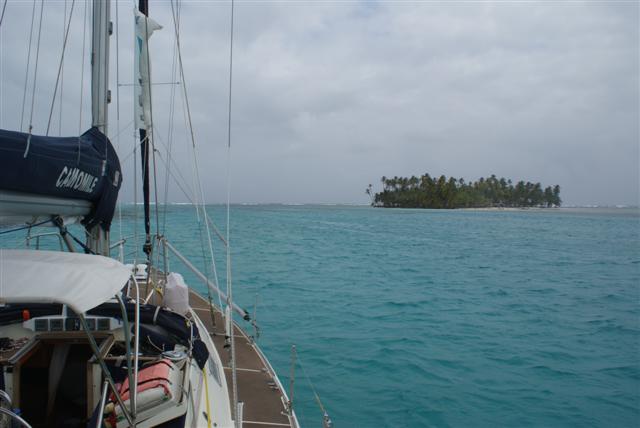
Camomile anchored off Barbeque Island
We sailed over to East Holandes Cays some 20 miles East and anchored in ‘The swimming Pool’, a wonderful anchorage with water the colour of a swimming pool and so clear you could see to the bottom 3M down. That evening we joined some of the local liveaboard cruisers on ‘Barbeque island’ for the weekly cruisers barbeque. We spent some time snorkelling in ‘The hot tub’, which had one of the best coral gardens we had seen.
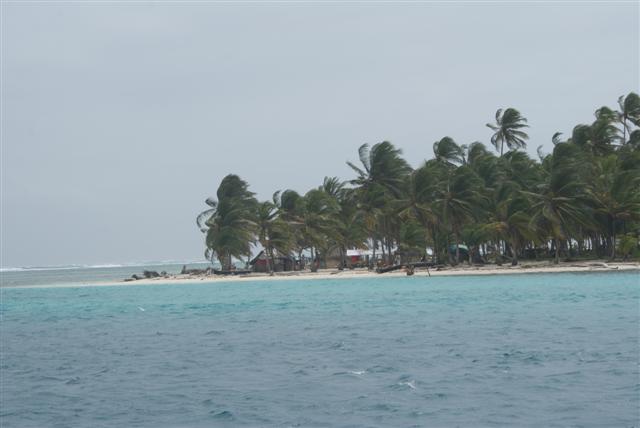
The beautiful beach at Chichime Cays
We made our way back to Chichime Cays a lovely protected anchorage. David and Susan arrived on Enchantress with a huge Tuna they had caught. After Bill and David had finished butchering this poor thing into steaks Susan and I made a delicious meal with marinated tuna and roast vegetables. The next morning we left to motor the short distance back to Porvenir to check out and collect our zarpe’s ready for the next port, when we were surprised to hear the smoke alarm going off below. On closer inspection I found the aft cabin full of smoke, which turned out to be exhaust fumes. Bill stopped the engine and looked in the engine bay to find it full of water, we were sinking! I started pumping the manual bilge pump while Bill ran round to find out where it was coming from. After lifting the floorboards he found a split in the exhaust muffler. He clamped it temporarily with molegrips so we could continue to the anchorage.
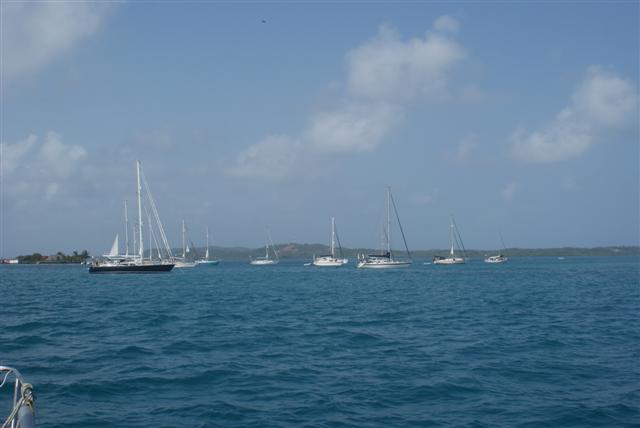
BWR boats anchored off Porvenir
Once there he removed it and bound it up with aircraft tape and cable ties until we can get a new one.
There was a mass exodus of BWR boats the next day bound for Portobello. It was 53 miles along the coastline. We started off with a reef in the main and 2 turns in the genny because this was the first time we had been ‘outside’ since our awful journey from Bonaire.
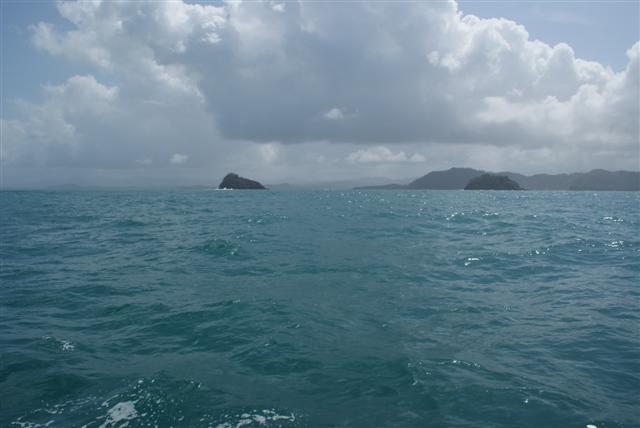
The Panama coastline
We needn’t have worried because it was a beautiful day with a lovely F5 and we had a great sail. Bill was pleased because we managed to keep up with Enchantress and then started beating them and they are a bigger lighter boat. We anchored in Portobello at 16.00 and invited David and Susan on board for a return meal.
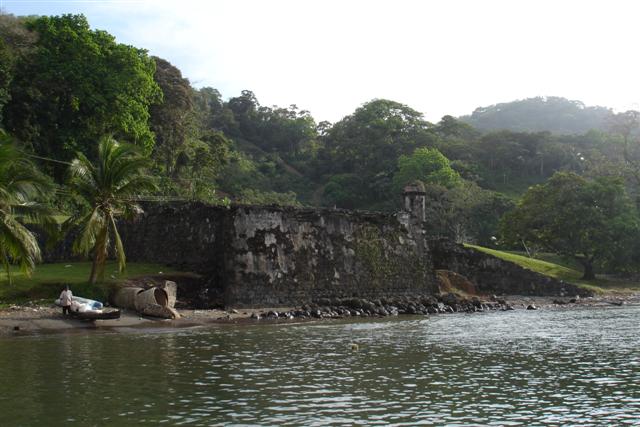
Ruins of the fortification, Portobello
The next day Saturday 6th February we all went ashore and were picked up by Richard from BWR for the first briefing of the newly formed rally. We were now 25 boats and the rally was almost complete. We were taken to a restaurant in the hills for the meeting followed by a lovely meal in the garden. Although we had met a lot of the new crews already it was great to all sit down together. We discussed the transit for the Panama canal and how it was all going to happen. There were going to be exciting times ahead.
The worse 48hours of our sailing life – so far.

Leaving Bonaire
After we left Bonaire we experienced some fairly lumpy seas and high winds of 25 – 30kts. The seas were only 2 to 3 m high which for that part of the world wasn’t bad; it changed!
We made good time and covered 165 miles in 24 hours, which was a new record for Camomile. We were off the golf of Venezuela and needed to travel about 150 miles west before we could drop down towards the San Blas islands off the coast of Panama. We had heard about the square waves close inland and intended to stay well away. For the next 24 hours we enjoyed a good sail in a F5/6 with 2 kts of current helping us along and we travelled 177 miles in that 24 hours, another new record for Camomile.
The following 24 hours was a different story. In the middle of the afternoon the winds started picking up to a F7 and the seas started to build. We were heading out to the 4000m-depth contour line, 125 miles off the coast where, we were advised, the conditions should have been better. We had already heard of boats you had cut the corner off and were only 50 miles off the coast and experiencing huge waves. By 10pm we started to head south and shortened the sails. We only had little pocket-handkerchiefs each side but we were still doing 6kts. The wind was very strong and blowing 40kt+ that was now a F8 full gale. The seas were horrendous, I’ve never seen seas like it, 4 and 5 metres high. Bill had a couple of hours sleep but then decided to stay on deck because the boat was being buffered by the wind and waves. We kept expecting the winds to subside because a gale doesn’t usually continue for that long but they got worse. By 2pm the following day we were getting winds of 45kt with gusts of 50kt+ that’s F10 storm force. Our highest recorded gust was 55.6kts! Thankfully all this was coming from behind and Camomile was coping fairly well but some of the waves were pushing us sideways beam on to the sea. We experienced several semi knockdowns so Bill put a drogue out behind us. This is a large cone shaped bag held together by webbing and had the effect of pulling our stern into the waves to keep us up right. We were both very tired, having not had very much sleep, as we went into the 2nd night of the storm. The decks were awash with water but the worse was to come. Bill was down below trying to get a few hours sleep. I had noticed one wave which seemed higher than the others coming towards us. It was breaking as it approached and hit the boat with tremendous force. Luckily we had the washboards in the front of the hatch but the top of the hatch was still open. I pulled it closed really quickly but we still had a lot of water down below. It dropped about 6 inches of water in the cockpit and then it swept away, I just caught my book and binos before they went over the side. If I haven’t been clipped on I would have gone with them. I’m afraid I just became hysterical; I had had enough and just wanted to go home. The water that had come in had soaked the cooker and the gas wouldn’t light so I couldn’t even make myself a cup of tea!
After that Bill refused to let me go on deck but put on his dry suit and stood watch harnessed into the cockpit on shortened straps. By this time we were using the Hydrovane self steering gear, the electric autohelm and the drogue to keep Camomile’s beam away from what were now dangerously breaking waves. Even with all of this it was necessary to stay near the wheel in case something failed which would mean that she would quickly have to be hand steered before the next big wave came along. Bill managed a little sleep on deck. While it was my watch and I just put my head up through the hatch every 5 minutes to check for shipping. I could see if anything was coming on the radar. It was impossible to sleep properly because we didn’t know what was going to happen next.
The next morning, after 36 hours, the storm continued. The waves, which were now the size of double decker buses, were mesmerising. The drogue had worked well and kept our aft quarter in the sea but the down side was it had slowed us right down to 3 – 4 kts overnight. It didn’t really matter because we didn’t want to get to Porvenir in the dark but we only had 137 miles to go so we wanted to speed up again. Bill decided the drogue would have to come in and we were going to motor sail south to try and get out of the storm, which we were convinced was following us. We started to winch in the drogue but we got a riding turn in the rope around the winch. We were tired and not thinking straight we should have put it around a second winch or tied another rope around it but we didn’t. The drogue slackened in between waves and Bill decided to take the rope off the winch but it started to pull and he couldn’t get it back on. I was holding the bitter end and tried to hold onto it but it was too strong. Bill said to let go or I would lose my fingers. So we lost it.
It was our lowest point. We still had F9 and huge seas. We continued with our plan and started to motorsail south. After an hour we turned the engine off and started sailing again as the wind dropped to F8. By 6pm nearly 48 hours after the gale had started the wind dropped to F7 and by 10pm F6. The sea had gone back to moderate and we were able to get some proper sleep. The next morning the wind dropped right away as we got closer to the land. We’d pulled the sails right out again and arrived in Porvenir just after 11.30am.
Through all this I had still ran my radio net on the SSB every morning at 10am calling each boat in turn and listened to all the tales of woe from the other boats. Some of the other women were feeling like me, that they had had enough and just wanted to go home, it was great to be able to chat to one another. All the boats arrived safely but there was quite a bit of damage across the fleet. Of the 5 boats who had Hydrovane self steering gear 3 had bent shafts which just shows what a tremendous force that sea had in it. If it hadn’t been for the drogue I think ours would have been bent too. It was a shame we lost it but we’ll certainly buy another one, it may have saved us from other damage.
So we survived the worst 48 hours of our lives, sadly I didn’t take any photos. Throughout our ordeal we felt confident Camomile would bring us through. We later learnt that the Venezuelan peninsular is known as the northern Cape Horn, well I certainly won’t be going round the southern one now!
Bonaire in the ABC islands
Latitude 12°09.1 North Longitude 068°16.7 West
Our time in the Windwards had come to an end. We didn’t have time to go further south, we’ll have to save the other islands for another time. We left at 7.00 and motored around to the west of the island. Fai Tira and Bionic were behind us. The wind was a bit fluky and a couple of squalls came over but by 9.00 the engine was off and we were sailing along nicely with the twizzle up.

Our usual Dolphin escort
Our usual Dolphin escort appeared for half an hour or so in the afternoon. There was a nice F3/4 blowing from behind and we travelled 127 miles in the first 24 hours. By 22.00 on the second night the wind had picked up to a F7 and we reefed the sails down. We did 159 miles in the second 24 hours. Although it was good to have a fast passage it meant we were going to arrive in the dark. We tried to slow the boat down a bit but with such good winds she raced forward. Fai Tira caught us up and went on ahead. We rounded the headland at 2.00 in the dark and crept up to the moorings. Fai Tira had found a buoy and we followed slowly and picked up a buoy too at 3.45. Time for bed.
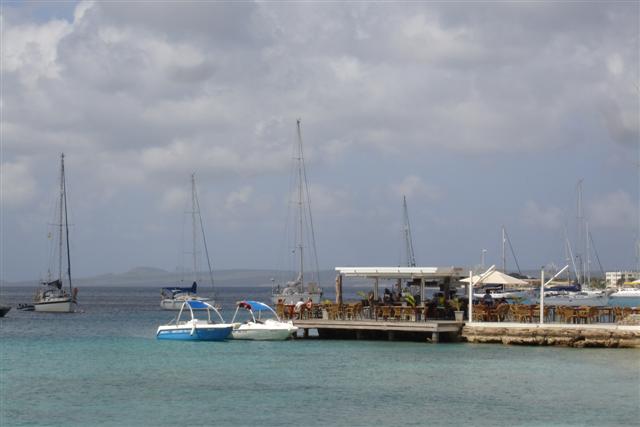
Camomile sitting next to the bar
The next morning we awoke to a great view of the town and a lovely bar on the landing stage. As usual we went in search of the customs. We had all our papers stamped and signed and then had to go to the police station to get our passport stamped by immigration. If you think EU bureaucracy is bad, come to the Caribbean. We had a look around the town but it was election day and a lot of shops were shut but I found a great supermarket. I hadn’t seen a proper supermarket since Martinique so it was good to stock up with lots of nice food.
Some of the other BWR boats arrived later that day and went into the marina. We took the dinghy along to see what we were missing.
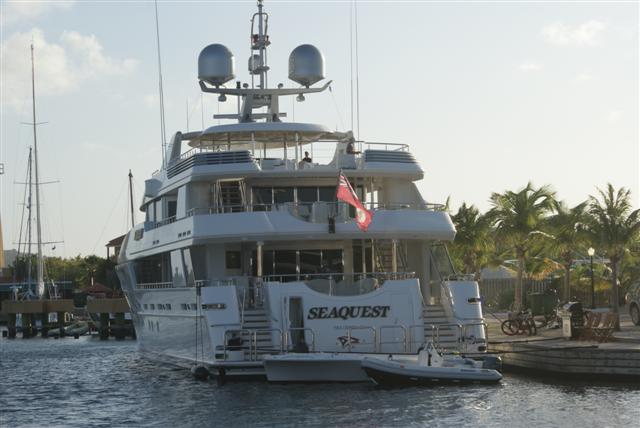
A Gin palace in the marina
Firstly it was a good mile out of town plus it was full of gin palaces and expensive, we decided to stay out on the buoy. This boat has a familiar name!!
Later that evening someone won the election, we weren’t sure whom but a lot of noise was being made. Car horns were sounded as they paraded up and down the street.
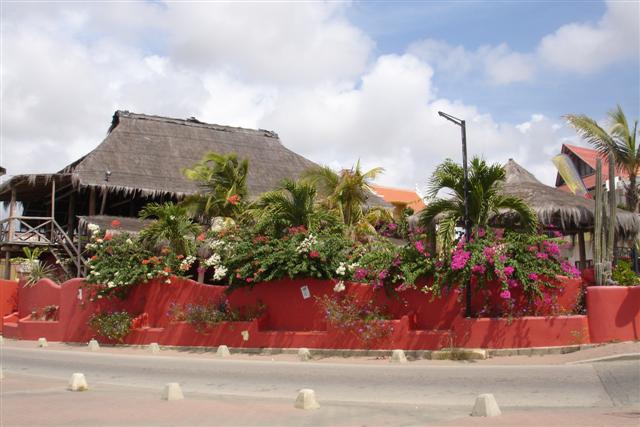
One of the colourful waterfront buildings
We watched it all from Camomile’s cockpit with Pete and John from Fai Tira and Debs and Eileen from Scot Free with a few bottles..
The next morning we bought a pass to go snorkelling. Bonaire is one of the best dive sights in the world and once you’ve bought your pass you can go where you like. Debs on Scot Free is a qualified diving instructor and she had arranged to take some of the others diving.

Bonaire coastline
We all got into 3 dinghies and motored across to the island opposite. Bill and I weren’t joining the divers but we snorkelled over the top of them. The coral gardens were beautiful. I watched a turtle surface and then swam along with it; they are so graceful. There were so many fish of different size and colour it was spectacular and the water was so warm it was like a tepid bath. We walked along the beach for a while then returned to the dinghies and motored back to the boats.
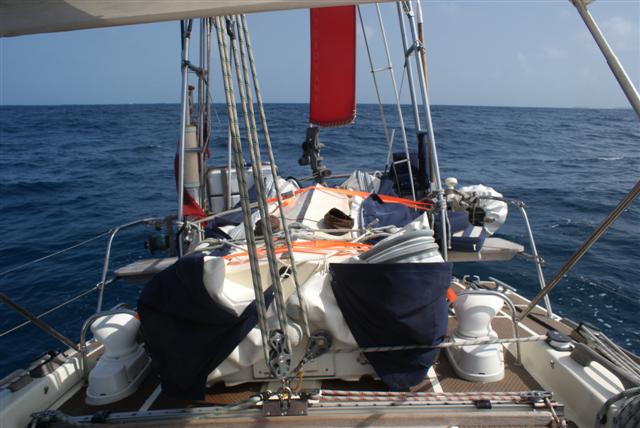
The dinghy prepared for the journey
We spent most of the next day doing more shopping and preparing the boat for the passage to the San Blas islands which we had been warned could be rough. We took a walk along the waterfront to the customs house to check out and get another set of papers for the next port.
The Windward Isles
We stayed 6 days in Dominica and loved it but it was time to move on. The windward Islands sweep southwards like a string of stepping stones with the Atlantic pounding the shore on the windward side and the calmer Caribbean sea sparkling in the sun on the leeward side. The British named them the Windwards because to get there from many of their other islands you had to beat to windward.
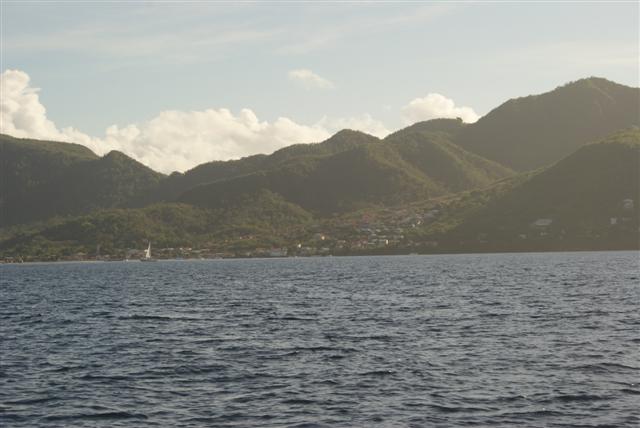 Martinique coastline Martinique was the next island we came to. It is part of France and we were back to using the Euro again. 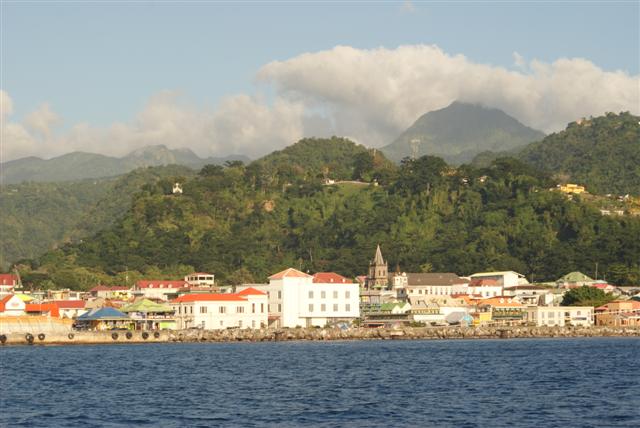 Fort de France We anchored in Fort de France, which is a big town with lots of shops and a big Carrefour supermarket so I was able to stock up. The anchorage was a bit rolly so we moved around to Trois Ilets, which was a pretty anchorage in a little bay. We went ashore and found a very French little town. The next morning we enjoyed French croissants and French bread for breakfast. As it was Sunday there wasn’t any thing open so we had a big washing session. We had quite a production line going. I was washing, Bill was rinsing and then we mangled together. |
The next morning we left early to sail to St Lucia. Once clear of Martinique we put the sails up and had a great sail south. St Lucia is an independent nation with a British tradition; it’s very mountainous and lush. We arrived at Rodney bay at lunchtime.
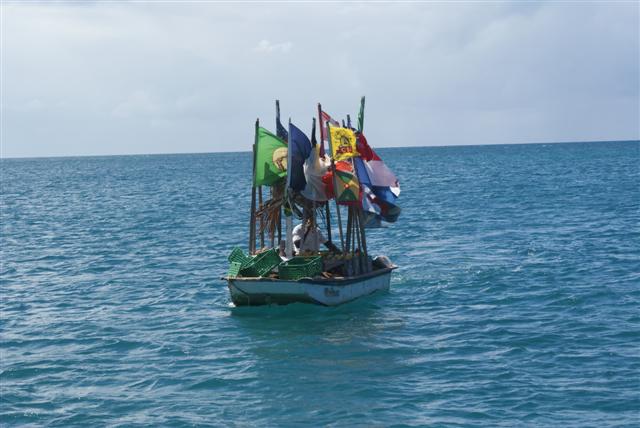 Fruit and Veg boat The first person to greet us was the fruit and veg man in his little boat covered in flags, I bought some oranges, grapefruit and mangos. Shortly afterwards more BWR boats arrived, Blue Magic, Jackamy, Enchantress, Fai Tira and Lucy Alice. We took the dinghy to the corner of the bay with some of the others and found a great snorkel site. Later that evening we all made our way over to Fai Tira for Pete’s birthday party. 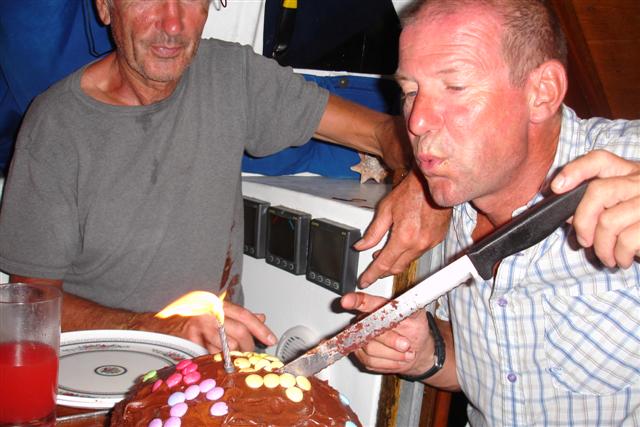 Pete's birthday cake John, his sailing partner, was trying out his new recipe for rum punch. All was going well until he ran out of ice, then he ran out of fruit juice so he added more rum … there were quite a few sore heads in the morning. We all went ashore to register with immigration and find an internet café. Luckily, Bill had to go back to the boat for something because as the wind had increased to 35kts he found Blue Magic was dragging. He held onto her using the dinghy and called to a nearby boat to radio them. Fortunately they hadn’t gone far and were able to quickly return and re-anchor. Once he returned we continued our shopping and found a chandlery and hardware store so Bill was able to buy some supplies for his job list. 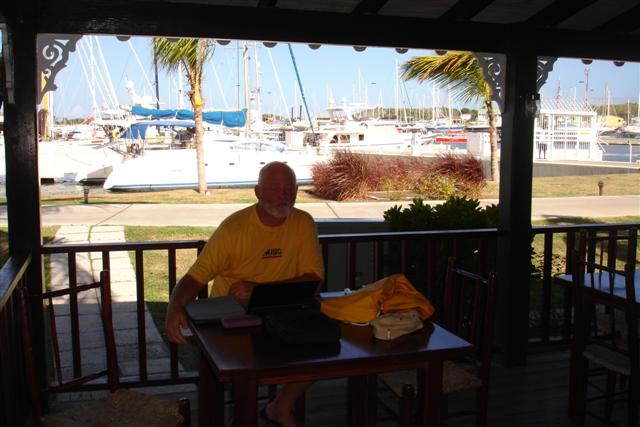 Bill in the internet cafe We had lunch in the internet café and in the afternoon we found our friends John and Joyce Easteal on their boat Fair Encounter in the marina, they had completed the ARC in November. |
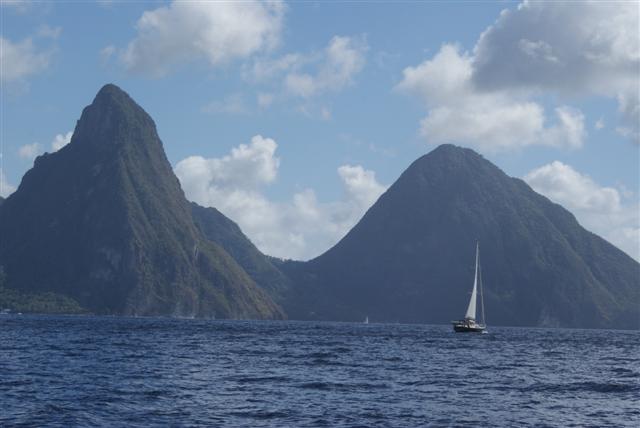 Blue Magic sailing by the towering Pitons Wednesday morning found us motoring down the west side of St Lucia to Soufriere bay with Blue Magic, Jackamy and Lucy Alice. Soufriere is a small town dominated by the towering twin Pitons. The staggering beauty of Petit Piton 2500’ and Gros Piton 2600’ when approaching by sea is superb. We picked up a buoy at the base of petit Piton and a boat boy took a line to the beach to try us to a tree. Sounds a bit risky but we felt quite safe. ‘Excelsior Tours’ (Mark on Blue Magic) arranged with the boat boy to take us all on a tour to the Sulphur Springs area. All 8 of us got into his ‘dug out’ with an outboard and he took us ashore to meet the taxi.  Soufriere waterfront Soufriere was a charming town with many old Creole buildings with balconies. We all got into the taxi and were driven to the Sulphur Springs, which looked like a scene straight from Hell with barren, brightly coloured earth and bubbling pools. The smell of bad eggs was awful. A very interesting guide walked around the site with us and told us about the history. More scenic and pleasant were the naturally hot Diamond baths built by Louis 16th.  Mark, Bill, Sue, Chris under the waterfall, Paul, Ian, Derry and Glenda The baths were set amid a beautiful tropical garden and were fed by piping hot water from the volcano coming down a waterfall into two huge baths. We spent about half an hour relaxing in the very soft water although we didn’t need the heat. The water disappeared over the edge at the other end into the garden. After we got changed the driver drove us back to the anchorage. We managed to get into the dugout from the beach, without tipping it over or falling in, and back onboard. |
We needed to keep going because we had less than a week left in the Caribbean, so the next day we left the buoys at 6.30 and spent the day sailing to the Grenadines.
 The island of St Vincent We sailed around the East side of St Vincent to pick up a better wind. We put in a reef while sailing across the gap in a F6. It took most of the day to sail past the island. The wind gradually died in the afternoon and by 3.30pm we had to put the engine on. We arrived at the island of Bequia at 5pm where there were quite a lot of BWR yachts. The next morning we went ashore to check-in with the customs and immigration, which would cover us as far as Union Island. Port Elizabeth in Admiralty bay is Bequia’s only town. There were some colourful buildings along the waterfront that contained every thing one needed, restaurants, shops, supermarkets, several chandlers (which had to be inspected closely!) and a great indoor market. 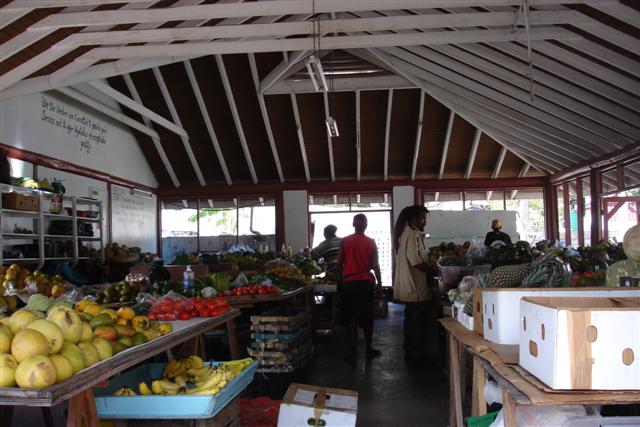 Indoor market in Port Elizabeth We got chatting to a Rastafarian running his stall while another one was asleep under it. I bought some lovely fruit but I probably paid a lot more than I ought to have. 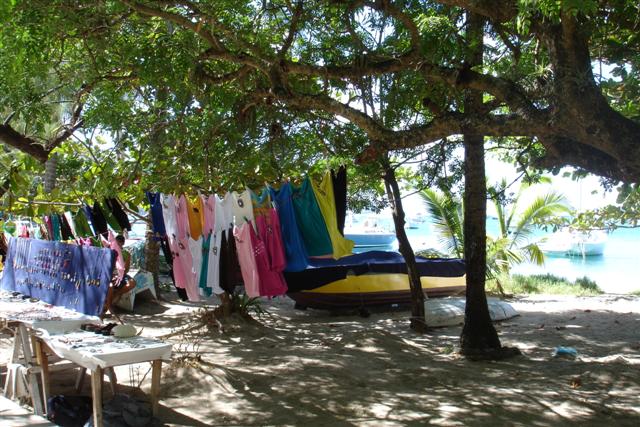 T-shirts for sale under the trees As we walked backed along the waterfront vendors were selling t-shirts hanging from lines in the trees. In the afternoon we took the dinghy across to the Devils Table and snorkelled over some rocks with beautiful fish amongst them. In the evening we went for a meal with Enchantress, Lucy Alice, Briet and Bionic to a restaurant called Coco’s place. There was a live band playing and we had a really good evening. Most of us went back to Enchantress, a Scottish boat, for ‘a wee dram’ after. |
We left Bequia with Jackamy, Fai Tira and Bionic. We all had a splendid sail to the Tobaco Cays.
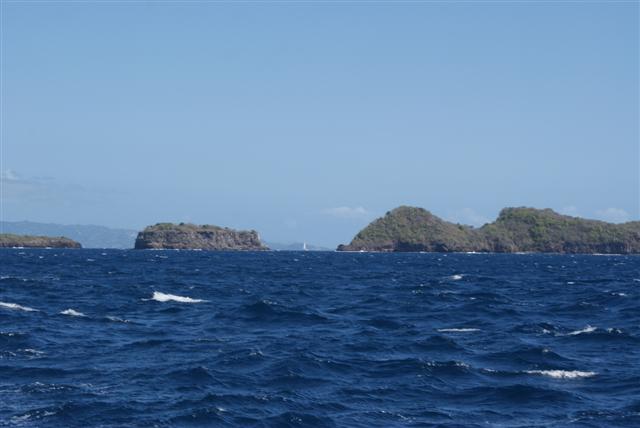 Blue Magic through the rocks Blue Magic left a little after us but they soon caught us up. We had a wonderful 4-hour sail to the cays waiting until the last minute to take the sails down. Tobago cays are a group of small deserted islands protected from the sea by a horseshoe shaped reef. 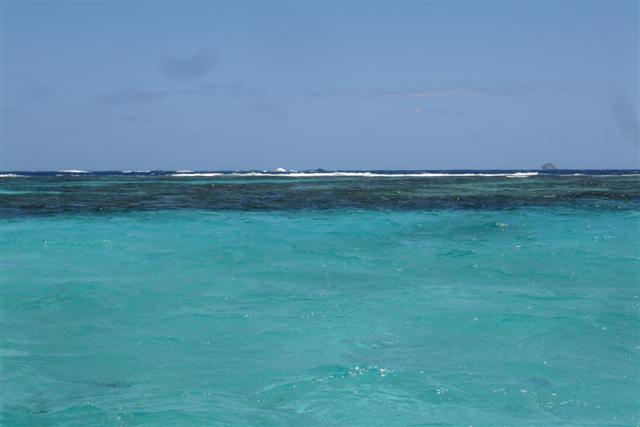 Coral under the water with the reef behind The water and reef colours are a kaleidoscope of gold, brown, blue, turquoise and green. We dropped our anchor in 5M of turquoise water. I watched it glide through the clear water to the bottom. We got the snorkel gear out and swam across to Baradel island, which has a protected turtle area in front of it where sea grass has been planted for the turtles to feed on. Within minutes I spotted several turtles grazing and as one of them came to the surface to take a breath I swam alongside it, it was wonderful. We spent an hour or so snorkelling and saw 7 turtles in total.  Camomile picnics on the beach with Blue Magic, Jackamy and Fai Tira As the next day was Sunday we decided to take a picnic lunch onto one of the islands but first we all wanted to snorkel over the reef. The seas were quite rough outside the reef but on the lagoon side the water was very clear and calm. We tied the dinghies to well placed buoys and jumped in. The reef was a wonderful sight under the water. Beautiful coral heads of differing colours mingled with underwater plants where the many fish swam in the coral garden. Afterwards we took the dinghies onto petit Bateau island and had our picnic together. We lay in the sun for the rest of the afternoon and went back to Blue Magic for drinks in the evening. Maybe this bit is a holiday! |
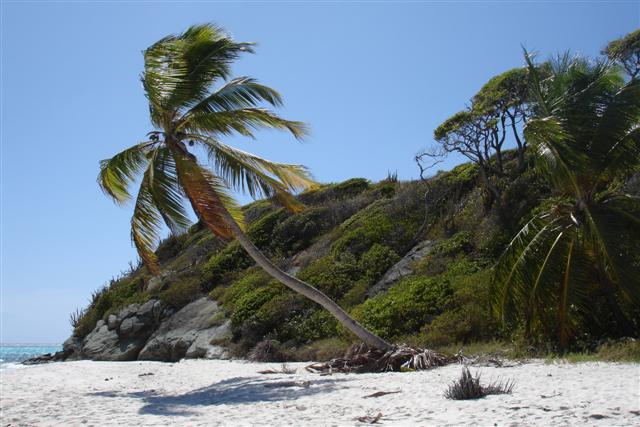 Beautiful Tobago cays, Grenadines Monday morning we left the beautiful Tobago cays and motored across to Union Island, picking our way carefully through the gap between the reefs. I walked up to the airport to check out and get our clearance papers. Then I wandered around the market buying fresh fruit and veg for the sail to Bonaire. 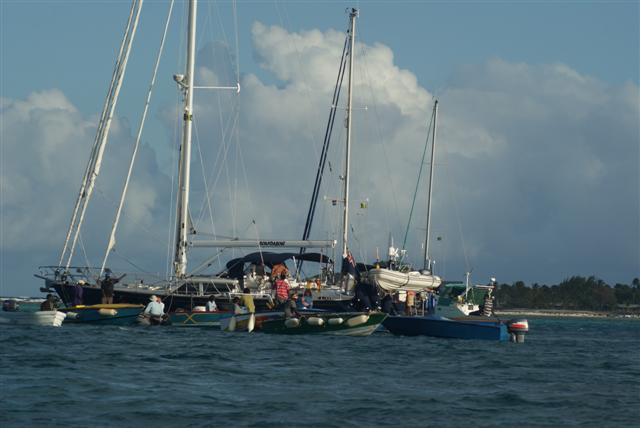 Roundabout on Roundabout reef Unfortunately for one of the BWR boats called Roundabout, there’s a reef in the middle of the harbour that happened to be called Roundabout Reef. David managed to run aground on it but as he was backing off boat boys suddenly surrounded him. They all put lines onto his boat and started pulling in all directions making the situation worse. I heard him calling for help and quickly ran to the café where I knew Blue Magic and Jackamy were sitting. Mark and Paul ran to their dinghies to go and help. Fortunately David was off by the time they got there but the salvage negotiations were just starting. After long talks the US$3000 came down to EC$800 about £200. David was very lucky. |
Cruising the Leeward Islands
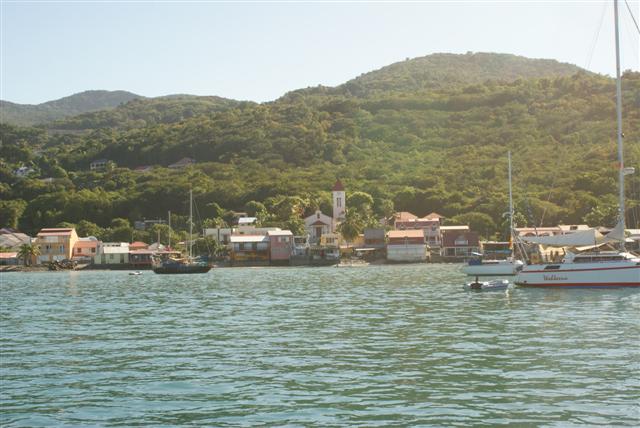
Deshaies Waterfront
The Leeward islands span 200 miles and include 10 major islands. There are some sophisticated continental islands as well as some under populated ones where you feel at the outer edge of the world. We visited two quite different islands. We left Antigua to enjoy a boisterous sail to Deshaies (pronounced day-hay) on the northwest corner of Guadeloupe, the largest of the Leewards. We anchored next to the Spanish BW boat called Bionic and invited Jaime and Carmen on board for a drink.
The next day we went ashore with Jaime and Carmen to register with immigration, which thankfully was just filling in a form on the computer. Our next stop was the tourist office to find out about the botanical gardens, which were a mile or so outside the town and uphill. The Lonely planet said they provide transport and sure enough after the lady in the tourist office called
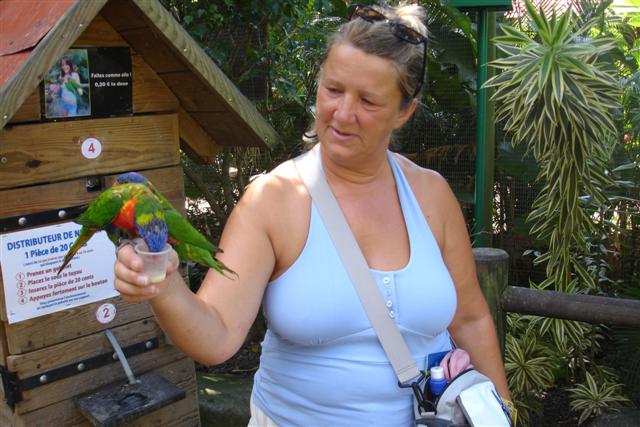
Feeding the parotts
them they sent down their minibus for us. The gardens were beautiful with thousands of species of plants with everything from cacti to beautiful orchids and magnificent trees. There was a walk-in aviary where we could feed the brightly coloured paraqueets from little cups with a kind of liquid that they seemed to love. There were also some beautiful rosy flamingos standing around one of the numerous ponds. We spent several hours wandering around the path that meandered through the gardens to enable you to see it at its best. Many of the species that were growing freely in the gardens could only be houseplants in the UK, and they were growing beside huge banana plants and other specimens. We sat in the beautiful restaurant over looking a superb waterfall and beyond to the Caribbean sea where we enjoyed a delicious lunch together. We spent a bit of time in the gift shop and bought Bill a new hat (another one) and me a beautiful pair of sandals made of shells (more shoes!)
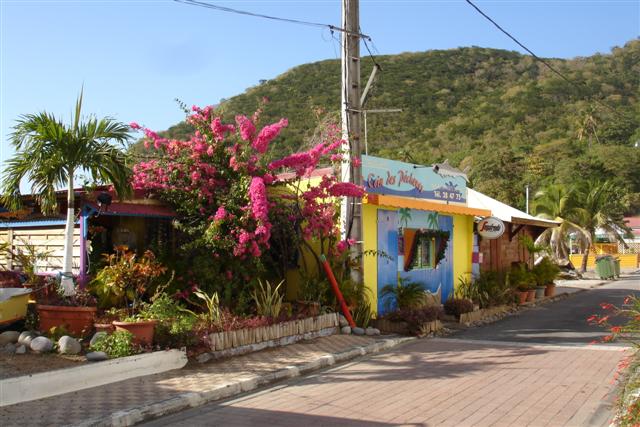
A street in Deshaies
We were given a lift back to the town where we found a supermarket so I could stock up with some supplies. As Guadeloupe is a French island we were back to using Euros. We took our shopping back to Camomile in the dinghy.
The next day, after we had taken delivery of some delicious French bread and croissants, we left Deshaies just after 9am. We motored 10 miles down the west side of Guadeloupe to Pigeon Island, which is surrounded by the Cousteau National Marine park. We anchored close to the mainland in the recommended anchorage and took the dinghy over to the park.

Sunset over Pigeon Island
Once in the water we found an amazing selection of fish of every colour and size. We spent several hours snorkelling before going back to the boat to watch the sunset.
The next morning we got up early and set off for Iles des Saintes, an archipelago off the southern tip of Guadeloupe. Imagine the natural beauty of the Isles of Scilly combined with French culture and Caribbean weather and you have Iles des Saintes. Unfortunately there wasn’t any wind so we motored all the way. We arrived at lunchtime and anchored next to Bionic off Le Bourg (which literally means ‘the town’) on Terre d’en Haut. The BWR Australian boat Gaultine III arrived shortly after and the crews from the 3 boats spent New Years Eve together.
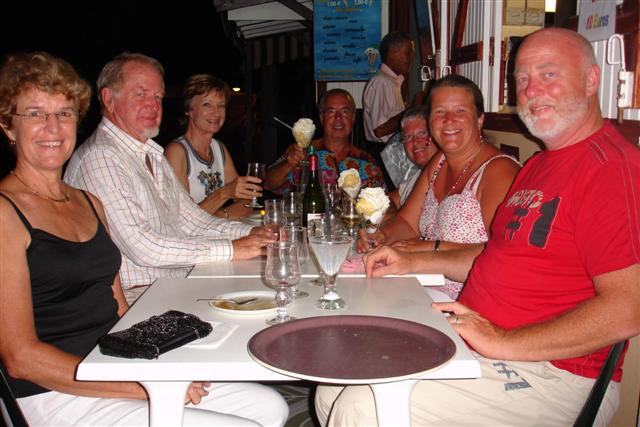
Lou, Stuart, Carolyn, Jaime, Carmen, Sue and Bil
We found a little Italian and sat outside for a delicious meal. A band set up in the little square and started playing at 10pm and continued through until midnight. People from the whole island were there dancing the night away.
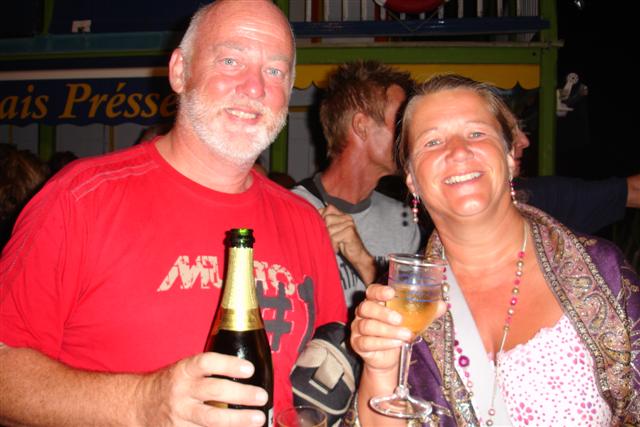
Happy New Year
The crew of Gaultine III decided to go back to their boat but Jaime and Carmen from Bionic shared a bottle of champagne with us at midnight while we were surrounded by glorious fireworks. We’re looking forward to a great year ahead. Happy New Year to everyone.
The next morning there was quite a bit of swell coming across the anchorage so we lifted the anchor and motored across the bay.
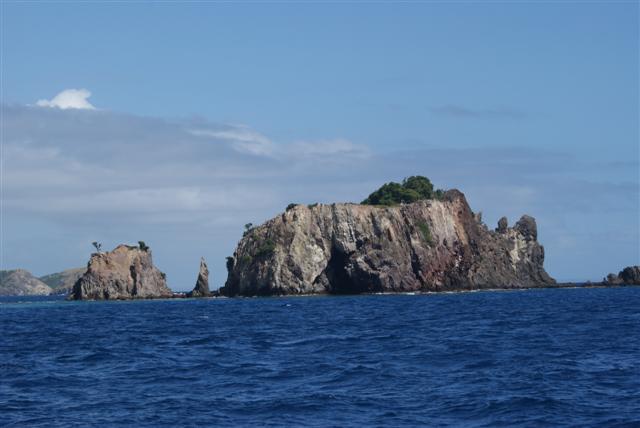
Iles des Saintes
We re-anchored behind one of the other islands called Ilet Cabrit where we had a bit more protection. We were very close to the beach and were able to swim over to it. We took our snorkel masks and enjoyed a wonderful view of the fish swimming around the rocks below us. We really enjoy snorkelling. When you are on top of the water looking down it feels like you’re flying.
We left Iles des Saintes at lunchtime the next day.
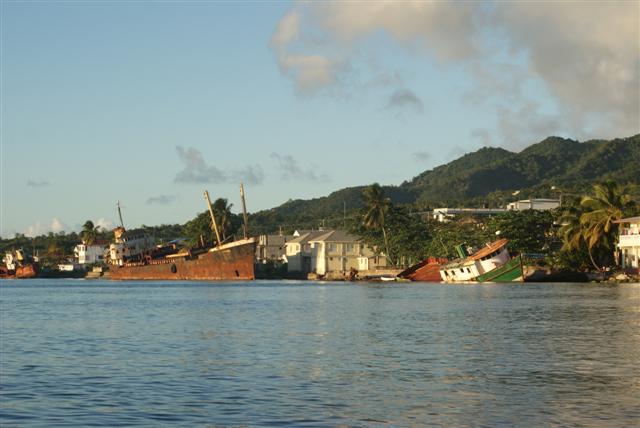
The Waterfront at Prince Rupert
We had a great sail across the ‘gap’ to Dominica the next island, completely different to French Guadalope. We were met by Albert, a boat boy, about a mile offshore who offered us his boat services. He followed us into Prince Rupert bay and showed us the best place to anchor. We had heard of the Caribbean boat boys and had been wary of them but Albert was in the pilot guide and turned out to be very helpful and knowledgeable about the area. The town of Portsmouth, on the banks of the bay, is the second largest on the island although it only consisted of a couple of streets with a lot of run down housing; what a difference to it’s English namesake. Some of the people are living in little more than a garden shed but they are happy. The people are very poor but rich in their surroundings.
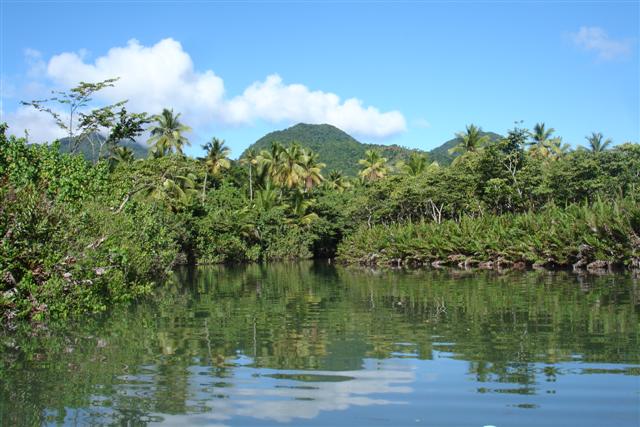
The Indian River
We agreed with Albert that he would take us and Jaime and Carmen up the Indian river the following day, he arrived at 2.30pm as agreed and we all got into his boat. The waterfront was strewn with ‘dead’ boats that had been washed ashore in a hurricane more than 10 years ago. Once inside the entrance of the river Albert turned off the engine and got his oars out because engines aren’t authorized on the river. It quickly narrowed and huge swamp bloodwood trees on both sides soon overhung us, their massive roots spread out above the soil and down into the water, twisting and tangling into wavy designs.

Hanging vines
Long vines dangle into the water and we saw crabs on both banks. The trees formed a cathedral like canopy above us. This, along with the sounds of birds and insects created a magical quality. We saw many birds and Albert even managed to spot an Iguana for us high in the trees above.
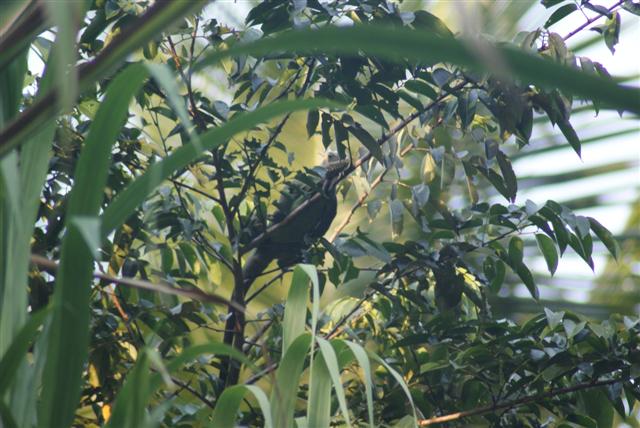
An Iguana hiding high in the trees
This photo was taken with a zoom lens. It took about an hour to row to the top where a bar had been created and we sat and drank the most beautiful Rum punch. Albert explained that many of the scenes from Pirates of the Caribbean 2 were filmed on the island and several on the river itself. We emerged from the river at dusk and the light took on an enchanting glow.
The next day the 4 of us went on a day trip around the island. We headed out of Portsmouth into the surrounding hills. Our driver Winston was very knowledgeable about the area; he stopped the minibus several times to show us a variety of things just growing beside the road. There were towering royal palms and seemingly endless banana plantations.
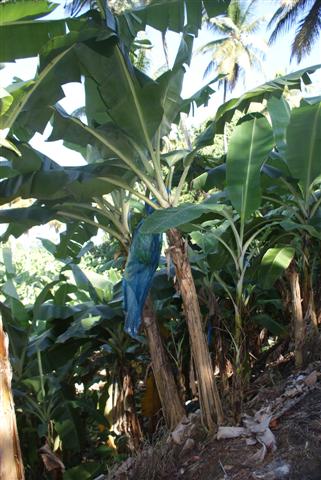
The blue bag is protecting the bananas
Winston explained that the blue bags covering the bananas were to protect them from insects and other problems. Each tree only grows one hand of bananas and once it’s been cut the tree is cut down and a new seedling growing alongside replaces it. The roadside was bursting with red-hued hibiscus and huge Poinsettias. We also saw lemon grass, bay leaf trees, cocoa plants, nutmegs, pineapples, mangos and papayas all growing along the road. Winston stopped the minibus many times for us to get out and see all these things.
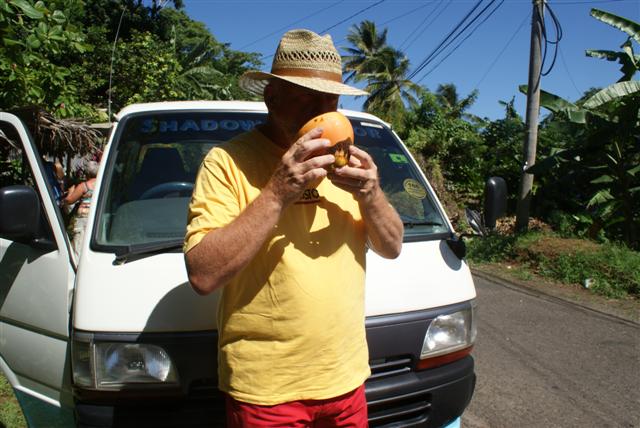
Bill drinking from a fresh coconut
He hacked the top off a green coconut with a machete for us to try the coconut water inside (I wasn’t very keen on it). We stopped by a grave, which Winston said was a past president who also happened to be his uncle! Winston liked to toot at everyone he knew, which was half the island, and also at all those who got in his way, which was the other half of the island! He probably used his hooter more times on that journey than we have in our whole lifetime of driving. We stopped at the top of a volcano and looked down onto stunning views of the Atlantic coast then drove along it to the Carib Indian territory. The 3700-acre reserve is home to the only remaining tribe of Carib Indians in the Caribbean.
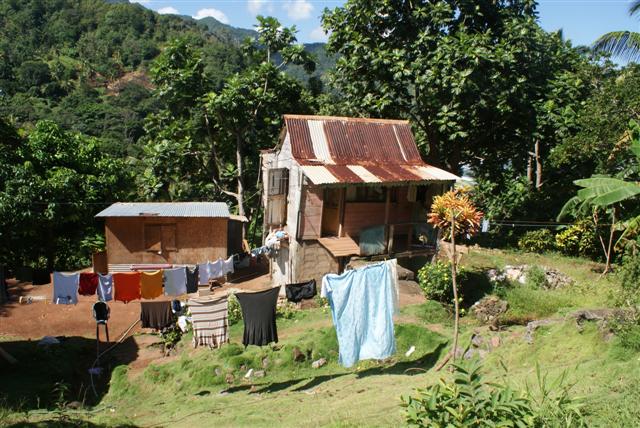
One of the oldest houses in Carib territory
Their homes were very basic but traditional.
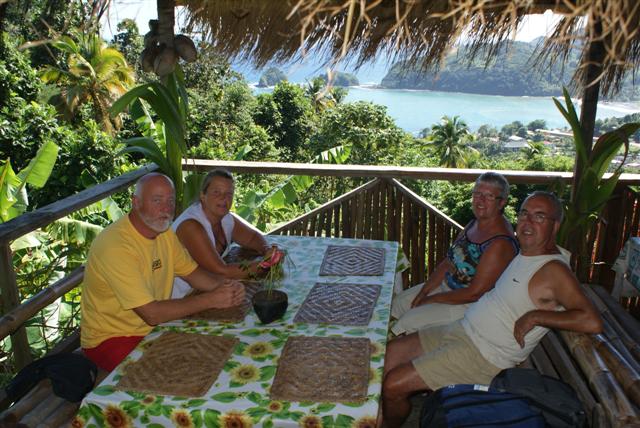
A restaurant with a view
We continued down the coast to Sineku where we stopped for lunch. The restaurant had the most stunning views over looking the Atlantic below. There wasn’t a menu; we were given a choice of fish or chicken. Jaime and I chose the fish and Carmen and Bill chose the chicken. When it arrived it was very traditional food without any thing we recognised. I wish I could say it was delicious but it wasn’t. The fish was salted cod and we really couldn’t eat it, although we tried, the Caribs have completely different tastes to westerners. We did have the most delicious freshly squeezed juice, which I think was Guava. While we were sitting eating our meal a pretty little gecko came to watch us hoping for a spare morsel. We got back in the minibus and headed back inland again through more rain forest. We were shown where the scene was filmed of Johnny Depp balancing on a wheel rolling through the countryside in the film Pirates of the Caribbean 2. The Dominicans are quite proud of how much of that film was shot on their island.

Having a paddle in the Emerald pool
We continued to one of Dominica’s natural wonders, the deep Emerald pool at the base of a 40ft waterfall. It’s reached by a five minute walk along a jungle like pathway whose paved sections date from its original use as a Carib trail. The pool would have been wonderful for a dip but we just had a paddle instead. We walked back to the car park via the scenic route, which took about half an hour. That was the end of the tour; it had been a long day of 7 hours driving. The roads aren’t great in Dominica, luckily Winston knew where most of the potholes were and managed to avoid them. We got back to the boat tired but well informed about life on Dominica. It isn’t everyone’s idea of paradise but we loved the island and it’s friendly people who love their life and their island.
The next day Albert took us snorkelling around in the next bay. We drifted along with the current and Albert picked us up at the other end. Bionic left later that day but more of the BWR boats started arriving.
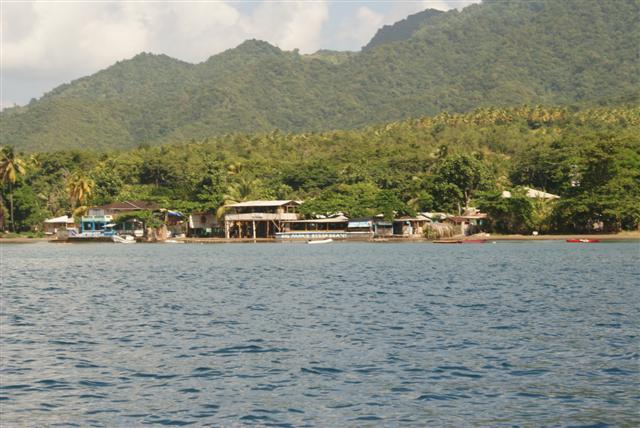
Big Papa's bar
On the Wednesday, which was our 5th day there, we all went ashore to Big Papas for a barbecue and ‘jump up’. It was a great evening with 12 of us joining in the dancing to the very loud music. There were also some strange smells drifting around from the large cigarettes everyone was smoking!
Lanzarote
After arriving Friday afternoon Saturday was spent sleeping and slowly getting to know our new environment. It was beautiful and sunny and much hotter than Gibraltar. The marina hosted a Welcome party in the evening and many stories of the trip down were swapped. Sunday was another quiet day. We walked to the small beach in the afternoon for a swim and looked around the shops. Monday morning found all the boat owners up early after the lazy weekend with many jobs to keep everyone busy. Bill was back and forth to the sail makers while I investigated the launderette. In the afternoon we all assembled in the car park ready for our coach trip around the south of the island courtesy of the Lanzarote tourist board. We boarded one of two coaches which both carried local guides. We were taken to the national park of Timanfaya. The volcano had erupted in 1730 and again in 1824 and left a quarter of the island almost completely buried under a thick layer of lava and ash. Reminders of the past are still present in high surface temperatures; geothermal abnormalities produced by a magma chamber fairly close to the surface. Temperatures of 610°C are recorded at a depth of only 13m and between 100 and 200°C at surface level. We had 3 demonstrations. Firstly we formed a circle and a spadeful of stones was taken from the surface, a few were put into each of our hands but they were so hot we had to drop them immediately. Secondly they had an opening in the ground and when some tree branches were dropped into it they immediately burst into flames. The 3rd involved tipping some water into some bore holes which sent great plumes of steam up into the sky within seconds. Alongside the demonstration area is a restaurant with a grill placed over the top of a volcanic vent that they use to barbeque the food! The bus took us on a tour of the volcanic park. The scenery was spectacular with many striking features of lava flows, volcanic cones and tubes, domes and craters. It’s a world of fantastical colours and textures. Timanfaya is virtually intact thanks to the slow process of natural evolution. It has barely been touched by human activity. Some areas aren’t as hot and have a fine layer of lichen over it that looks like snow. After our tour of Timanfaya we were taken to a winery. The vines are built into the hillside and grown behind semi circles of stone. They are covered in a layer of black ash to conserve the moisture in the ground caused by the dew as they only have 30 days of rain a year on Lanzarote. The little semi circle walls went on for miles. The wine tasting was very pleasant.
Tuesday we spent doing jobs around the boat but in the evening we were off in a coach again for dinner at the volcanic underground cave of Jameos del Agua. It is located inside a volcanic tunnel created by the eruption of La Corona Volcano. It owes its name to the existence of an internal lake that originates from filtration through the rock which lies below sea level. It was difficult to tell which was original and which was new it was cleverly formed. We walked down a rock staircase into an open chamber that was full of tables and chairs. We walked past these further into the cave and down past the lake. At the other end was a beautiful lagoon. There were several bars dotted about so we sat down for a pre dinner drink. The meal was excellent, Avocadoes with Prawns followed by roast pork and veggies, and a delicious chocolate tart to finish. The wine flowed. While we enjoyed coffee and liqueurs a troupe of traditional dancers entertained us dressed in traditional costume, their skirts swirled as their musicians played. It was a very enjoyable evening.
Thursday morning I woke up early and immediately realised what I had signed up for today – a try dive. I’ve tried diving before and haven’t been able to get past the point where you have to start the descent. The dive centre here uses the dinghy slipway to get into the water instead of going off the back of the boat. I walked to the centre with my heart in my mouth. There were 5 of us booked in altogether. Angela and her husband Frank and their friends Steve and Mike. George immediately put us at ease and we all started to get kitted out. George sat with us for about an hour talking us through what was going to happen and then we all walked down to the beach. George and Heidi helped us into our weight belts and tanks. I thought I definitly wouldn’t come to the surface now. We walked into the water and started with just putting our faces in the water. When we were happy with that George asked us to just fall forward into the water, as we did he released the valve on the BCD (jacket that inflates and deflates to keep you floating or help you to sink) and it felt like a Baptism as we fell forward on to our hands and knees! We then had to practise taking the regulator (the thing in our mouth that we were breathing through!) out of our mouth and then put it back in again and clearing the water. We all managed to do that and also clear the water from our mask by blowing through our nose. We were now ready to go forward over the edge of dinghy ramp into the open water. I had a voice on one side of my head saying I can’t do that but one on the other side that said I could. Everyone else managed it so I let go of the edge and floated over to the others. Lots of claps in the water. After that I was away, we only went down about 3-4metres but I DID IT. George had some fish food with him that brought lots of fish over to us from all directions; they were so beautiful with all their different colours. I’m going to take a longer course in the Caribbean when we get there because I enjoyed it so much. Friday evening was curry night. There was going to be a friendly race with the locals in the afternoon but the winds were too strong and no one was prepared to go out and risk getting their boats damaged before the Atlantic crossing.
Chris and Mark on Blue Magic very kindly asked us if we would like to go out for a drive with them on Sunday afternoon. We left after lunch and drove around the town of Arreclife, the capital of the island, along the waterfront. The sea was quite rough because of the high winds. We then drove right to the north of the island to a height of 475 metres. We had a wonderful view but the weather was a bit hazy. We stopped for tea and cake on the way down in a café that had spectacular views across the valley.
Monday morning brought more high winds of 40kt+ coming off the land. We are all moored together and everyone’s boat was covered in a layer of black volcanic dust blowing across from the volcanic mounds behind us. Bill had Freddie, one of the children on Miss Tippy, on the boat for a DT lesson. The children started off with a travelling teacher but it didn’t work out so we are all helping in any way we can. Bill enjoyed getting his tools out and teaching him how to use a jigsaw, etc. They made an outboard bracket for Miss Tippy.
On Tuesday we had another coach tour this time to the north of the island.
Bill stayed behind to help David on Enchantress fix his hatch but Susan and I went off to the coach. First we stopped at the Cactus garden which has many fine examples of cacti within a wonderfully designed setting that was created by Cesar Manrique a local artist whose work is in evidence throughout the island. We moved onto La Cueva de los Verdes, the green caves. We were taken on a guided walk that took us underground for a mile or so through volcanic tunnels that are part of the volcanic tunnel system that runs from Montana de Coruna that erupted about 4000 years ago and flowed out into the Atlantic. It’s along the same lava flow that the Jameos del Agua was formed. Over the years the caves have served as a place of refuse for local people when pirates attacked their shores. The temperature inside remains at 18C throughout the year and it was pleasant inside out of the hot sun. The cave opened out into a vast cavern. The shape of the walls formed by the solidified lava and enhanced by discreet lighting is quite extraordinary. As the tour draws to a close the guide asked us to be quiet in order to introduce you to the ‘secret’ of the cave. It was very clever and I’m not going to give the game away. The last place we visited was the Mirador del Rio that was one of the homes of Cesar Manrique and over 800M above sea level. It commanded spectacular views.
Wednesday was spent stocking up the boat ready for the Atlantic crossing.
The Cote de Cornouaille and the Cote de Megaliths, visiting the southern Breton islands on the way.
We sat in L’AberWrach for 2 days while the wind abated. On the third day we motored out with the wind on the nose but the swell had gone right down. We turned south into Chenal du Four as this was as far west as we could go. The choppy channel had finally released us without a struggle, we were happy to leave it behind. The wind started to drop and we watched a front pass over us with blue sky behind it.

Cameret waterfront
We motored into Cameret mid afternoon and found a space in the inner marina right next to the town.
On the Friday we went for a bike ride to my favourite beach at the end of the Toulinquet peninsular; it was just warm enough to paddle in the sea.
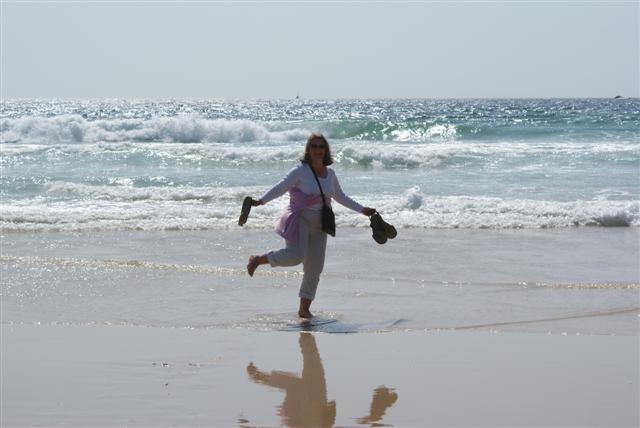
First Paddle in the Sea
The Saturday was my birthday and we spent the day eating. Petit déjeuner in a bar on the water front, crêpes for lunch, and a beautiful dinner in the evening with langoustines (large prawns), several types of fish and a peach melba for dessert plus wine. I was really spoilt. We had a lazy day on Sunday watching the French leave after the weekend; always a source of entertainment.
We left Cameret on the Monday. We motored towards the Toulinguet point, hoisted the sails, turned off the engine and we were away. We always go around the point but having watched other keel boats go through the passage when we were on the beach we decided to go through the rocks.

Toulinguet beach
It was a bit nerve-racking but we passed through unscathed, we also had an excellent view of the caves and the beach. Within an hour we were at the Raz de Sein another notorious sailing black spot but the wind and tide was with us and we sailed though without a problem on towards the Pointe de Penmarc’h – Gateway to Southern Brittany and the Sun. We were now entering the Biscay and it was sunny, hopefully it will stay that way. We continued eastwards into Benodet bay to the first port of Loctudy and tied up to the visitor’s pontoon.

View across Loctudy harbour
The next day we walked into the town to visit the market and I bought some freshly caught king prawns for our lunch, some strawberries and a slice of raspberry Breton cake which is similar to bakewell tart, it’s not so almondy but delicious.
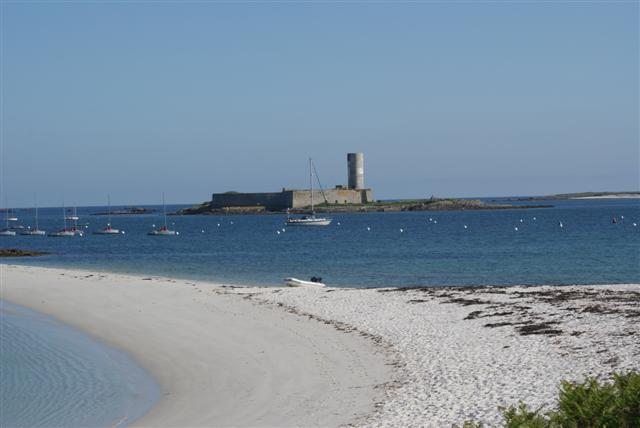
Camomile and little Camomile on the beach
The following day we found ourselves in Iles de Glenan, a beautiful archipelago with white sandy beaches not unlike the Caribbean. I sat in the cockpit looking across the shimmering sea to the white sandy beach where yesterday we had walked bare foot collecting the most beautiful shells and all I could hear was the gentle lapping of the water against the side of the boat and the call of the seagulls. We’d spent the night on a buoy, it was an idyllic spot; and we virtually had it to ourselves. This is what I had been looking forward to.
We left the Glenans that afternoon because the winds were getting stronger and as the islands are little more than sand dunes they don’t offer any protection. We set sail north to Bénodet which only took a couple of hours. Bénodet occupies the east bank of the Odet River, which is one of the loveliest rivers in Southern Brittany.

Beautiful chateau on Odet river
We waited until the tide was at half flood and left to start our journey up the river passing several beautiful chateaux with their manicured gardens stretching down to the waters edge. It was a beautiful day and the sun was shining on the steep tree-covered banks giving all the leaves a wonderful luminous glow, this in turn reflected in the water as a dark shade of green but the water was so clear. We knew we couldn’t go right to the top because it dries out and there isn’t anywhere to tie alongside but we had found a little anchorage called Anse de St-Cadou. We crept in at high tide. We had 4.2 metres under our keel and it was a 4 metre tide so it should be ok. Down went the anchor. The fall of the tide revealed some rocks around the bank but nothing in our way.
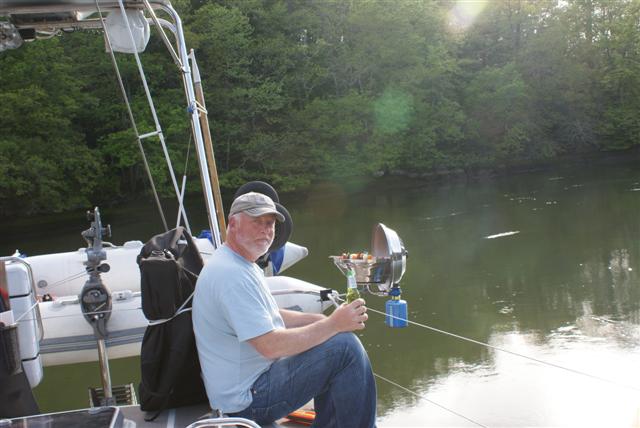
Bill enjoying a beer while barbecuing
It was a lovely evening and we decided to try our new barbecue. We had a splendid feast in wonderful isolation. As it got dark the noises of the forest that surrounded us were quietly noisy. At low tide we were sitting in a pool with 0.3 metres under our keel. We swung round with the tide and you could just hear a slight scraping as the rudder lightly dragged over the shingle bottom. Happy that we were safe we retired to bed. The next morning was wonderful. I got up early and sat out on deck, all that could be heard were the birds twittering in the trees. I watched a Heron picking his way along the waters edge looking for tasty morsels and a Cormorant sitting on a rock drying his wings in the sun. What a lovely spot.

Old buildings in Quimper looking through to the catherdral spires
We decided to take the dinghy to Quimper, another 5 miles up the river. Unofficially the capital of Cornouaille Quimper is dominated by the twin spires of its Gothic Cathedral which tower over the banks of the river. When they added the Nave in the 15th century, to avoid the swampy edge of the river, the masons of the time placed it on an angle; it’s very strange walking down the aisle. Once out in the sunshine we walked around the old quarter, its cobbled streets lined with charming half-timbered houses above shops selling antiques, lace and local craftwork. At the heart of the city flower-decked footbrides criss-cross the river. We stopped for a crêpe before we returned to the dinghy for the trip back down the river to the boat. We spent another night at anchor because it was such a lovely place.

Camomile anchored in the lagoon
We left the anchorage at 10.00 on the high tide creeping back out into the Odet and motored back down the river to St Marine which is on the West bank of the river.
We left St Marine mid morning and tied up in Concarneau at 15.30. The attraction at Concarneau is the Ville Close and we went to have a look around the next day.

Walking the streets of Concarneau
The Ville Close is a walled town dating back to medieval times. You enter over a drawbridge between two Granite ramparts that lead into a busy thoroughfare lined with shops and restaurants. Narrow cobbled streets and alleys branch off in all directions between little courtyards and squares bedecked with flowers in window boxes and tubs. It was absolutely charming.
We motored out of Concarneau the next day and set sail for the Belon river. Shortly after turning the engine off Bill decided to try his luck at fishing, he put the lines out and within half an hour had caught one.

Bill caught his first fish
Bill reeled it in and put it in a bucket. He then decided to dip the bucket in the water to fill it and, surprise surprise, the fish came to life and leapt for freedom! The 2nd one got away and after that he caught 4 more but they were too small and he put them back but we do have photographic evidence of the one that got away!
We motored into the Belon river just after 19.00 on the high tide. The river has a sand bar over the entrance that can only be passed at high tide when it’s then covered by the sea.

Camomile in the Belon river
We tied up fore and aft to large metal buoys. The next day we took the dinghy ashore to explore. Belon is famous for its oysters and the sides of the river were covered in oyster beds, which were exposed at low tide. We went for a lovely walk along the coastal path that gave us beautiful views of the river with glimpses of Camomile through the trees.
The next day we decided to visit Pont Aven.
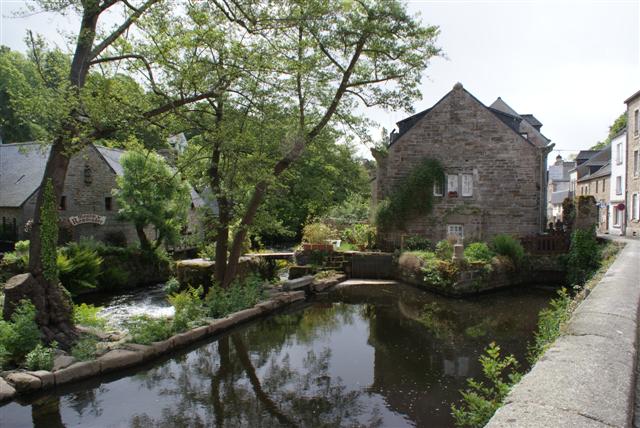
Walking around Pont Aven
It was at the head of the next river and we decided to cycle there. It wasn’t far, only 5 miles or so but it was a bit hilly. Pont Aven was the home of Paul Gauguin and if he returned today he would still recognise many of its old houses and watermills even though the mills are no longer working. The river tumbles steeply down between great outcrops of granite that served as the driving force of the mills. These days there are enchanting walkways built across the river so that many of these wonderful old buildings can be viewed. It was a beautiful setting.
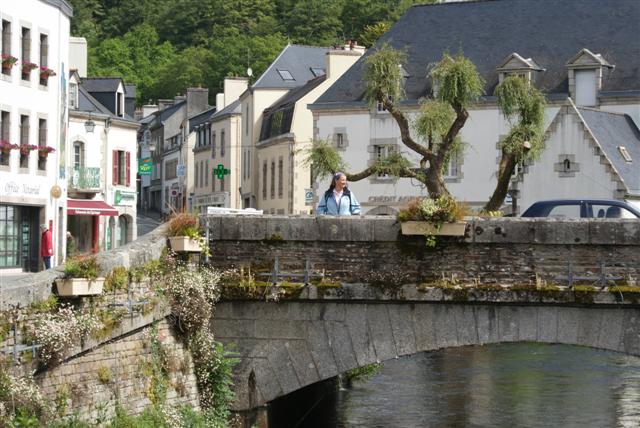
Walking around Pont Aven
Many of the bridges carry holders for flower boxes and in the summer it will look very pretty. It was already starting to look colourful. We cycled back to Belon and packed the bikes back into their bags and set off in the dinghy for the boat. We had quite a bumpy crossing, the wind had got up while we were away and the river was quite choppy. We raised the dinghy on the davits ready to leave the next morning.
We didn’t leave the next morning or the morning after that. The wind was relentless. It didn’t go below F7 for 2 days. We couldn’t even get off the boat because it was too choppy to launch the dinghy. The storm was blowing right across the Biscay from the southwest. The entrance to the river faces SW and the charts give warnings of crossing the bar in a SW gale. The French are officially barking because they were still going in and out. We spent our time doing little jobs. I suggested to Bill he could go up the mast to mend the wind instrument; he said he would hold the screwdriver while I put the harness on!!!
Monday morning we finally managed to get out of the Belon river, we had only been there 5 days but it felt longer. The wind was still blowing from the southwest, but it had dropped enough for us to escape. High tide was at 12.30. We untied the many lines we had tying us to the buoy and left at 11.15. The swell was still coming in over the bar but we managed to get out safely.

Pretty houses on Ile de Groix
As we were travelling southeast to Ile de Groix we had a wonderful beam reach all the way. We arrived at Port Tudy harbour at 14.15; it had taken exactly 3 hours. The town of Port Tudy was very pretty, in an untidy island sort of way. The houses were painted many colours, although some of them didn’t match very well but the gardens were becoming very colourful as we get further into the summer.
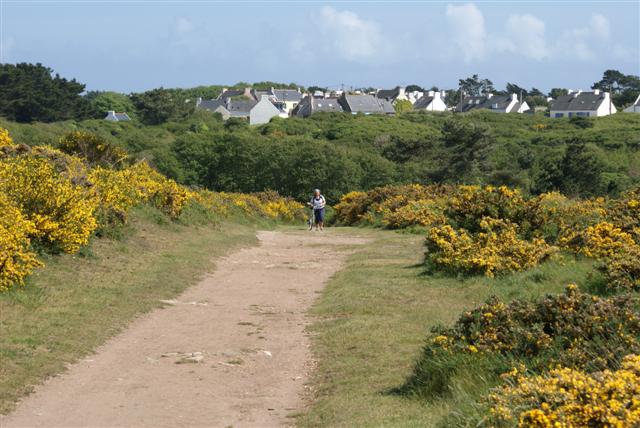
It’s steeper than it looks
The following day we spent cycling around the island, it’s only 5 miles long and 2 miles wide with a marked cycle path all the way around. We managed to cycle most of it between acres of yellow gorse. It made it seem very desolate at times but still beautiful.
We left Port Tudy the next morning bound for Belle Ile, another island, our 6th so far. It was a beautiful sunny day with a light southeasterly wind. We arrived at Le Palais at 18.00. The next day the bikes came out again for another cycle ride.

A beach on Belle Ile
Belle Ile also has marked cycle paths but, being a bigger island at 10 miles long and 5 miles wide, we only cycled half the island. Belle Ile means beautiful island and it certainly was. We headed south to the other side of the island that faces the Atlantic. It was very rugged and rocky but had some beautiful beaches in between.

The Grotte de l’Apothicairerie
We stopped at one of them for lunch and watched the French surfing on the Atlantic rollers. We continued north along the spectacular coastline to the Grotte de l’Apothicairerie. This is an oceanfront cave so called because it used to be filled with the nests of cormorants, arranged like the jars on a pharmacist’s shelves. It’s viewed from above and we teetered as near to the edge as we dare to see inside but it was a long way down to the rock-strewn sea.
We continued across the island to the harbour of Sauzon. It was absolutely charming with some beautifully painted houses with roses around their doors, a real picture postcard village.
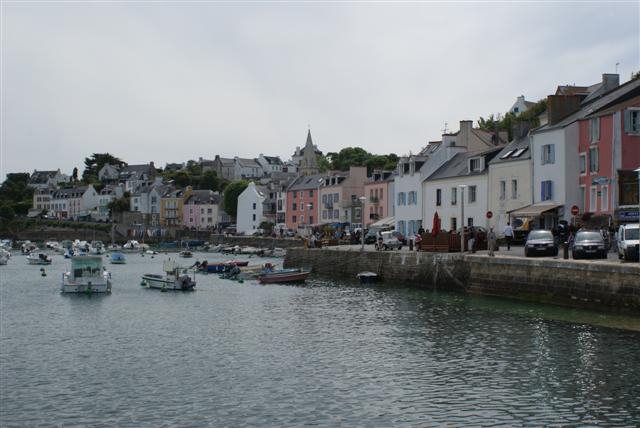
Sauzon Harbour
We stopped for an ice cream but then returned to Le Palais. Fortunately it was down hill all the way. We spent the following day walking around the town. The citadel, a star shaped fort built by Vauban in the 18th century, dominates the town. We wandered around the ramparts, which look down onto the beautiful blue sea below.
We arrived late at the Tréac’h er Gourhead beach off the island of Houat (pronounced to rhyme with that) on 25th May; the anchor dug in well and we sat down to a late supper. The forecast said F5/6 from the west and as the anchorage is on the East coast we felt comfortable with that. I don’t know why we bother with forecasts because we went to bed with it gusting F7 and Bill was up at 3am letting more chain out because it was F8 gusting 9. Fortunately the new anchor and 10ml chain held us firm.

The village on Ile d’houat
We awoke the next morning to find it had dropped so we walked across the island. Flowers from the gardens spread across several houses; there were roses and yellow broom growing everywhere. There is a harbour on the other side of the island but it’s full of fishing boats as their industry is mostly fishing, and lobsters in particular.
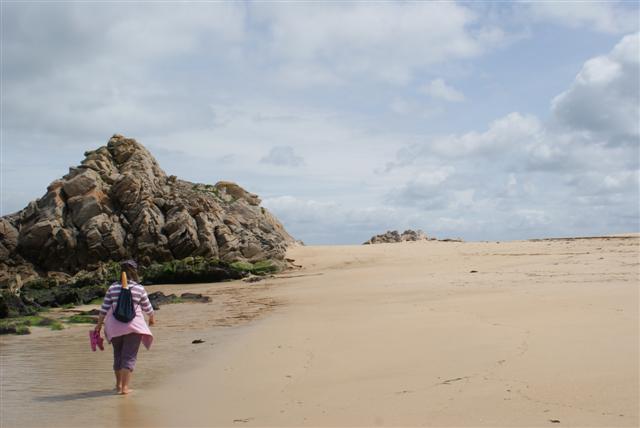
Collecting the bread is a tough job but someone has to do it!
We walked for several miles around the island returning to the dinghy via the narrow headland to the north, picking our way through the rick pools, the views were stunning. It was so peaceful we decided to stay a 3rd night.
On the Thursday morning we left the anchorage and motored back across the Quiberon bay. It’s starting to get quite hot and for the first time this year we were able to take our clothes off and enjoy the sun. We arrived in La Trinite in t-shirts and moored up just after lunch. We had now left the Cote de Counouaille and joined the Cote des Megalithes.
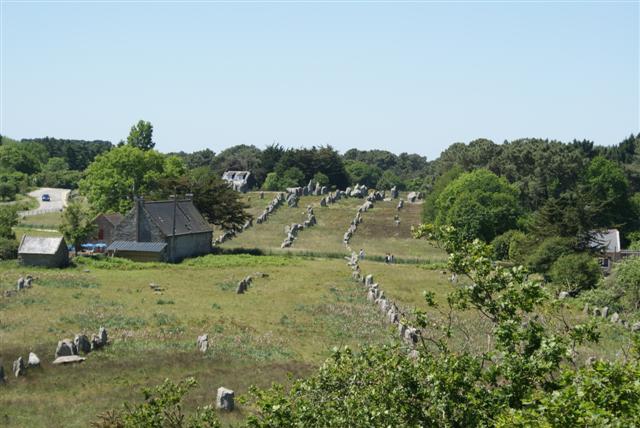
Standing stones at Carnac
No one knows who erected the Megaliths, it was long before the start of recorded history, or why. The most popular theory is astronomical but they date from the time of the arrival of agriculture. Could they have been linked to an annual harvest, they were certainly erected over a period of time; they are stark reminders of how little we know of our own origin.
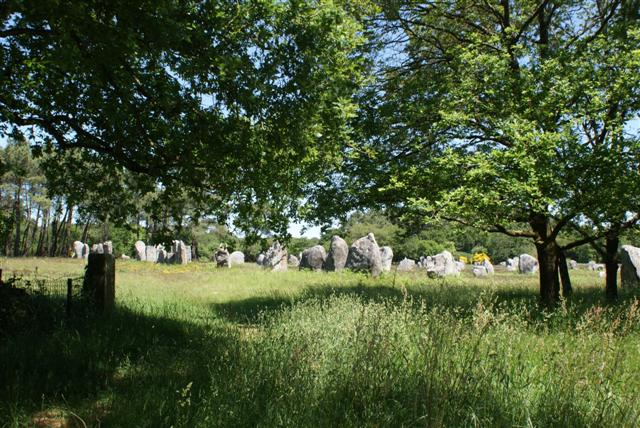
Groups of Menhirs
La Trinite’s neighbour is Carnac. It’s profusion of Menhirs laid out in groups of a thousand or more, undulating across the countryside in long irregular rows, make an extraordinary spectacle. It’s no longer possible to enter the sites but the fences are fairly low and they can be viewed easily; I find them fascinating.
Springtime in Northern France
After our wonderful sailaway party and boat blessing we spent the first week of our new life in the Solent. There were still a few jobs on the list that needed to be completed before we crossed the channel, namely batteries. We finally left on Friday 4th at 5.30 am. It was drizzling and misty as we left England without knowing when we would return.
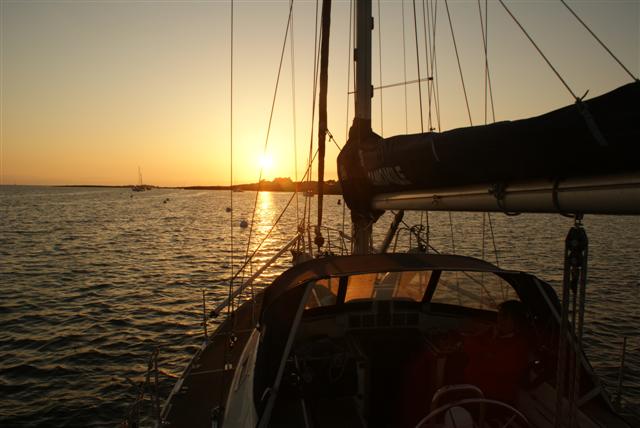
Sunset over Bray harbour
We arrived in Bray harbour on Alderney at 18.15, our first island, having had a fantastic first sail. We celebrated with a bottle of champagne and watched the sun go down.
The next day we went ashore to explore in the spring sunshine. We walked around the sleepy village and the interesting museum with lots of exhibits about the war. We left Bray harbour on Monday 6th and sailed down to St Peter port; the place was deserted.
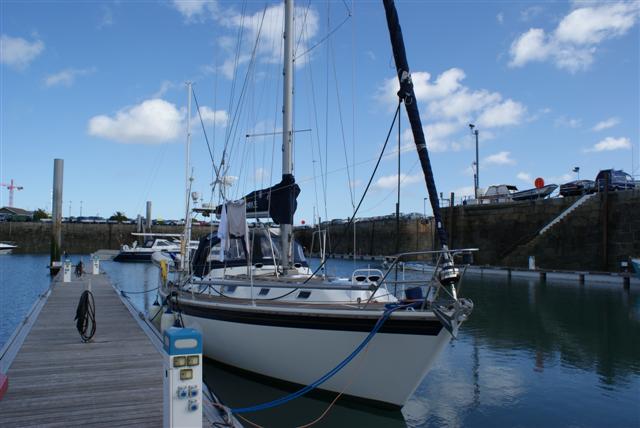
All alone in St Peter Port
While there we went shopping, my favourite, and its VAT free! One of the things we bought ourselves was a digital SLR camera with a detachable zoom lens, just the thing to photograph all the wildlife we hope to see! We stayed 3 nights and got our 4th night free.
We decided against an early start because that would have put us at Lezardrieux at low water, we left later to get there at high water instead. It’s important to arrive at slack water (high or low tide) because it’s reported that as much as 5kts of current runs through the pontoons. We left St Peter Port at 10.00. Bill put the French courtesy flag up just before 18.00 in the rain and we took the sails down ready to motor up the river. We eventually tied up in Lezardrieux at 20.30 our first French port.

First French breakfast
The next morning we enjoyed our first French breakfast; we had arrived in France.
We spent 4 nights there altogether. On Easter Sunday we spent most of the day walking back down the estuary along a marked footpath.

French Countryside in the Spring
It was a wonderful walk that took us along the bank of a natural stream that had lots of wild spring flowers growing along its banks and beautiful fern fronds stretching out into the spring sunlight. It was muddy in places but also opened out onto the waters edge with fantastic views of the jagged rocks that guard the entrance to the river. The thought of my Easter egg on our return kept me going!
We left Lezardrieux at 13.00 and motored around to Tréguier. We arrived in the rain and it rained most of the next day, which was a pity because Tréguier is a beautiful town. It’s set high above the port and is a meandering medieval wonderland that has retained many of its ancient half-timbered buildings. The stone spire of the cathedral is full of holes, to offer least resistance to the wind, and contains the very ornate tomb of St Yves, the patron saint of lawyers, bizarrely. Parts of the cathedral date back to the 11th century.
We left Treguier at 7.15 just as it was getting light. The rain had stopped and the sun was trying to peep through the broken cloud. It was lovely to breathe in the crisp fresh air. We arrived at Perros-Guirec at 11.30 half an hour after high tide but unfortunately too late for the lock gates that already closed. We made a quick exit because we were in an area that dries to nothing at low tide.

Beautiful rainbow while sitting at anchor outside Perros Guirec
We motored out to the edge of the low water line and put our anchor down, our first night of the season at anchor. We saw the most beautiful rainbow.
The following morning we decided to go to Ploumanac’h which was only an hour around the headland. We had originally decided against it as you need to motor through a rocky entrance to get in and they don’t look very friendly on the chart.

Entering Ploumanc’h
The trip round was beautiful because the sun was out and shining on the waterline that was strewn with large boulders of pink granite rock of all shapes and sizes. We found the entrance channel and crept slowly in over the rocks and the entrance sill, the tide was still in so it was fine.
Once inside it opened into a really pretty village with lots of mooring buoys across the middle of the water. There was a beautiful sandy beach just inside the harbour that was surrounded by more of these stunning boulders. They were all shapes and sizes that had lain there for millions of years while the elements had eroded them into soft and organic forms. Many of them stacked improbably giving the impression that they had no right to be there and were going to topple into the sea the moment you looked away.
Saturday we took the bus into Lannion. It’s an historic city with streets of medieval housing.
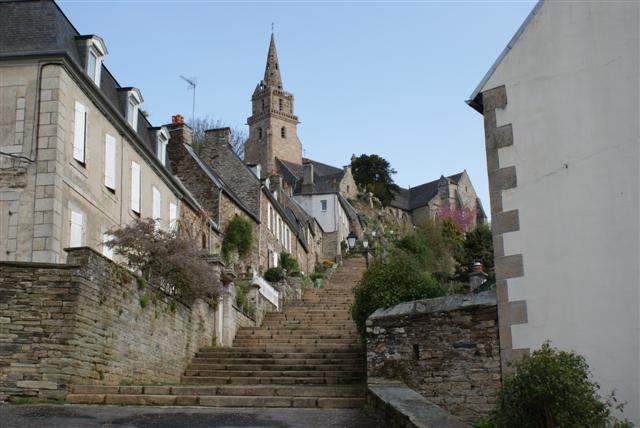
Steps up to Lannion church
We climbed the 142 granite steps to the 12th century Brélévenez church. It was a pretty climb with many picturesque houses with gardens full of spring flowers along the way. The view from the terrace was stunning. We walked back down to the town and through the medieval streets to find a tiny restaurant tucked in amongst them. We ordered the set menu without quite knowing what we had ordered. We needn’t have worried because a beautiful rump steak turned up followed by a delicious chocolate pudding.
On Sunday the weather was cloudy but we still went ahead with the 5-mile walk along the coast back to Perros-Guirec taking in the full extent of the boulders. It took us several hours but we got there. It really is a spectacular coastline.

I'll just hold this one up!
I couldn’t resist trying to lift this one! We took a picnic and sat on a bench overlooking the beach eating it with the wind blowing but soon, very soon the sun will shine.
We got up early to cross the sill before the tide dropped too far. We motored over the sill with bated breath because we draw 1.9m and the tide gauge was already down to 2.3m but we passed across unscathed. We crept back out through the narrow entrance, past the spectacular rock formations, and into the open sea. It was light but the sun wasn’t up yet.
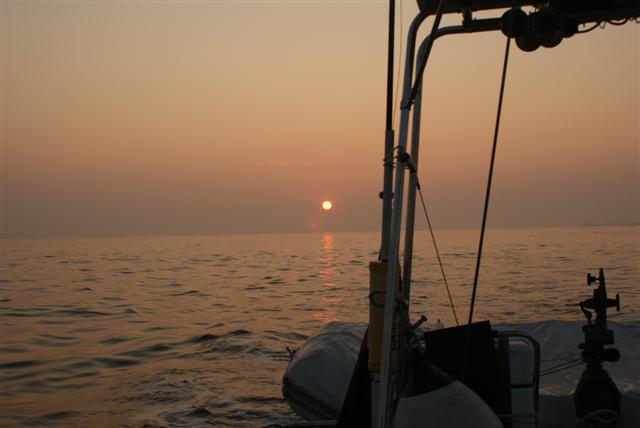
Early morning sunrise on the way to Morlaix
At 7.45 a red ball appeared over the light mist that had formed in pockets between the rocks setting the pink granite rocks on fire – our first sunrise this year. It rose further into the sky making beautiful reflections in the oily smooth sea; who said April was too early to leave? We arrived off Morlaix entrance just after 10.00, an hour before low tide, too early to venture up stream to the lock so we ghosted in between the islands and anchored while we waited for the tide. There was still not a breath of wind and the sun was getting hotter, this is more like it.
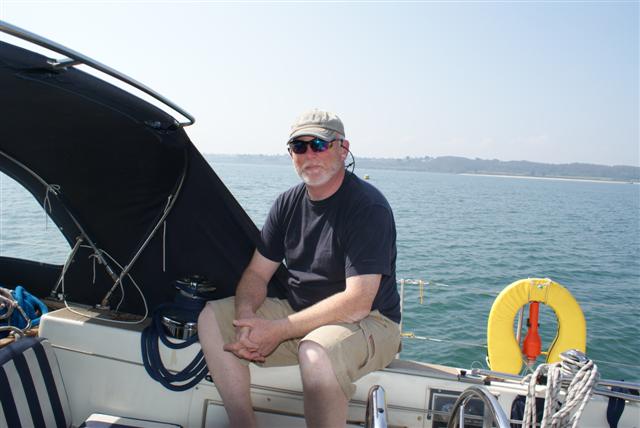
First time in shorts
Bill decided to put his shorts on for the first time this year as we relaxed in the sun. We enjoyed lunch in the sunny cockpit and then motored up to the lock arriving at 2.30 pm.
We spent a week in Morlaix altogether. We spent many hours exploring the town, which has many attractive buildings that have survived from its medieval heyday.
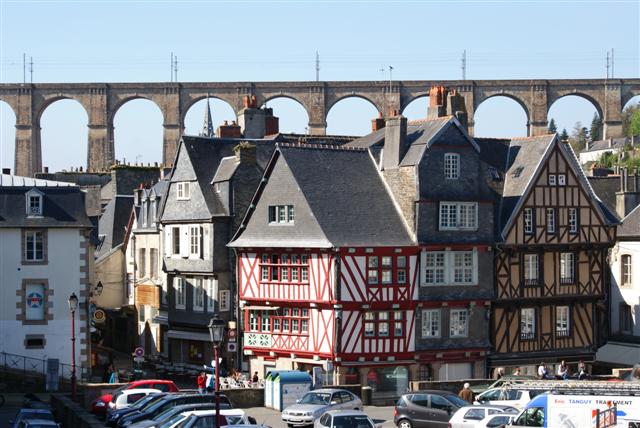
Viaduct overlooking Morlaix
It was originally protected by an 11th century castle and a circuit of walls, sadly little is left of either but the cobbled streets with their half-timbered houses still remain. Many have been restored and still have most of their original timbers, some of which came from the structure of ships. There is a viaduct that carries the railway over the town. Morlaix was the closest we could get to the Breton Parish Closes each of which comprise of a walled churchyard which in addition to the church incorporates a cemetery, a calvary and an ossuary.

Guimiliau Parish close
The Ossuaries now hold nothing more alarming than some picture postcards but were originally charnel houses used to store the exhumed bones of less recent burials. Inside the churches are magnificent examples of hand carved pulpits, baptisteries and, for me the best of all, beautiful altar walls. One of which covered the entire end wall with gilded carvings and sculptures surrounding icons; truly magnificent. We visited 3 of the best known examples within 2 or 3 miles of each other. When they were created each village tried to be better than their neighbours. We cycled out to see them on a beautiful sunny day. The problem came when we had to cycle back. The guidebook said they were 10km away but on the way back we saw a signpost that gave 17kms to Morlaix! We cycled 32 miles altogether that day and my bottom felt every one of them. We’ll leave it there!
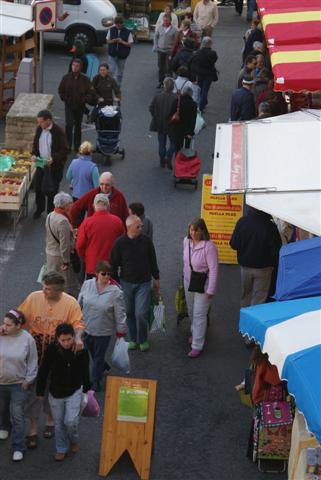
Looking for bargains in Morlaix market
We stayed longer than intended because we wanted to see the Saturday market that went right up through the old medieval streets. Unfortunately we regretted doing that because the weather closed in around us. We left on the Monday and motored through the lock back down the river into the sea. We had arrived in t-shirts and were leaving in full foulies; how fickle the weather is. We hoisted the sails with 2 reefs in the main and a scrap of genny. It was blowing a NW4-5, raining with squalls and quite a swell. We motored through the Ile de Batz channel described by Tom Cunliffe as ‘a rock-strewn, tide-scoured chamber of horrors’ that cuts the corner off and gave us some shelter. It is indeed rock strewn but with careful planning we passed through unscathed. The swell was now coming in from the west straight off the Atlantic along with the wind but it was too late to go back. Bill managed to helm the boat very well; he seemed to enjoy it. We took the sails down at 13.30 because we were now headed and motored towards L’AberWrach. The swell was horrendous and easily 20ft high with very little distance between them; the channel wasn’t going to let us leave without a fight. Bill turned into the entrance at 14.30 and by 15.00, thankfully, we were tied up on the pontoon.
So that takes us to the end of April, northwest France and the choppy channel. Biscay and pastures south now beckon us beyond Le Four.
 Camomile